
How to future-proof your business
Anticipating what will happen in the future is difficult, however, it is something you may want to consider doing to protect and grow your creative business. By considering what future possibilities lie ahead, you might be able to minimise the effects. It may seem like an overwhelming thing to tackle when you’re in the throes of running a creative business, but a little thought and planning can go a long way toward keeping your business running and possibly helping it grow.
Plan Having a business plan is a great place to start, but it isn’t something to “set and forget.” Your plan may need to change as your business grows, markets move, and audience evolve. In your business plan, set goals and don’t forget to track your progress.
Review Don’t get complacent; always keep an eye on what you are offering. Can it be improved upon? What is the market doing? Where are trends going? What and where are opportunities for improvement? You may be onto a good thing now—and hopefully still will be in the future—but markets, trends, and audiences can change, so make sure what you are offering remains relevant and meets the demands of your customers and the market.
Ask your customers regularly what they think. You may think what you are offering is great, but does your audience still think so? Listen to them and watch their behaviour. Is there anything you can do better? Is there something they’d like that you are not currently offering? Ask them face to face, put a survey on your website, do follow-up calls, and so on, to get this information. You’ll gain great insights and can then apply those learnings to your business.
There may be situations when your customers cannot tell you what they want, especially if you are in the innovation space. Think about the iPhone. We didn’t know we needed a device we could use to make a phone call, take photos, play games, and do our banking, but now we need to do all of these things on our phone. Innovating a product that your customers don’t yet know they need is a great way to grow your business and open new market spaces. As Henry Ford famously said, “If I asked people what they wanted, they’d tell me a faster horse.”
Rethink your acquisition strategy regularly. Ways in which you’ve gained new customers in the past may not work for you in the future. Review this often so you can keep adapting.
Watch Observe competitors and your marketplace, watching what is happening around you. Do this by following competitors’ social media feeds (both locally and internationally), reading blogs and industry publications, setting up Google alerts, and so on. If you already have your eye on your own competitive space, start looking at other industries, too, as learning from one industry can be adapted to another. Having an understanding of what is happening around you will keep you and your business on its toes.
Depending on what business you are in (but especially for creative industries), following trends can also be important—even more so if you are riding on them. Watch trend forecasts, keep in touch, and, if needed, adapt your offerings to keep riding that wave.
Experience What can you do when others are offering something similar? How do you stand out from the crowd? Don’t just sell a product or service, make sure to give your audience an experience to remember. It doesn’t have to be elaborate; perhaps it’s the packaging for your product, or how you call the client after delivery to see if everything was okay. Customers are more likely come back if they had a good experience, and repeat business is always good.
Diversify Don’t depend on one section of your business to account for all of your revenue and growth. Find ways to diversify your product folio. If you manage to diversify your offerings, the additional revenue streams can help support your business.
Consider risks Identify and manage risks, both for now and in the future. You can’t predict all future problems, but consider potential risks and map a way to manage them if they do happen. Not sure how? Start with a simple “SWOT” analysis (Strengths, Weaknesses, Opportunities, and Threats) and go from there.
Your day-to-day creative business may keep you incredibly busy, but take some time to think about the future so you’re equally busy—if not more so—down the track.
Jes Egan is a “practical creative” and very busy lady, doing the business in a digital agency, being an artist and a university lecturer. Follow Jes on Instagram (@paper_chap).
Art commissions: basic tips

As an artist, in addition to creating work for exhibitions and your own projects, you may often be commissioned by businesses or individuals to make something just for them. Whether it is a piece of fine art, a mural, or a digital illustration, a commission gives you an opportunity to practice your skills, create new work, and reach new audiences.
Unfortunately, misunderstandings can sometimes come up along the way that cost you time and impact your client’s satisfaction. I’ve found that most problems arise from a lack of clarity in communication, and from not being on the same page about the expected result, timeline, or cost of the piece. Many clients will have never commissioned an artist before and may know little about art and the creative process, and it’s essential to keep that in mind.
Here are a few basic things to remember while doing an art commission to avoid most issues.
Always start with a brief No matter how simple or straightforward the project, always develop a basic brief at the start. Talk to your client about what she wants from the art piece and what role it will fulfil in her home or business.
Assess the client’s expectations When someone commissions you for the first time, talk to her extensively about what she expects from the art piece. Be skeptical of people who tell you that they have no expectations and that you can do anything you like. Usually, clients have seen a particular style of art that you do and want something similar. Show them pieces of your work and discuss what they like the most.
Get a deposit before you start sketching A lot of people will ask to see ideas or sketches on the piece before they commit to working with you. However, they should be able to decide whether you are a good fit for their project based on your portfolio and past experience, without asking you to work for free. It can be frustrating if you spend a long time working on a design only to have a potential client cancel the project. Before you do any creative work, get them to pay a small percentage of the quote as a financial commitment.
Show your client a sketch before you start the piece Once the client has paid a deposit, get approval of a basic design before you start the piece. This can be as simple as a rough sketch or as detailed as a presentation with colour palette, mood boards, and finalised drawings. The important thing is to agree on the main elements of your piece before you spend a lot of effort on it. If the client is unhappy with the final result, you can refer back to this stage to justify your choices.
Don’t rely on words when talking about art The people commissioning you will rarely be artists, so you need to illustrate what they mean when using creative terms. When they use words such as “abstract” or “modern” to describe their preferences, ask for examples of what they mean. Similarly, when you describe your ideas, don’t trust that they’ll understand your description: show them. This will ensure everyone is on the same page.
Keep them updated on progress This doesn’t mean you have to regularly send photos of the piece, but make an effort to keep your client posted on how it’s coming along and when you plan to finish. If you are running behind schedule, be honest about it.
Don’t forget to document your work Get good photos or videos of each piece you create. A solid portfolio is the best way to quickly convey to future clients the type of work you do and what they can expect from you.
Júlia Both is a Brazilian artist based in Melbourne. Her work explores duality and the relationships between the macro and microcosmos, inspired by plants, nebulae, sex, and dreams. For more about Júlia’s work, visit her at artofboth.com or follow her on Instagram (@artofboth).
Interview with Dawn Tan, illustrator and teacher
One of the greatest gifts that illustrator, teacher, and soapmaker Dawn Tan gives her students is the permission to make mistakes. Having taught art since she was seventeen, as well as working as an illustrator, Dawn embraces the art process as changeable. “If you make a mistake, just go for it,” she said. “Change it up a bit. See how you can do something new out of that mistake that you’ve made.”
Dawn’s “Making Space” Dawn welcomes me into her Yarraville home in Melbourne’s inner west. We can feel it is going to be a warm day, but for the moment we are both thankful for the coolness of her kitchen and dining room.
Dawn’s studio space has a gentle filtered light. The Victorian terrace she shares with her husband, Darren, is filled with art by friends and by artists she admires—such as good friend Madeline Stamer—as well as objects collected on the couple’s travels. A recent trip to the U.S. and India has prompted new designs featuring images and patterns inspired by the American desert and India’s magical colours and spices.
The long wooden table in her dining room is where Dawn creates her illustrations. On the day I visit, the table is neatly arranged with resources for a work in progress. The watercolour painting she shows me is of her client’s grandparent’s home, which Dawn carefully paints with fine detail as a precious memory for her client.

A Creative Life Along with working as a freelance illustrator and having her work published by such clients as Frankie and Hooray magazines, Dawn teaches workshops for adults in her home, and for children as a school art teacher.
In the last six months, Dawn has also discovered a love of making handmade soaps—enticing in both looks and aroma. The packaging for her soaps bears Dawn’s signature watercolour drawings, and the scents include apple cider, Joshua tree cactus, and chai milk tea. “I started making soaps not only because I wanted soap for myself, but because I was going through quite a rough patch when I was teaching and working in my previous school,” she explained. “I found that I needed a way to relax and not think about anything else, to do something different for a change.”
In high school, Dawn had great support from teachers who recognised her natural artistic ability and encouraged her to pursue an artistic career. Her friends and family have also encouraged her to keep going with her art, in part by ordering prints and custom house portraits, buying soaps, and sharing her posts on social media. “A lot of my colleagues were amazing, super troopers, cheering me on,” said Dawn.

The Little Art Yurt In June 2017, Dawn will fulfill her dream of opening her very own art school: The Little Art Yurt. “I’ve always known that I wanted to teach,” she said.
As Dawn awaits delivery of a large round tent, which will fill the entire outdoor space in her courtyard, she prepares for the school—planning, designing brochures, and adding students’ names to the ever-growing waitlist. She already has the most elegantly made aprons ready and waiting for the first class, hung on a plywood rack made by her father-in-law. The Hedley & Bennett aprons are examples of Dawn’s attention to detail: she is sensitive not only to the ways children engage with art, but also to how they feel physically while creating art. The aprons let children move freely without being hampered by stiff, bulky art smocks.
Dawn possesses a true joy of teaching, describing it as something that feeds her creativity. “I find that, especially working with children, they have this sort of crazy, fun energy about them. It makes you learn how to let go and just relax,” she said. “I see it as an exchange of knowledge. I see kids as teachers as well.”
Dawn comes from a family of teachers. “Being able to share what I love—which is art—helps me be inspired. I enjoy having conversations with people, sharing experiences, food, laughs. All these things help me create better as a maker.”
Being an Artist At the end of each day, Dawn makes a deliberate effort to pack all of her work away onto her shelves, a method she has recently adopted. “I used to leave everything out lying on the table,” she said. “I used to have a separate table in a little corner, but then we bought this bigger table and I realised that having this big kitchen table forces me to put everything away. It actually helps me think better and work better because every day is a new fresh start.”
Dawn’s watercolour illustrations are distinctive, with their use of fineliner and watercolour. Layers of watercolour in elegant tones capture doughnuts, cakes, food, plants, houses, and packaged goods. Dawn decided a while ago that drawing people was not for her, preferring to draw inanimate objects. Her style brings the subjects she paints to life, as if we are experiencing them through her eyes. “One word that’s kept coming up over the years is ‘raw’: how my work is so raw, almost like reading through someone’s journal. I like that,” she said.
Dawn is open and honest in the way she shares her life and work online. “When you have a very personal voice—when you’re just you and when you don’t hide, when you don’t make it all look nice and fancy—I find that people actually appreciate it more,” she said. “I always wanted to be the sort of artist where there’s no hiding, so, yeah, I think I’ve achieved that.”
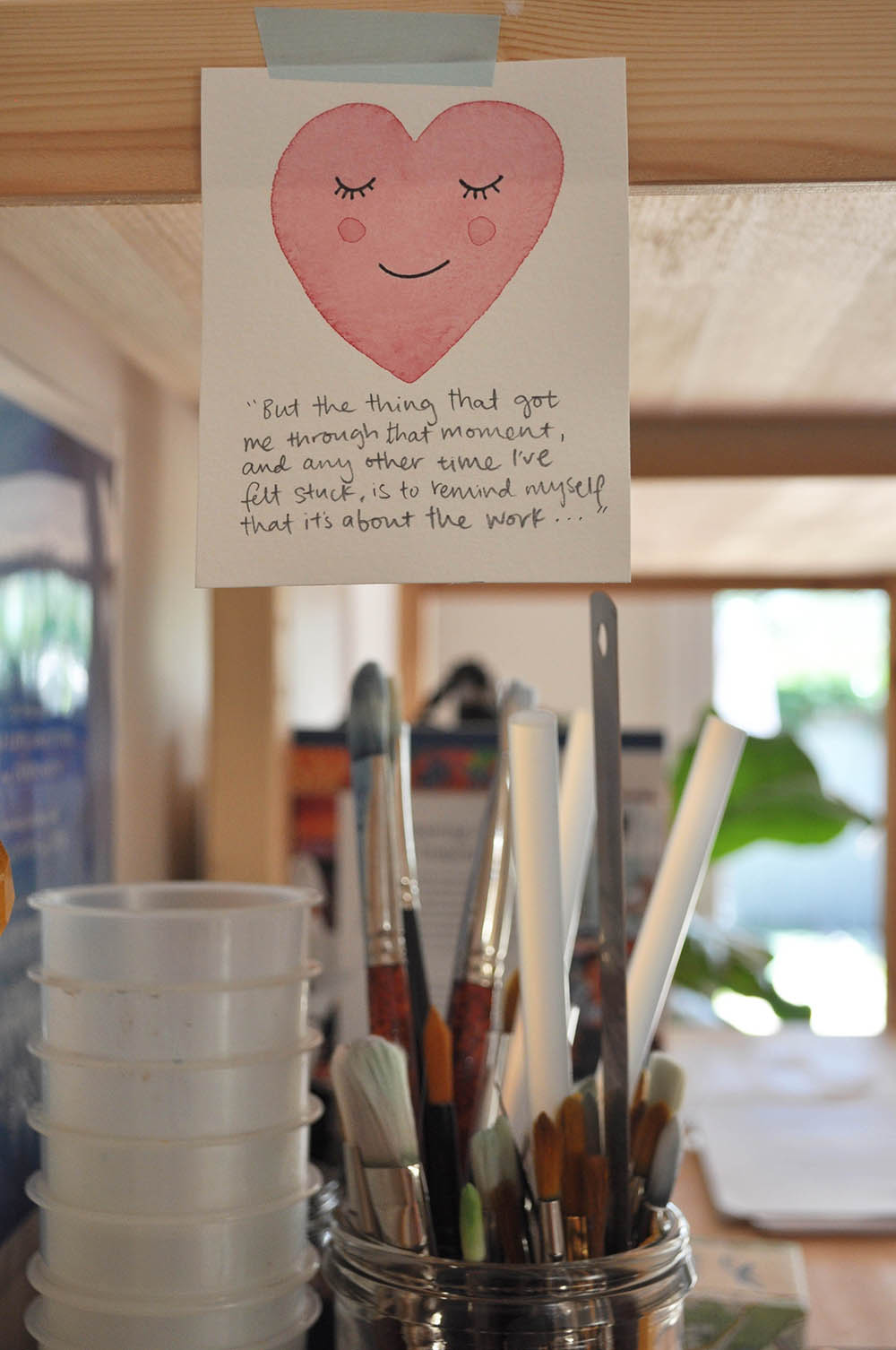
Dawn’s Tip Dawn encourages women who want to start their own creative business, or who struggle to juggle their business with other demands, to believe in themselves. “Don’t doubt yourself,” she said. “I’ve learned over the years that if you’re going to sit there and hesitate and doubt yourself and think, ‘What if? What if?’ then it’s never going to happen. Just do it. If you fail, you fail. Dream big; go do it. If you don’t try, you’ll never know.”
To find out more about Dawn and her work, visit her website or follow her on Instagram (@handmadelove).
Photos and podcast audio production by Jenni Mazaraki
Jenni Mazaraki is an artist, designer, writer, and podcaster who helps women tell their stories. She is particularly interested in the ways women make time and space for creativity. You can see more of Jenni’s work at localstoryspace.com, on Instagram (@localstoryspace), or on Facebook.
Taking a leap: going out on your own

I always wanted to be an artist. As a teenager, I had romantic notions of living in a studio surrounded by canvases, paint, red wine, and cigarettes while I suffered for my art. I lived this dream for a while when I moved out of home and undertook a Fine Art/Visual Arts degree straight out of high school. I rushed through my early foundation classes in sculpture and silver-smithing, awaiting my longed-for painting instruction. Alas, after undertaking my foundation course in painting I realised that my love of arts and passion for creating weren't enough. I was surrounded by amazing artists, I was invisible to my lecturer, and my work was far below my expectations. I hadn't learnt yet that comparison is the death of joy. I didn't know not to compare my "chapter one" to someone else's chapter twenty. I just felt a sense of failure and fear. And as a seventeen-year-old living in a world of adults, I assumed the answer was to drop out.
I’m so pleased that a friend and fellow student talked me out of such ideas, so pleased that I stuck it out. I fell in love with and majored in my next foundation area: intermedia (a mixed-media approach to fine art). Here I learnt how to become an artist: how to question, see, experiment. I was given free rein over photography equipment and a darkroom. I learnt early Photoshop and built a website, created sculptures and installations, journaled, and exhibited my work. I still didn't know what I was going to “do” when I grew up, but I trusted that I would work it out.
To complete my degree, I needed to tick off two final classes. My financial situation had changed by this point, and studying silver-smithing became a viable option. It seemed like an enjoyable way to meet the requirements of the degree. After three years at Uni, these last two classes actually decided my future, for it was here that I found my medium and decided to become a jeweller. I fell in love with the rigidity and flexibility of metal. I was enthralled with the techniques and history of the practice. It was sculpture in miniature, designed to be worn. It was craft, art, and a trade. The day after I graduated I started applying for jewellery apprenticeships. I wanted to be a “real” jeweller, with a secure, guaranteed income as I learnt the craft, and the ability to create work and exhibit in my own time.

Finding an apprenticeship is no easy task. I spent the next several years working in jewellery stores as a sales assistant, getting whatever time and training I could at the jewellery bench and learning anything else I could in the process—from pearl threading to Diamond grading, gem identification to antique hall marks. I learnt sales strategies, stocktake, and stock and package ordering. I met suppliers and went to industry launches and trade fairs. I took a twelve-month jeweller vocation course at the Goldsmith school. I worked with several jewellers and finally started an apprenticeship, only to lose it when the business ran out of capital. After all this time, effort, and learning, I still wasn’t a real jeweller.
By the time I took maternity leave with my first child, I was so burnt out on the jewellery industry that I settled in to being a stay-at-home mum and didn’t touch the tools in my workshop for more than eighteen months. Eventually, I made a silver pendant as a gift for a friend. Then I made my sister a pair of earrings. Online sales platforms like Etsy and Madeit were taking off and friends suggested I sell my jewellery online. So I did, as a hobby.
With hindsight, I can join the dots, but at the time I couldn’t see the forest for the trees. The thought of starting my own business hadn’t occurred to me. I thought I would return to the workforce as a jewellery sales assistant and keep trying to get an apprenticeship, chasing the elusive dream of becoming a “jeweller.” I thought receiving my apprentice certificate would remove the imposture syndrome I felt. But as I kept making and selling my jewellery, I realised that the certificate was only important to me. When people brought my pieces, they didn’t ask if I was a “real” jeweller, self-taught, or a bit of both.

Change came rushing in after listening to Clare Bowditch speak at a Big-hearted Business morning tea. I had begun tossing up the possibility of selling my wares at a local craft market in a school hall, still with a hobby mindset. Clare encouraged us to get out pens and paper and write down where we wanted to be in five years’ time. For the first time, it clicked that in five years’ time I could still have a hobby—or I could own my own business. I decided to apply for that craft market! After the event I chatted with creative business owners and shared my revelation. They were pleased, but offered another revelation: don’t aim small. Find the best market around for what you want to sell, and apply for it. That day, a fire was lit inside me that still hasn’t gone out.
My hobby became a business the moment I decided to treat it like a business. I had to embrace fear and question my belief that I wasn’t the sort of person who could own a business. I applied for the Brisbane Finders Keepers market and spent the next couple months making stock and learning everything I could about business. I launched Christina Lowry Designs in November 2013 at Finder Keepers.

Now in my fourth year in business, I consider myself not only a “jeweller,” but a designer, mentor, and businesswoman. Everything I have learnt, from my fine arts degree to my sales work, has been incorporated into Christina Lowry Designs. I define my own work life balance. My family is my priority. My passion and drive continues. I believe in lifelong learning. I read, listen to podcasts, collaborate with other creatives, and take courses. And every day, I am so glad I took the leap and went out on my own.
Photos by Trudi Le Brese Photography for Christina Lowry Designs
Christina Lowry is a designer and jeweller who makes fine jewellery for creatives. Her work is featured in several Australian galleries, as well as in her online store. Christina fell in love with jewellery making while studying a Bachelor of Fine Art/Visual Art. Each piece is lovingly made by hand in her Brisbane workshop, incorporating precious metals and gemstones, using traditional metalworking techniques.
Studio visit: Anna Walker, picture book author and illustrator
Anna Walker is one of Australia’s most established and beloved picture book creators. She has published twenty-fivebooks in a career spanning twenty years. Her newest book, Florette, has just landed in bookstores and is a beautiful meditation on how to become comfortable with change.
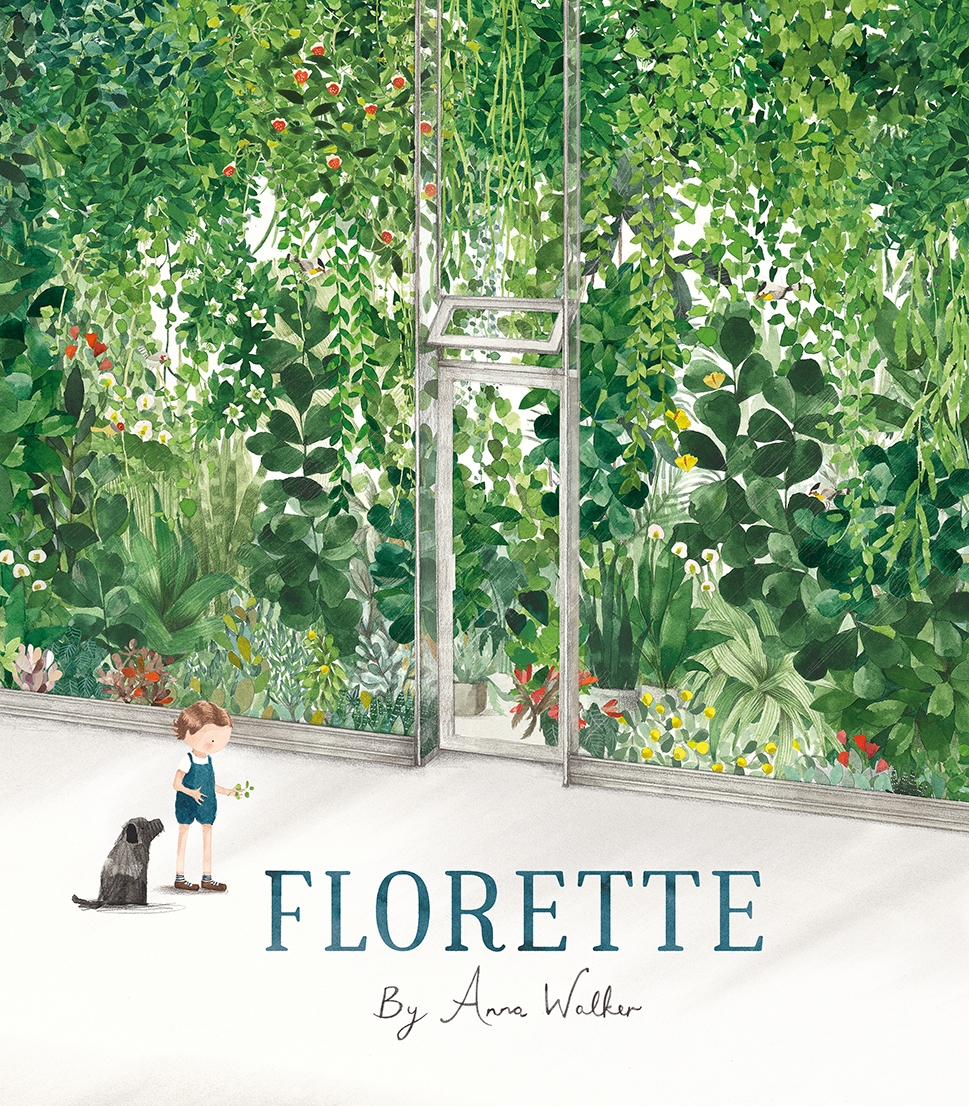
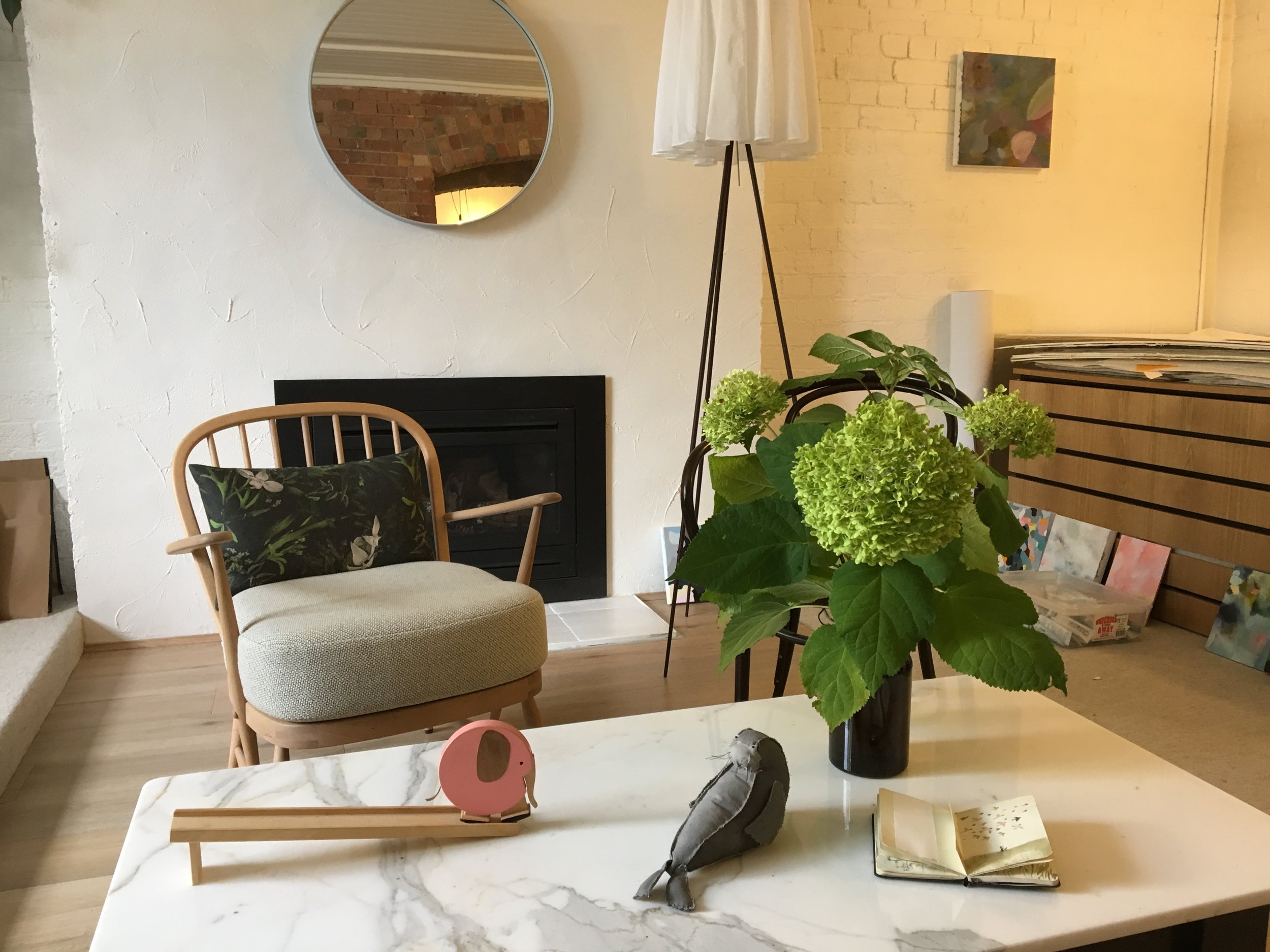
I met Anna in her studio, a converted shirt factory she shares with a printmaker, an interior designer, a tea importer, and a book designer. You know you’re talking to a visual thinker when she says, “I wish I could respond to your questions with a painting instead of with words.” But as you read on, I think you’ll agree that Anna’s words more than suffice!
Starting out
Anna had the good fortune of knowing what she wanted, right from the get go. “I remember looking at the illustrations in a book of fairy tales and thinking, ‘Those are so beautiful; that’s what I want to do when I grow up,’” she said. How did she turn that early inclination into a rewarding career? It was hard, she explains, and there were obstacles, but she would “try to find ways of overcoming them.” Anna is petite but possesses a stubborn determination, to which she largely credits her success.
After studying graphic design at Swinburne University (where “there were no illustration courses,” she said), Anna set up shop straight out of school. Her parents ran their own business, so working for herself felt more like a natural step than a leap of faith. Besides, she says, “I had nothing to lose.” At first, it was all design work. Whenever there wasn’t enough work, she would invent briefs for herself and treat them as real commissions. After a few years, all of her work was illustration-based. Gradually, picture-book illustration became the foundation of her business.
The importance of presentation
For illustrators still building their businesses, Anna stresses the importance of presentation and attention to detail. Small details—like a visual link between your website and your business card—matter. She also suggests finding ways to put your work in front of potential clients, both online and in hard copy. This might mean incorporating an illustrated element into your email signature, or sending out postcards, bespoke holiday cards, or, occasionally, original artworks. “People don’t get that kind of thing very often,” she said, “and they appreciate it.”
Giving work space and time
Anna and her character Mae in Florette have something in common. They like to be immersed in an environment that is beautiful and familiar. While Anna’s studio retains the exposed brick and pipework of its industrial heritage, she has transformed it into a bright, welcoming space. It feels like a loft, though it is actually a basement.
Her desk looks out through an arched window at street level. She enjoys watching the passing foot traffic, including a Greek neighbor who always bends down to wave hello and children who look through her window.
“I’ve always shared a studio,” she said. “I go a bit crazy working by myself at home.” Having others around provides moral support and an exchange of ideas, both vital to a happy work life. And from a business perspective, having to meet an overhead (rent) pushes you to find work.
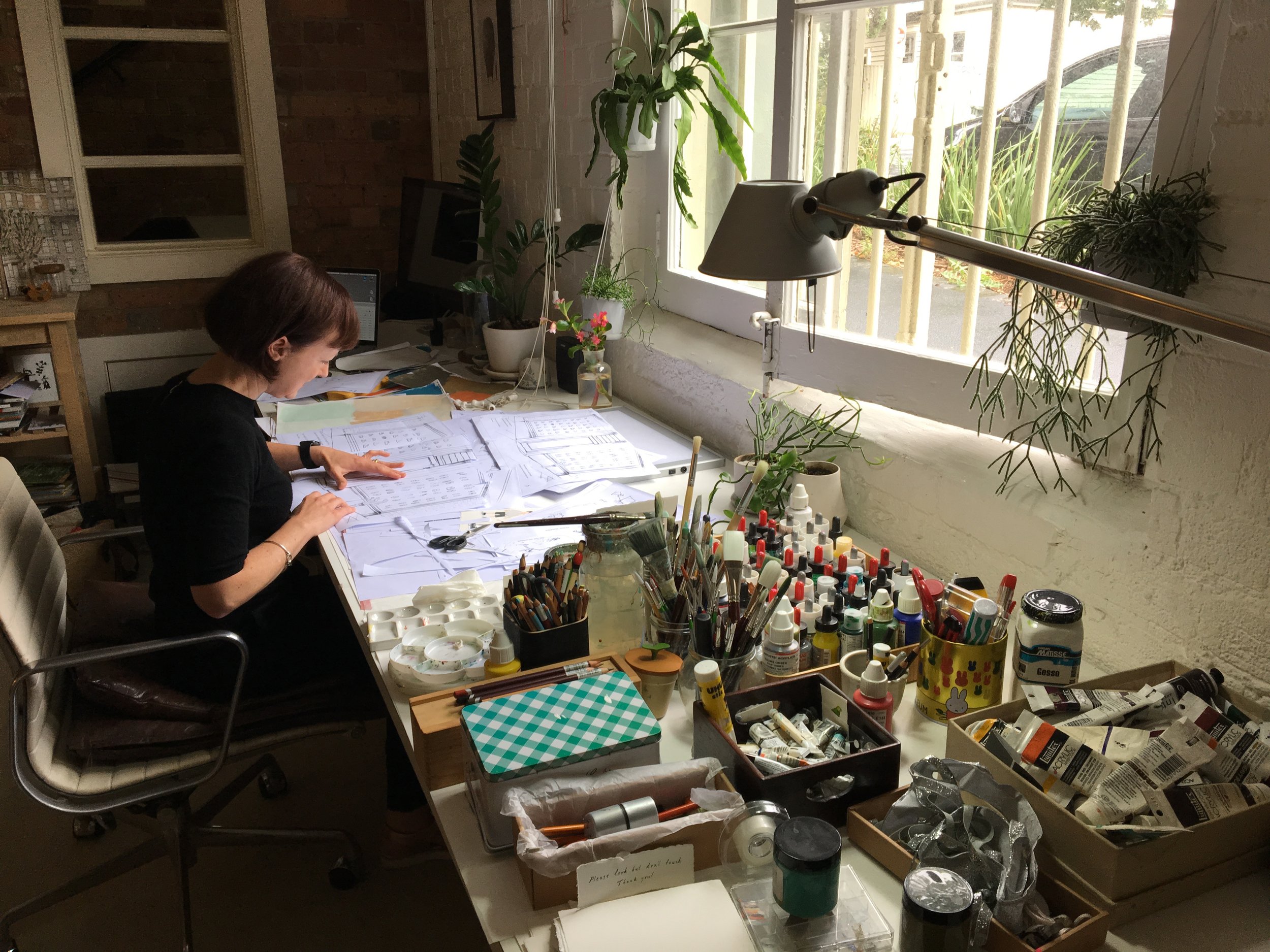
Just as important as environment is time. Anna devotes a year to each book, a pace that allows her to let the work develop fully, take on select commissions to subsidize her picture-book work, and be present for her three teenage children.
Personal style
Anna uses a variety of techniques in her work, including collage, woodblock printing, etching, watercolour, and ink. She’ll sometimes redo an illustration twelve times before she feels it’s right. Regardless of the method, her illustrations always seem to strike the perfect harmony between detail and simplicity.
Anna suggests not worrying too much about developing a personal style. “It was years before people started saying, ‘I recognize your work,’” she said. “You can’t have a style until you’ve got a volume of work behind you. Just do the work.”
The power of knitting
Like many creatives, Anna references self-doubt as one of her biggest challenges. She tempers those unhelpful thoughts by running three times a week, sharing a studio, keeping in touch with other illustrators, and…knitting. Anna knows she’s bringing too much work anxiety home when her husband says, “Now, where’s your knitting?”
I asked Anna what she does with her ideas-in-waiting: ideas she’s had but hasn’t had the chance to use. Her response was golden. She thinks of ideas as little scraps of fabric. A book is like a sewing project: you assemble the bits you need, make a start, and keep going until it’s finished. “You don’t need to feel badly [about the ideas that] haven’t been used yet,” she said. “They’re just waiting there, ready to make the next thing.”
Meeting business challenges
For many illustrators, the biggest challenge is making a living. “Getting your folio out there and meeting with publishers is important,” she said. “When things are quiet, you worry about when the next job will come in. But that’s when it comes back to sending out postcards, freshening up your website, reminding people you’re here. If your focus is book illustration, joining the Australian Society of Authors is a must.”
Certain things, like cold calling and quoting, never get easier. Anna doesn’t have to do the former as much these days, but her motto when something’s difficult is: do it anyway. She suggests viewing cold calling, networking, or whatever “thing” you find difficult as just one part of your business.
If you’re not sure how much to charge for a job, Anna suggests talking to other illustrators. Take into consideration how the artwork is going to be used. Is it for one product, or multiple products? Will it be used locally, or globally? Also consider the duration of the usage license. Is it for one month? One year? In perpetuity? “I don’t part with copyright for anybody,” she said. There’s a way to give the client what they need and protect yourself. As she explains, “An exclusive license has just as much weight as copyright.” Don’t be afraid to request amendments to your contract.
What’s next?

“I’m working on a book with Janie [Godwin, a long-time collaborator],” Anna explained, “and I’m also working on my own story about a walrus.” Anna often starts a project by crafting her character in toy form. She showed me a loosely stitched walrus plushy. “So far, that’s what I’ve got,” she laughed. Recently, the final step on her projects has become creating a book trailer using stop-motion animation.
“I’ve always believed in the picture book as an art form,” she said. “It’s important to me that every aspect is crafted to be the best it can be.”
For more about Anna Walker, visit annawalker.com.au.
Jo Watson is a Melbourne-based screenwriter and artist. Visit her on Instagram (@diaryofapicturebookmaker).
Photos by Jo Watson
What is (creative) leadership?

Discussions of leadership are all around us. Business titans and sportsmen offer up the secrets of leadership in countless “how-to” books lining the walls of airport bookstores, yet we hear less about creative leadership. We’re more likely to see a leadership book written by the captain of the Australian cricket team than by the director of a blockbuster film. Personally, I don’t think we give creative leaders the respect they deserve.
Have you ever stopped to ask: what actually is leadership?
We are told by employers and business coaches that we all should aspire to be leaders, but there’s actually very little agreement as to what leadership is. In 1994, one researcher wrote that more than seven thousand academic articles had been written on leadership. Even with all these words, no definitive definition has been agreed upon, then or since.
Different perspectives of leadership For some, leadership relates to hierarchy: those in management and in positions of authority or seniority. In art and culture, we often look toward artistic directors, gallery heads, CEOs, and general managers of our large institutions as examples of community leaders. But leadership is not management. The operational running of an enterprise is an exercise in the coordination of resources and administration; it’s not leadership, which is removed from day-to-day operations.
Theoretically, what constitutes leadership has changed over time. At first, leadership was considered an innate set of qualities identified in a lucky few. This was known as the “great man theory,” for obvious reasons. While the “leaders are born, not made” argument seems easy to dismiss, it has recently returned to popularity, with studies linking leadership to physical characteristics, such as height. Some have even claimed to uncover a “leadership gene.”
In the 1950s, focus shifted to understanding what leaders do. Leadership became a set of behaviours that could be learned and applied. We all could be leaders if we developed the right skills—a view still prevalent in the world of leadership development today. Unfortunately, this approach often neglects the environment in which leaders operate. In response, research began to consider the context, or situation, in which leadership occurs. In all these theories, leadership is embodied within an individual, with a strong focus (particularly since the 1990s) on characteristics such as charisma.
In more recent decades, however, there has been a shift to consider leadership as a more holistic concept. A widely shared TED talk by Derek Sivers, called “How to Start a Movement,” highlights the crucial role of the first follower. Critics of traditional leadership theory tell us that what we call “leadership” neglects the incredibly important role of followers. Leadership is not embodied in one man (or woman), but is a process that occurs between people. Without followers, there is no leadership.
For most of us, particularly anyone working in the creative sector, where, according to the 2011 Australian Census, more than 90 percent of people work in businesses of less than twenty employees, leadership can be something else entirely. Leadership in the creative sector is often what is known as distributed, or relational. It is a fluid process that exists in networked groups, which come together to achieve shared goals through collaborative processes. It doesn’t relate to job titles or pay grades, but emerges within a group to guide the team as needed at a particular moment, and may change from person to person as required.
Is creative leadership different than “regular” leadership? Discussion of creative leadership has echoed the development of leadership theory in many ways. Leadership in the creative sector has been studied predominantly from the organisational perspective, examining the intersection of the artistic and the administrative in large arts companies or institutions.
In today’s knowledge-driven economy, however, where companies aspire to be the next Apple, creativity and innovation are seen as “silver bullets,” leading many in the business world to examine creative leaders with renewed focus. Orchestra conductors, for example, with their ability to bring seventy musicians together into a single, cohesive musical unit, are seen as leadership role models by many. And theatre directors, who enlist diverse talents to construct and communicate a shared vision, are identified as great un-lockers of creative potential.
Leadership and creativity are similar in that they were both originally thought to be individual qualities. As in the “great man” theory of the past, creativity—or talent—was seen as a “gift” bestowed on a lucky few. We now know that creativity and leadership both emerge as processes between individuals, and can be fostered and shared.
For many, leadership has always been linked to the achievement of defined goals. But for a creative individual or organisation, goals might be harder to quantify than for a bank or retail organisation. Creative leadership is not as simple as breaking even, or delivering a return to shareholders. Leadership in the cultural sphere is, as Sydney Festival Director Wesley Enoch writes, “…creating space for opposing voices, about imaging a future, exploring the repercussions of our values and promulgating public debate through the work we make and the relationships we create.” (Source: “Take Me to Your Leader: the dilemma of cultural leadership,” issue 40 of Platform Papers).
Creative leadership is about more than meeting performance goals. It is about imagining a future for our communities, and bringing people together to communicate those visions. This is what makes creative leadership such an exciting concept.
What does this mean for you as a creative practitioner? When someone asks if you are a leader, do not measure yourself against an idealised, organisational version of leadership. Consider instead your vision and the ways you are achieving it in partnership with others. This is what makes you a leader.
Kim Goodwin is an academic researcher and arts manager with a background in leadership, human resources, and career development. Since leaving her corporate career, Kim has focussed on building understanding in how creative leaders are developed while working in a variety of arts organisations and academic environments. She can be found on LinkedIn, or follow her on Twitter (@KimAroundTown).
Allow creativity to fill the vacant spaces in your life
In my creativity coaching practice at Creative Cocoon, I’ve found that although most clients come to me for help with larger creativity projects, they often report the most significant positive change from our work integrating creativity into their everyday lives. Integrating creativity into their everyday lives—huh? What does that even mean?
Many people use the term “everyday creativity” to describe the creative thinking involved in solving everyday problems, such as using a paper clip to poke out the SIM card in your phone. I prefer to use it to refer to integrating creative and artistic thinking and expression into our daily activities, something I call micro-creativity.
What is micro-creativity? In my definition, micro-creativity refers to small, self-contained creative or expressive activities that you perform in your daily life. The main purpose of micro-creativity is to strengthen your creative habits without the anxiety often associated with larger projects. You can also think of it as creativity for creativity’s sake. Here are some examples:
- Whilst waiting for your son to get out of school, you people-watch and imagine their backstories and personalities.
- On your morning tram ride, you write short poems to express your current state of mind.
- During lunch breaks, you wander the streets and take photos of details that catch your eye.
Benefits of micro-creativity You can’t substitute all of your downtime with micro-creativity; your brain would fatigue. But sacrificing just a small chunk of mental “lazy time” each day can, I believe, result in many benefits, including:
- Increased creative problem solving. Tapping into your creativity at random times strengthens the connection between your logical and creative minds, which helps with problem solving in your work, creative, and personal lives.
- Increased self-awareness. The more you interact with your creativity, the better you understand and appreciate its existence, warts and all. Building a stronger relationship with your creativity can benefit your creative process and help you develop your sense of self.
- Increased confidence. The more you practice, the better you become. By improving skills, you gain confidence and a sense of capability in your creative life.
- Increased wellbeing. Creative self-expression without boundaries, deadlines, or judgment can help you work through personal issues and channel emotions (although self-guided creative therapy is no substitute for professional help).
- Increased discipline. Practicing daily micro-creativity gets you into the habit of regular creative expression, which can help reduce anxiety (and procrastination) around your larger creative projects.
- Increased observation skills. Micro-creativity can help improve your observational skills, which are key for creative thinking and expression.
When and how to micro-create You can micro-create whenever you have mental downtime, which means whenever your full attention is not focused on another task. Some examples include:
- Waiting in queues
- Riding public transport or as a passenger in a car
- Walking
- Taking lunch breaks
- Swimming laps or running on a treadmill
- Cleaning
- Showering or bathing
- Waiting on hold on the phone
- Resting
Micro-creativity activities are limited only by your imagination. Some examples are listed below, but be creative and make up some of your own.
- Take photos of interesting details.
- Write a poem.
- Write stream of consciousness.
- Draw or photograph self portraits over multiple days.
- Watch people and make up their backstories.
- Tune into your senses and record what you see, hear, smell, taste, and touch.
- Play a word game, such as a rhyming game.
- Doodle mindlessly or draw patterns.
- Record a voice memo of your observations or thoughts (as if you were a private detective).
- Imagine life from someone else’s perspective. What are they experiencing in that moment?
- Write a letter to your future self, then reply as the future self back to your present self.
- With headphones on, listen to music and imagine what the music would look like if it were a painting.
Conditions In order for your exercises to count as micro-creativity, you need to meet the following conditions:
- Don’t think, just do. Don’t overthink the activity. Tune into “doing” mode (rather than “thinking” mode) for the duration of the activity.
- Minimise judgment and pressure. Put your inner critic aside and accept whatever comes out as part of the process. There is no “good” or “bad.” To help, imagine a child has done the exercise. You wouldn’t judge her on the final work; you would simply be proud of her for putting in the effort.
- Choose your content. Work with content unrelated to your current projects to reduce the risk of anxiety. After a while, you’ll be surprised how often random creative exercises turn into something bigger or link back to a larger project.
- Keep it quick and dirty. Limit your exercises to between five and fifteen minutes. Any longer and your inner critic will step in. If it helps, set a timer. Remember, it’s the process that counts, not the result.
- Commit. Commit to at least one activity a day, even when you don’t feel like it. Routine and persistence bring the longer-term creative benefits. Think of it like brushing your teeth. If it helps, decide on a regular time and set a phone alert or calendar entry.
- Minimise distractions. Try to minimise distractions whenever possible.
- Enjoy yourself. The more you enjoy an activity, the more likely you are to continue doing it. Choose exercises that are meaningful, fun, and enjoyable.
- Change it up. Be creative and choose different activities from day to day. The examples above are just the tip of the iceberg.
Additional resources If you'd like to read more about integrating creativity into your everyday life, I recommend the following books:
- Just Do Something, by Mykel Dixon
- The Creative Habit, by Twyla Tharp
- How to Be an Explorer of the World, by Kerri Smith
- The Creativity Challenge, by Tanner Christensen
- Flow, by Mihaly Csikszentmihalyi
Bronya Wilkins is a creativity coach and founder of Creative Cocoon, a coaching practice dedicated to helping people connect with their creativity to increase wellbeing and life fulfilment. Bronya is passionate about psychology, self-development, and creative expression. Some of her creative hobbies include dance, graphic design, music composition, and photography. For more about Bronya and Creative Cocoon, visit her website and Facebook page, or follow her on Instagram and Twitter.