
Creative women at work: Maryanne Moodie, fibre artist

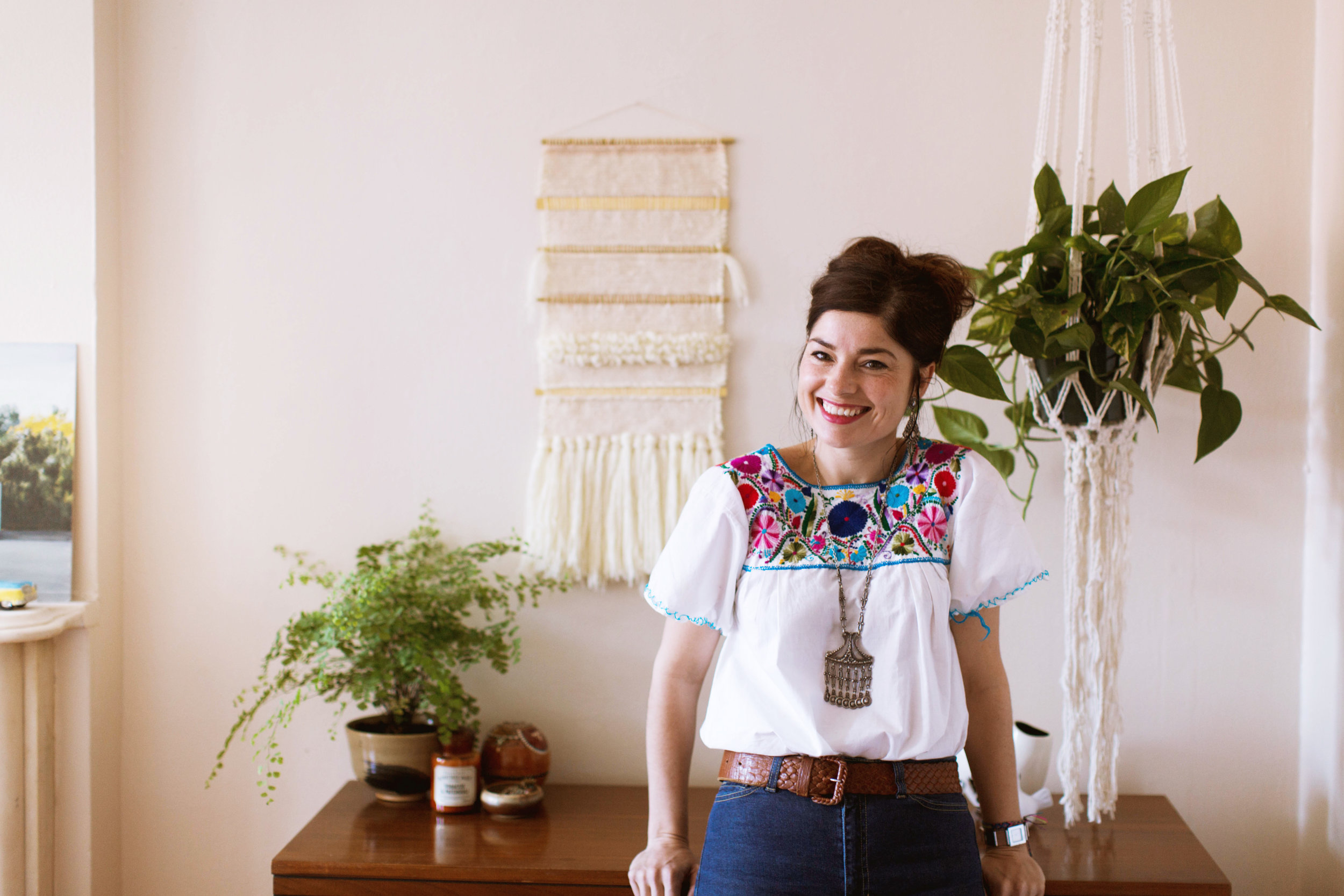
Maryanne Moodie is an Australian fibre artist, teacher, and business owner who splits her time between her home in Brunswick, Victoria, and her studio in Brooklyn, New York. Known for using unexpected colours in vintage-inspired woven pieces, she has re-energised weaving with her innovative designs and passion for the craft. Maryanne teaches workshops locally and around the world, runs a thriving Etsy shop, and has been featured on everything from The Design Files and Design*Sponge to New York Magazine. Her book, On the Loom, was published late last year by Thames and Hudson. I caught up with Maryanne to chat about weaving, community-building, and the surprising perks of not having a plan.
Can you tell us about your background and how you fell in love with weaving?
I’ve always had an entrepreneurial spirit. Even during high school I used to make toffees and sell them during recess. I spent most of my time being an art teacher, but I also had a business on the side, sourcing and selling vintage fashion.

I got pregnant, and during my maternity leave, as I was cleaning out the art storeroom with another teacher, we found this old loom. I took it home and loved it immediately. I’d tried other crafts before—macramé, ceramics, jewellery making—but nothing fit until I started weaving.
I had a little social media following from my vintage company and put up a photo of my first piece. Everyone went bananas! People started asking, ‘Can I buy that?’ ‘Can you make me something?’ It was my husband who said I shouldn’t sell anything for a year. I was still learning, and wanted to be proud of what I sold. So I waited.
When did you turn weaving into a business, and what did that evolution look like?
During that first year, I kept sharing my weaves on social media but didn’t sell anything. I gave all of my pieces away. I would ask my friends, ‘Can I make something for your shop?’ And they would say yes and hang them. Lucy from the Design Files walked into a florist where I had one hanging and asked if she could feature me on the blog. I didn’t even have anything for sale yet. I actually asked her, ‘If I’m going to sell one of those, how much should it be?’
By the time I was ready to sell, I had a huge market of people wanting to buy my stuff. Soon, people wanted to learn how to weave. That was when Megan Morton from the School found me. She taught me how to do this elegant way of teaching, turning a class into a beautiful treat: have a glass of champagne, be fulfilled, chat with someone. She made me love teaching again.
People saw my photos of teaching and said, ‘I can’t make it to the classes, but could you sell me a kit?’ So I started making kits. And then people were like, ‘What book should I buy? I can’t find a good book.’ So I thought, okay, time to write a book. Then people said they liked the book, but did I have an online course? So we’ve been filming online courses. It’s really been about listening to what my customers want.
Social media has been a big part of building your brand. Which channel has been the most effective for you?
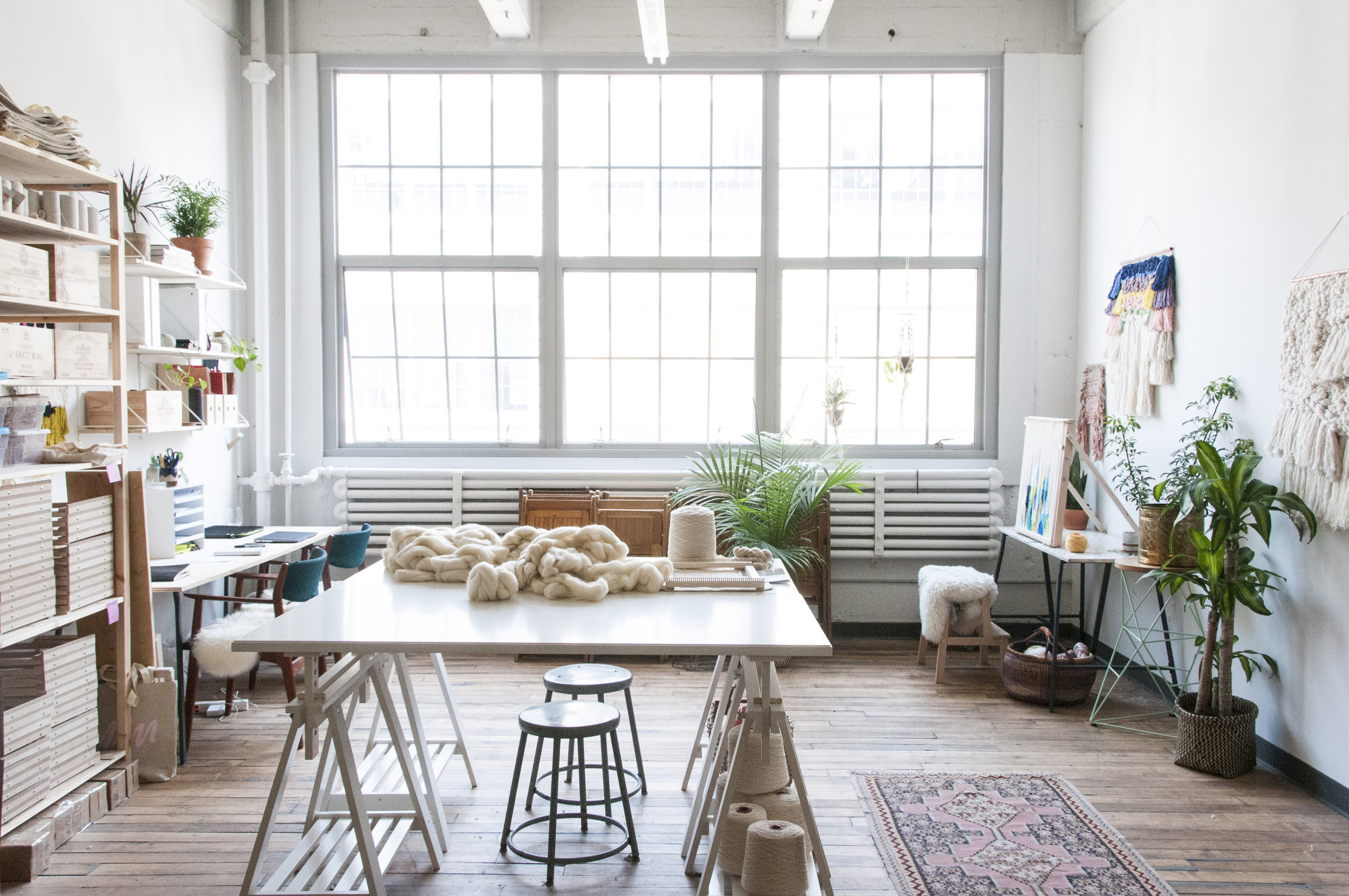
Instagram. I love the community-making side of it. I love how if someone writes something, I can look at their feed and message them. If I really liked what someone was doing, I would say, hey, do you want to do a swap? I would take a photo of their work and share it with my community, and they’d do the same. You end up sharing what you love.
There was a bittersweet moment when I hit about 25,000 followers. I used to reply to every comment, but it got to the point that every time my child looked away, I’d whip out my phone to respond to people. Then he’d turn back and see me. I realised, I need to respond to my child. Now I post only once or twice a day. I read the comments to know what’s going on, but I allow the community in my platform to help each other.
How do you gear yourself up to take risks in your business?
When I think up my own ideas, they’re sometimes right. But when the ideas come from what my customers are asking for—they’re the most successful. It’s about not having a plan and just listening. If I had a plan, I would miss opportunities to the left and right because I’d be so focused on what’s ahead. If you’re open to listening, you’ll always have a market for your product because it’s what people are asking for. It doesn’t feel like a risk.
You work between Melbourne and New York City. How does that work?
We moved to the U.S. because [my husband] Aaron got a job with Etsy. At the time, I thought I was taking one for the team, but I got to meet other artists and set up my business. We were there for 3-1/2 years. We decided to move back because we wanted the kids to do their schooling in Australia. So I came back but kept my studio there. My studio manager, Kaelyn, and I Skype every week and I prattle back once a season. I don’t know how long I’ll go on doing it like this, but I’m just going to jam it out and see how it goes.
How did being Australian affect your time in New York? And how did your time in New York affect you as an Australian?
Australians are very self-deprecating. We’ve got the whole “tall poppy” syndrome. You never big yourself up, talk about your achievements or how wonderful your work is. I have a little of that, but I’m also able to push forward and take risks and grow unselfconsciously, which is a bit more American. I have a balance of both. I try to push myself forward by pushing other people forward, too. Rather than saying, ‘Look how amazing I am,’ I want to bring people along so we can make weaving amazing together.
What are you looking forward to doing with your business in 2017?
I did Vogue Knitting Live in January and there were yarn stores looking at what I do and saying, wow, we want to stock your looms. It’s a new wholesale part of my business where manufacturers can make the looms and send them to shops. For the first time, I won’t have to include my energy in things to push the business forward.
Any advice for other women running creative businesses?
Make a community of people interested in what you do—on social media, through a newsletter, however you can talk to people and they can talk to you—and then listen to them. Ask them: what do you think about this? Would you buy this? You might know how to make a product, but unless you ask your customers, you might be making the wrong thing, or doing it the wrong way.
Maryanne’s Quick Picks:
Favorite read:Apartamento magazine
Favorite podcasts:Two Dope Queens, On the Media, Lore
Favorite Instagram feeds:@popandscott, @jordi_pordi, @tanyaauiniga
Designers, creatives, or brands: Pop and Scott, Jordana Joan, Tanya Aguiniga, Cindy Zell
Favorite places to go for inspiration: In New York, the Museum of Arts and Design (MAD). In Australia, anywhere near the water.
Most inspiring friend or family member: My female friends and family. We’re doing everything—running businesses, taking care of our families, taking care of ourselves (when we can)—with grace, tenacity, and grit. Females are my inspiration.
For more about Maryanne, visit her website and Etsy shop. You can also follow her on Instagram at @maryannemoodie. Her book, On the Loom, is available wherever books are sold.
Julie Mazur Tribe is an editor and book publishing consultant with a lifelong addiction to paper stores. She can be found at BrooklynBookStudio.com or on Instagram at @brooklynbookstudio.
Tax basics for small creative businesses
Just want to be creative and not think about your tax? So do most of us, however there are many administrative tasks to running a small business and sometimes they can get in the way of being creative and doing what you love. Unfortunately, most of these tasks are important and avoiding them can land you in trouble. Tax is definitely one of those things, admittedly one that a lot of people find the least enjoyable. Here are some tips to help you prepare for your tax.
Business versus individual It can be really easy to lose the distinction between “your” money and “the businesses’s” money, especially when you’re just starting out or are a sole trader. To make tax simpler, ensure that these are clearly defined. A simple way to do this is to have a business bank account in addition to your personal bank account, and make sure all funds going in and out for the business are coming from here. It’s not a bad idea to have a few business accounts, such as a savings account, a credit card, and a GST payment account (if applicable) that you can transfer funds into as sales are made.
Be ready Don’t leave it to the last minute; it is much easier if you prepare yourself as you go throughout the year. When it comes to your tax, you need supporting documentation. So instead of scrambling to find your receipts at the last minute, file them as you go. The ATO will accept electronic or paper receipts, so either scan and file them on your computer or put paper receipts into a folder. Find a system that works for you and is easily retrievable. The types of documentation that you are required to have are:
- Sales receipts
- Expense invoices
- Bank statements
- Credit card statements
- Employee records (wages, super, tax deductions, contracts, etc.)
- Vehicle reports
- List of debtors and creditors
- Assets purchases
Not great at filing as you go? Get a tray or plastic folder and just put them all in there. Then set yourself up a regular calendar reminder to spend thirty minutes each week or month doing your filing. That should be enough and will make tax time much easier.
Don’t forget, the ATO requires that you keep your records for five years, so make sure you keep your files once lodged.
Doing it yourself If you decide to lodge taxes yourself, you can use myGov as this is now for individuals and sole traders (e-tax has been replaced). This is an easy, quick, and secure way to lodge. Once you’ve opened a myGov account, you will get access to a number of useful calculators and tools. (Note: if using a tax agent, speak to him or her first before opening a myGov account.) There is also an ATO app that will help you record deductions, access online services, find key dates and set reminders, lodge and track your tax return, plus many other useful things. Find it in the Apple app store, on Google Play, or in the Windows phone store.
Small business tax concessions If your business is earning less than two million dollars (that’s gross income, excluding GST), you may be eligible for small business tax concessions, such as immediately writing off purchases under twenty thousand dollars. To see if you’re eligible, talk to your tax agent or check out the ATO website for more details.
Need more help? Get assistance from a small business qualified tax agent for peace of mind. There is no harm in knowing when to outsource help. Each business is different, so get a specialist to help you or have a look at the ATO’s digital services for small business tools; they may be helpful.
Being organised throughout the year will help with most aspects of running your business, and will make tax time, especially, more seamless and less stressful, allowing your creative juices to flow freely without added tax-time stress!
Jes Egan is a “practical creative” and very busy lady, doing the business in a digital agency and working as an artist and university lecturer. Follow her on Instagram at @paper_chap.
Dealing with a creative slump: 9 ways to overcome a creative block

The moment I start thinking about designing a new jewellery collection, a part of my brain panics.“Nope!” it says. “You can't do that.” And Creative Block comes to visit.
I stare at a blank page in my sketchbook. I over-think. “What if I really can’t design anything?” “How can I be original?” “What materials should I work with?” I find myself wanting to see the whole finished collection in my mind before I even put pen to paper. Eventually, something distracts me and I shut my book with a mental note to come back to designing later. But how long “later” takes depends upon how I deal with this creative slump.

While there are plenty of ways to find inspiration—Pinterest, a trip to an art gallery, a new magazine—inspiration is not action. Feeling inspired is not always enough to break through a creative slump. You need to take action to deal with a creative slump. Different things work at different times, and I have created a list of actions that have worked for me.
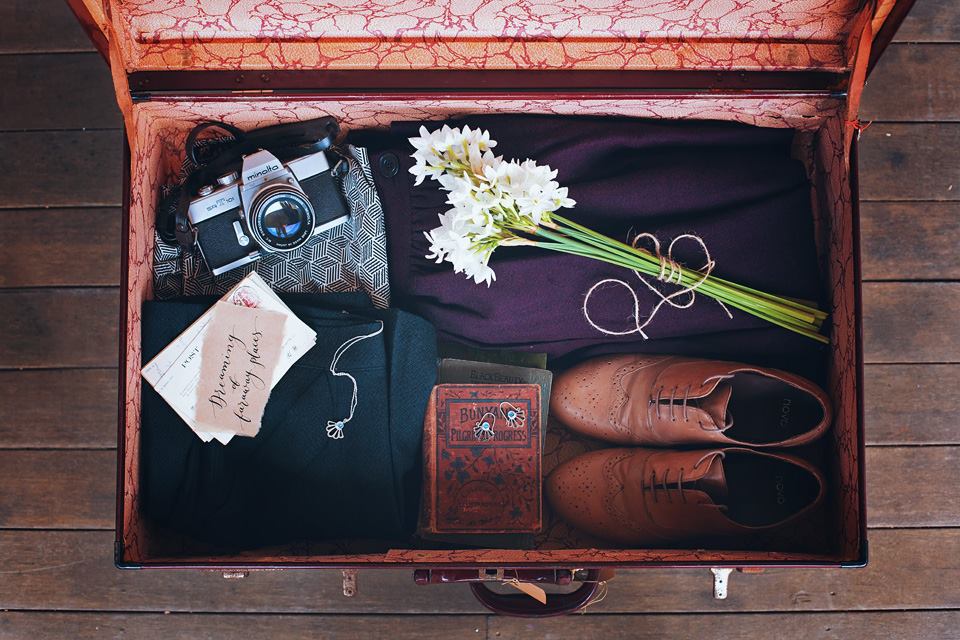
9 actions to deal with a creative slump
- Don’t start with a blank page. Break the ice with a doodle. Sketch your coffee cup, draw the design of you balcony railing, try to draw a perfect circle. It’s easier to keep making marks once a mark has been made.
- Take away the expectation. Stop thinking big (“I need to design a whole collection that will sell”) and start thinking smaller: “If I were going to make myself a pair of earrings, what might they look like?”
- Make it a habit. You will have more success by picking up your sketchbook for a short period several times each week than for one long session per week. Keep pushing ideas that you have been previously drawing. Play with scale. Introduce texture. Bring in a new shape to complement or contrast the shapes in play.
- Take a shower. If you are trying to solve a problem or make a decision, have a shower. Something about running water and a few quiet moments often results in a string of ideas.
- Look back through old sketchbooks. Flip through your portfolio of finished work. Little kernels of ideas are most likely still waiting there for you. Looking at them now, you will bring new experiences to them and never know where they could end up.
- Make something different. Try a class in basket-making, pottery, macrame, watercolours, life drawing. Rip out pictures that speak to you in magazines and create a collage. Introduce a new material to your practice. Make something you don’t have to sell and it will help you design something you can sell.
- Fill your well.Listen to podcasts. Watch films. Read widely. It is all sun and rain for the seeds you are germinating.
- Step away.Know when to give yourself space from your work and relieve the pressure. There will be flows—creative highs and lows—and you are either on the way up or on the way down. Both are necessary for creation.
- You are not your work.I struggle with this, as designing and creating is so personal. If my work is no good I feel like I am no good. If my sales drop, I often wonder what I have done. Regardless of your work's reception, good or bad, you are not your work. Make that distinction and smash the creative block that comes from that fear!
Christina Lowry is a designer and jeweller who creates fine jewellery for creatives. Her work is featured in several Australian galleries, as well as in her online store. Christina fell in love with jewellery making while studying a Bachelor of Fine Art/Visual Art. Each piece is lovingly made by hand in her Brisbane workshop, incorporating precious metals and gemstones, and using traditional metalworking techniques. Christina can be found at christinalowrydesigns.com, and on Facebook and Instagram (@christinalowrydesigns).
All images photographed by Trudi Le Brese Photography for Christina Lowry Designs
Tips on Live Painting
 by Júlia Both
“Live painting"—when an artist is commissioned to create something in front of an audience—is quickly becoming a popular entertainment option at events such as corporate dinners, award nights, underground parties, exhibitions, and cultural festivals. Painting live at an event is an interesting and non-intrusive way to entertain an audience. Most people never get the chance to see a piece of art unfold, and find it fascinating to watch it progress.
If you are an artist, live painting can be a great opportunity to network and get your art seen, though it is completely different than creating something alone in the peace and quiet of your studio. Here are some tips to help you paint live in front of an audience.
Plan a piece that suits the event. When choosing what to paint, think about how you will paint it and whether it will be both interesting to watch and achievable in the duration of the event. Choose a theme and style with which you are very comfortable.
Pick materials suitable for the space. If you are painting indoors or near people eating, do not use aerosols or paints with strong fumes. If you are painting in a pristine environment with expensive carpet, don’t plan to create a piece that will involve splashing lots of paint around.
Go big. The point of live painting is for people to watch it happening. Your piece needs to be big enough so your body won’t block it, and should require you to move your arms and body, not just your hands. Unless it is a very small event, don’t go smaller than one square meter.
Prepare as much as possible. If you are feeling nervous, why not do a practice run? You can paint the same painting or something similar the day before, perhaps on a smaller surface, to check your process and palette. This will help you build confidence and plan your timing.
Depending on your style, it might be a good idea to sketch the painting on the surface before the event to save time. If you use light chalk or pencil, the audience won’t be able to see the sketch; it will look as if you are creating something completely from scratch.
Keep in mind that while you’re painting, you will be seen and photographed as much as the artwork. Think about how your choice of clothes can complement the art.
Get an efficient setup. Visit the venue beforehand so you can plan how to arrange your materials and tackle any problems with lighting, space, etc. Set up your materials within easy reach. Consider getting a small table for your supplies so you won’t have to lay them on the floor.
Use a limited colour palette. If you have to mix specific colours, mix them before the event. It will make the painting go a lot more smoothly if you have all the right colours and can just focus on applying them to the piece.
If you are using reference materials, don’t spend the event looking at them on your smartphone. Print out the images and have them somewhere accessible. I like to stick mine with tape to the floor in front of the painting, so my hands are free and I can check them easily, without detracting from the piece.
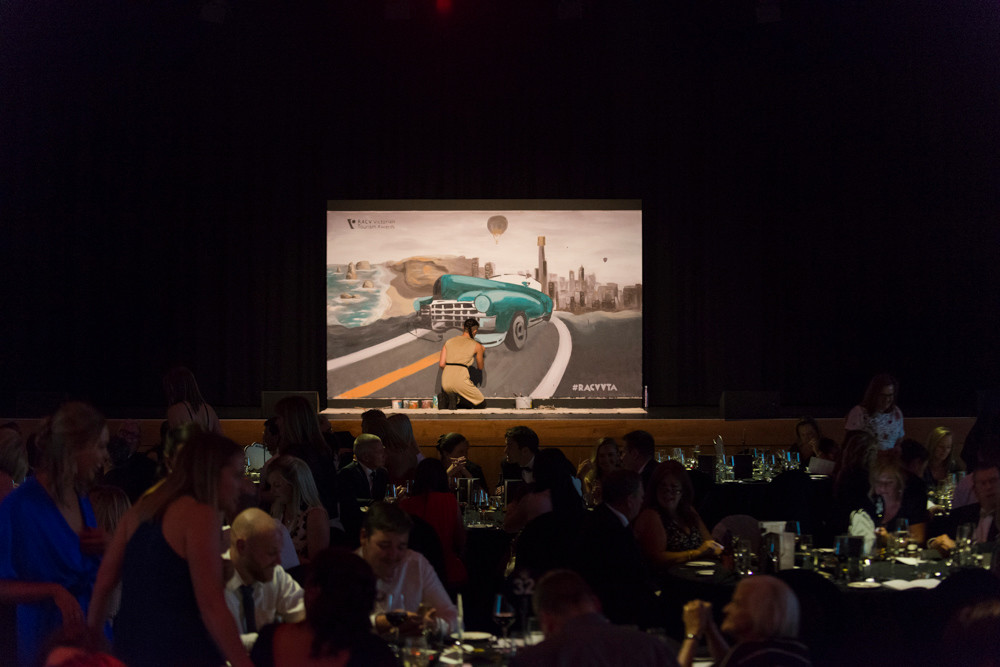
Consider movement and timing. While you are painting, think about your body as part of the performance. Can you make your movements more dramatic and interesting to watch? If possible, position yourself in a way that allows people to see your hands and the brushstrokes you make.
Guests will want to photograph your finished work and talk to you about your art. Finish your painting before the event ends to leave enough time to network. To make sure you are not going too quickly or slowly, divide your process in stages and set milestones for certain times. Keep a watch or phone handy so you can check your progress.
Remember: no one is judging you. It’s easy to feel nervous when you have an audience behind you, and to think people are judging your every move. Don’t let your mind go down that path. Remind yourself that people are there to have fun; they are busy interacting with each other, not staring at you constantly. Most people don’t understand the process behind a painting and won’t even notice if you do something wrong. If you make a mistake or spill paint, don’t panic: stop, take a deep breath, and just follow the steps to fix it.
Júlia Both is a visual artist from Brazil. Since moving to Melbourne in 2013, she has run Mayfield Palace, a partnership that creates art for businesses and organisations all over Australia. She shares her work regularly on Instagram (@artofboth) and at artofboth.com.
Australian Women in Art: Lily Mae Martin
 by Annette Wagner
If you know me, you know that I’m passionate about art. All kinds of art. I love being floored by work that conveys an emotive response or inspires me to think beyond my world of possibilities.
Lily Mae Martin’s work does just that. When viewing her incredible, highly technical drawings, I become both lost in the detail and enamoured by their complex totality. For this last “Australian Women in Art” post of 2016, Lily Mae was kind enough to answer a few burning questions, uncovering that, for her, it’s all about drawing, drawing, and drawing.
What in your personal life influenced you to pursue a creative career?
A timely question as this has been on my mind of late. I think there were a few things that led me here. I’ve always drawn, always written, always been interested in the dexterous arts. I think drawing outdid the rest because it allows me to be expressive but also hide a lot within it. There are a lot of things I try to work through with my art, and drawing is very safe for me. It keeps the hands and mind busy.
It’s also very accessible. I’ve been making my way through this world largely on my own since I was just sixteen, so I never had much opportunity in the way of money or support. I work with pen and paper, and although now it’s fancy hot-pressed paper and Micron fine-liner pens, I was also happy with the backs of forms and cheap ballpoint pens.
Your work is incredibly fine, detailed drawings. How did you arrive at this medium? Have you, or do you, explore other media for your creativity?
Drawing is (mostly) immediate. I just want to sit down and make work. I have other passions, such as printmaking and oil painting, but these require a lot more build-up and planning and space and time, and I don’t have that space and time. I'll get to those things one day, but for now, drawing is what works for me. I’ve been working for so long creating my style and setting little challenges for myself within this medium. And there is still so much to explore!
Harkening back to my admiration of printmaking, and especially etching—that’s what I try to replicate within my drawings. Building up shape and tone with tiny little lines is so very captivating for me. Of course, I see this as an ever evolving thing. Once I feel I have mastered drawing and detail, I’ll probably undo it all and get abstract and expressionist. My thinking is, if you know all the rules, you can break them. Being skillful and disciplined has always been very important to me.

Seated Nude, by Lily Mae Martin, 2016. Ink on paper, 75 x 105 cm.
Were you ever discouraged or have you had setbacks that derailed your creative passions? What are five favorite things that keep you focused, optimistic, and motivated?
Yes, very much so. Five things that keep me focused, in no particular order of preference, are:
- I love drawing.
- I feel good when I’m drawing.
- I want to master drawing.
- Drawing makes me happy.
- Drawing.
How do you manage your time and creative output with children and all that entails? Do you think having children has contributed to your work?
Not very well, but I keep trying! I have to prioritise it. If I don’t, I am not a very nice person—and then I start baking too much and it all gets very upsetting! But honestly, I don’t have a social life and I don’t make it out to events much. I just can’t do it all. It took me a few years to accept this, but once I did, I became a much happier and more productive person.
There is a lot of pressure to do and be everything for everyone, especially as a woman. But stuff that, I say. I love, love, spending time with my kid and my husband, and I love drawing. Beyond that, there isn’t much time for anything or anyone else at the moment. It may change one day, but childhood only happens once for my little one, and I intend on enjoying it and making it as magical as I can. The world can wait.
Having my child has contributed to my work in that she’s reminded me of the wonder and joy in the world. She stands in my studio and says things like, “Mummy, no one can draw like you,” and it’s the best. She was drawing before she could walk. I wouldn’t wish the art life on her, but I definitely think that the joy and problem-solving that come with creating are powerful things for humans to have in their lives, regardless of whether it becomes a career or hobby.

Lily Mae Martin in her studio. Photo by Gene Hammond-Lewis.
Do you think there is a gender imbalance in Australia’s current contemporary art system? Have you ever felt discriminated against as a female artist? If so, what was the scenario?
For sure. There’s a gender imbalance across all aspects of life, so of course there is in art as well. I feel it keenly. I think the most obvious thing is that male artists get all the air-time, the wall space, the praise. It just does my head in when men—and women—do not check their unconscious bias. Sometimes I want to jump up and down and yell, “WHERE ARE THE WOMEN? WHAT ABOUT THE WOMEN?”
Do you feel that Australian female artists have fewer resources and lack crucial financial support to go into making and producing art?
Most likely. I mean, my experience is that the few residencies I would have considered won’t allow children to go. The reason generally given is that they want the artist to have alone time to create something. That’s all fine and great if said artist has a wife, or family support. But considering that I am the wife with no family support, it isn’t very helpful.
One time I did apply for a grant—and even paid someone to help me put it all together—but the weekend before we were going to submit it, the grant was cut and no longer existed. So, really, are there any resources for anyone?
Where do you find inspiration? Do you have advice for other creatives on how to be inspired?
I find inspiration everywhere. I find it on long, long walks, and while traveling, reading, and learning about history and science. I like to watch animals and birds, and the way kids negotiate their conflicts. People-watching at the supermarket or the gym, or on long train rides and in cafes, also inspires me. Looking at art is inspiring, but I tend to draw from other things in life to bring into my work.
I think to get inspired you need to find the joy, and you need to want to explore and enjoy the process. If you don’t enjoy it, why do it? Fame and glory are the wrong reasons to commit your mind and time to anything.
Lastly, what is the best advice you have ever been given?
When I announced that I wouldn’t be drawing again, my grandmother—may she rest in peace—said, “Well, that’s just silly. You have a talent; don’t waste it.”
She also berated me for getting stuck on what was trendy, and praised my skill, though she noted that some of what I make is “repugnant.” She was a true gem of a woman.
Lily is represented by Scott Livesey Galleries in Melbourne.
Annette Wagner is a designer, marketer, creative consultant, artist, and writer. She is also on the board of the Creative Women’s Circle. Obsessively passionate about the arts and the creative process, she is determined to not talk art-speak and instead focus on supporting and sharing concepts and insights most creative types crave to know.
Branding basics: Building your brand
 By Mirella Marie
Building a brand is one of the most important parts of business, yet also one of the most overlooked. For a brand to be sustainable, it must evolve with a business’s life cycle and meet the changing needs of its audience.
Here are five things to consider to when building your brand:
- Vision
A strong brand starts with a vision. If you’re unsure what yours is, ask yourself the following:
- Who do you want to serve?
- What are your brand’s values?
- What is your “why”? (Meaning, why do you do what you do?)
Once you identify these points and present them in a clear way people can understand, you’ll start attracting an audience that shares those values and relates to your “why.”
- Credibility
It’s natural that people will wonder if you can really deliver what you say you can, so having a quality designed brand identity and website is the first step to instilling trust in your audience. Testimonials, case studies (where applicable), and high-quality photos of your work will also help alleviate doubt, convey professionalism, and establish your expertise. Credibility by association is another way to positively shape people’s perceptions of your brand, so make an effort to align your business with leaders in your industry (and others) and people who are smarter than you.
- Authenticity
There is no shortage of pretenders on the Internet, which is why being authentic is so important. While many businesses might have a tightly curated Instagram feed, people want to see what goes on behind the scenes because it’s more relatable. For example, showing sketches of your latest design will give people a look into your creative process instead of just the final product. Being true to yourself, knowing your brand, and injecting your personality into it will help you stand out in your competitive industry and attract people who resonate with you.
- Visibility
Your brand needs to be visible in order for people to recognise it. Positioning your brand in front of the right people in the right places at the right times will keep your brand front of mind and help it become memorable. For example, if there’s an event your audience will be attending, find a way to promote your brand to them through that event. The more it is seen, the more likely people are to remember you when they need the products or services you offer. Never give people time to forget about you.
- Consistency
As with anything, consistency is key to achieving results, and your brand is no different. Being consistent shows that you’re reliable; in turn, people will know what to expect when dealing with you. For example, having the same imagery across all your communications will encourage trust and brand recognition. If you’re consistent with when and how you communicate, your brand will grow sustainably.
Remember, your brand is one of your business’s most valuable assets and building it is an ongoing process that takes time, work, commitment, and passion to be successful.
Mirella Marie is the owner and creative director of Vertigo, a Melbourne-based graphic design studio specialising in brand identity and design. She is also a contributor for Women of Graphic Design, a project examining the work of female designers around the world. Join her on Instagram at @studiovertigo.
Industry insights: Game on
by Annette Wagner PAX Australia is the ultimate celebration of all things gaming, technology, and culture. This premiere video game convention was held over three days at the Melbourne Convention and Exhibition Centre, closing yesterday. So what has this to do with CWC?
When I think gaming, I don’t often think of women, but there are increasing numbers of women who work in this industry. According to Giselle Rosman, it’s an industry that is growing quickly as technology continues to change our lives.
Giselle kick-started her games career in 2007, and has worked tirelessly across many aspects of the gaming industry. She currently runs the Melbourne chapter of the International Game Developers Association and is an advocate for women in gaming.
How did you end up working in the game industry as a business administrator at Hipster Whale and executive producer of Global Game Jam?
I had been working as a games educator from 2007 to 2009, a job I’d heard about from a friend when I was itching to get back to work after having had two wonderful children. It wasn't a great time for the Australian industry, with lots of studio closures and very few graduate opportunities for students. Along with some friends, we rebooted the International Game Developers Association Melbourne Chapter (IGDAM) in November 2009. We still meet monthly and have more than 100 game developers attending each time.
Through IGDAM I started running the Melbourne Global Game Jam in 2011, and got more involved on a global scale each year in a voluntary capacity. I was asked to join the executive committee and then had a stint on the board before taking on the executive producer contract in 2015.
I also got to know Matt and Andy of Hipster Whale “before they were famous.” When Crossy Road took off, I offered my business administration skills when they needed them.
What sort of training did you complete, and what program knowledge did you need, to start working as a business administrator and executive producer? My roles in games are a bit “left field,” as is my formal training. I completed an advanced diploma of business administration back in the day, and have fallen into event management roles though my career and hobbies.
As a business administrator and executive producer, what does your job involve?
For Hipster Whale I do general admin tasks, including accounts management, HR, and dealing with office management and email enquiries. I've also been involved in setting up and expediting merchandising plans, and working with film and television studios that are interested in having Crossy Road in their productions. It's been wonderful to see Crossy Road arcade machines pop up all over the world, and to know you had something to do with that.
Global Game Jam is a people and time-zone management role. The buck stops with me for running a 48-hour game-making “hackathon” in January, which in 2016 was held in 93 countries over more than 630 sites. This involves a lot of project and people management, looking after sponsors, and managing social media and the website (globalgamejam.org), about 40 regional organisers, and more than 600 participants (jammers). We have a very busy Slack at peak times!
Game designers often create video games as part of a team. They come up with the game’s concepts, characters, setting, story, and game play. Designers must work with artists and programmers to create the scripting language and artistic vision for a game. Do you have any tips for managing the creative collaboration process?
I am only very peripherally involved in any creative processes with relation to game development, but I do work in a small team at Hipster Whale, and a big team with Global Game Jam, and it always comes down to two things: communication, and respect for your colleagues.
Do you use any apps or project management and time saving processes to remain agile and manage such a multidisciplinary process? I live in Slack and Trello, mostly, with a hefty side-serve of Google Drive. I live by lists!
Game development can be a highly complex, intensive process lasting two years or more, requiring teams of programmers, artists, project managers, writers, musicians, and many others. What projects have you worked on and how long have they lasted?
While I don't directly make games, I was involved in the development of Disney Crossy Road, a process that took twelve months. Given that the original Crossy Road was developed in twelve weeks by three people, it was quite a different process. Working with a publisher like Disney was a great experience, too. The opportunity to visit Pixar when I was in California last March for the Game Developers Conference (GDC) was a special treat.
We also worked with another studio, 3 Sprockets, and Bandai Namco on the release of Pac-Man 256. The process for the original iOS and Android launch took around six months. It's since been ported to Playstation 4 and XBox One.
Global Game Jam takes about nine months of preparation. The first five months are relatively low-key, then the next four are a whirlwind of managing and coordinating all of the elements and organisers involved in such a big and regionally diverse event.
What percentage of the game industry is female? Is this changing? If so, how?
I did some research about three years ago and found that just over ten percent of the Australian games industry identifies as female. Looking at the number of women studying games, there is certainly potential to improve this ratio. There are a lot of great people looking at how to address this imbalance and creating events and spaces for women and girls to get comfortable with game development. Programs like She Makes Games have the potential to inspire the next generation of women in games.
Are some games predictable in their representation of women? Is this likely to change with women behind the scenes?
In short, yes, the representation of women in games is often lazy and relies on clichés and two-dimensional window dressing, with some notable exceptions. I do believe that by including more women in the creative development process, the representation of women can be improved. If you have more women writers, for example, it means their characters will be developed with a closer personal understanding of the nuances and range of what it means to be a woman or girl.
Is there a focus on games made especially for women?
There are games made with women as their primary target market. The industry is recognising that women make up around fifty percent of the market (which is no great surprise, given that play is not a gendered thing). The other market segment that's often overlooked—despite accounting for a sizeable market segment—is more mature game players. The average age of video game players is 33 years. Not 15. Not 20. The industry is learning this. I think in the future more games will be made to meet the needs of a greater range of market segments, especially women and older game players.
What are your predictions for the game industry?
The games industry is always changing rapidly in terms of processes and tools. Recently, the rise of VR [virtual reality] is notable, and that's not going anywhere any time soon. The use of both VR and more traditional game design techniques in areas like “serious games” will continue to increase. And the integration of game design methodology into non-traditional game spaces, such as advertising and marketing, will also increase.
Annette Wagner is a designer, marketer, creative consultant, artist, and writer. She is also on the board of the Creative Women’s Circle. Obsessively passionate about the arts and the creative process, she is determined to not talk art-speak and instead focus on supporting and sharing concepts and insights most creative types crave to know.