
How to succeed as a multi-passionate creative
 By Bec Mackey
Do you find yourself pulled in different directions by your work and your creative projects? Are you easily distracted by a new idea or flash of inspiration, only to abandon it again shortly afterwards? Or maybe you’re trying to juggle working and paying the bills with a creative side project, and finding it hard to manage both at the same time. You may beat yourself up for being fickle, unable to commit, or to make a clear decision. But despite what we’re told by society, not everyone is built to have just one linear career path, and being easily distracted isn’t necessarily a bad sign. If any of the above resonates with you, it may just be that you are multi-passionate.
Being multi-passionate is a gift, so embrace it! There are many people out there who would kill to have your energy, curiosity and ability to see inspiration everywhere. Multi-passionate people can draw connections where others see nothing, and this is a highly valuable skill, particularly if you work in a creative industry – or would like to.
However, having so many interests and ideas can feel like a burden at times, and indecision about which path to take and what to focus on can contribute to a lack of confidence. It may seem like all external messages are telling you to commit and let go of all of your competing ideas – to settle down and choose your niche. If you don’t have just one job, title or simple elevator pitch to sum up what you do, its easy to feel isolated.
Multi-passionate people are almost always highly sensitive and very creative. This sensitivity, although an incredibly valuable trait for artists, communicators and business owners, means you probably pick up on a lot things, both negative and positive, that others don’t. If others have judged you for being changeable, or all your friends and family have solid careers and can’t understand your various interests, you may have taken this to heart and let it stop you from embracing your multi-passionate nature. This can lead to confusion, lack of motivation, and sometimes paralysis about which path to take next.
Here are some tips to help you move forward and thrive as a multi-passionate creative:
- Let go of the need to define yourself by one job title or career path. It may seem that this is a cultural expectation, and that many people you know define themselves by their job title. But if you’re multi-passionate, it won’t help to try and fit yourself into just one defined category. Be true to yourself – own your diverse skill set and know that there is a place for you too.
- Find a tribe of like-minded multi-passionates. Look out for other people who value curiosity and exploration in their career, and are interested in many different areas. It can stimulate your energy levels to be surrounded by others who get excited about new ideas and have a range of projects on the go. And when things get challenging, you’ll have friends and colleagues around that understand where you’re coming from and can support you without judging your hybrid career. You might even discover someone wonderful to partner up with – multi-passionates are great collaborators!
- Read about the profound things multi-passionate people (sometimes referred to as polymaths) have done through the ages. Having a defined, specific ‘thing’ to do for work is a relatively modern phenomenon. Even in more recent times, the revolutionary multi-passionates are there if you look for them. Maya Angelou is a fantastic example of a polymath who defied categorisation in her work. She may be most famous for her poetry, but she was also an accomplished dancer, journalist, editor, teacher and activist (who worked for Martin Luther King, no less!).
- Define your overall ‘why’ and then you will have a long term vision that will help with direction and focus. Watch Simon Sinek’s famous TED Talk ‘Start With Why’ and complete a simple ‘why’ exercise for yourself. Focus on what motivates you in life generally, rather than worrying about defining your why for multiple projects or business ideas. Discovering what motivates you and what is important to you will provide you with a compass of sorts, and help you understand yourself better.
- Resist the urge to do everything at once. Get good at time management or find help from a coach or course to enhance your skills in that area. You’ll feel better once you are taking small steps, even if its simultaneously in a couple of directions.
- Don’t give in to the paralysis that can come with having too many ideas. Choose one of your most dominant ideas– one that hasn’t gone away for a long time, or one of the most viable, and run with it. The upside to this is once you start to see progress, your confidence will increase and you can get out there and impact the world as only a vibrant, multi-passionate person can!
Bec Mackey is a writer, teacher and producer of screen-related things. She uses a decade of experience in the business sides of media and arts to help creative people fund and promote their work in ways that work for them. Bec writes about funding, promotion, creative careers and life on her website, Brightside Creatives.
Branding basics: Rebrand your brand
 By Mirella Marie
Rebranding is changing the image of a business. It focuses on how the business is perceived and how it has developed beyond its original goals and values. Some businesses will rebrand in their early lifecycle once they’ve discovered who they are, what they’re doing and where they’re going, while others will rebrand after having grown (or outgrown) their existing brand.
Your goal when rebranding should be to build upon your existing brand in order to maintain its audience, awareness, recognition and loyalty. If you steer your brand in a completely different direction, you may need to build it up again from scratch.
Reasons to rebrand
- A change in the type of products or services that would attract new customers (or disengage current ones). For example: you changed your product from chemicals in plastic packaging to plant based ingredients in biodegradable packaging.
- Changes to business ownership or structure. For example: hiring staff, bringing on a new management team, sole trader registering as a company.
- Leading the business into a new area. For example: expanding into international markets or other industries.
- Negative publicity. For example: a social media campaign, ad campaign, or brand spokesperson that offended the public; your audience discovering your products and services are not sourced, produced or advertised ethically.
- Staying relevant. For example: incorporating a responsive online store and a complementary app so your customers can place orders straight from their phone.
- Changes in customer needs. For example: offering more eco-friendly and sustainable products and services to a growing socially aware audience.
Reasons not to rebrand
In most cases, the following challenges may be resolved with the redesign of an existing brand identity and design materials without requiring a complete overhaul of the brand itself:
- Professional image. Your logo, branding and marketing materials are DIY, but now your business is up against competitors who have quality, strategic brand identities designed by professionals.
- Lack of consistency. Communication and marketing materials are not consistent in their design and implementation, which can affect brand trust and recognition.
- Outdated logo. It was designed 10 years ago based on what was trending at the time.
Launching a rebrand
- Don’t launch your rebrand until your brand identity and design have been updated and implemented across all touch points (where possible). For example, having a new logo on your website and an old logo on your business card will not only make you look unorganised and unprofessional, it will confuse your customers. If your customers are confused, they will turn to your competitors.
- Launch your rebrand internally first to your employees and educate them on what it means and why it matters. Your employees need to feel excited and emotionally connected to the brand and most importantly, they need to believe in it. If you don’t have employees, ask your friends and family.
- Gradually lead up to launching your rebrand to your audience in order to build anticipation. Engaging your audience and giving subtle hints that something new is coming will excite them and make them feel involved.
Things to consider
- Why do you want to rebrand?
- What do you want to achieve from a rebrand?
- How are you going to achieve it?
- Who do you want to target?
- How will the needs of your new audience meet the needs of your current one?
- Will your customers still identify with your brand?
- Have you conducted any research into your competitors, market, audience and industry to determine if a rebrand is the best decision for the direction you want to take your business?
Rebranding needs to be driven by strategy, vision and research. Before you consider rebranding your business ask yourself if you really need to, because if ain’t broke, don’t fix it.
Mirella Marie is the owner and creative director of Vertigo, a Melbourne based graphic design studio specialising in brand identity and design. She is also a contributor for Women of Graphic Design, a project examining the work of female designers around the world. Join her on Instagram @studiovertigo.
Collaboration 101: Painting
 Making an art piece with another artist is so rewarding, whether it is a small illustration, a series of canvases or a giant mural. Together, you can make things you could never create on your own. You can teach each other new techniques, finish bigger projects and reach new audiences.
For shy people (like myself) it's also one of the best ways to network both at home and when traveling. You can easily reach out to an artist you admire, and meet up to do something you both love.
A successful collaborative piece achieves a common vision. It uses each artists strengths to create a result that is unique and that they could not have created alone. After painting with someone, you should feel that the piece is a good joint effort that displays both your skills, surprises you in a good way, and that you are both proud of.
When collaborating goes wrong, the final result leaves you feeling that you've compromised your art and ended up with a piece that is below your standard, looks disharmonious, or favours the work of only one of you. Here are a few tips that can help you avoid that:
Develop a shared vision
Choose a theme that you are both excited about and that you are both comfortable painting. It can be something broad that you both draw inspiration from, or as specific as a particular type of animal. Take time to discuss ideas and experiences around it.
Agree on a common goal, discussing what effect you'd like your piece to have on people. Maybe you are trying to create something calming, communicate a political message, or just weird everyone out. Whatever it is, it should be clear to both artists before you start.
Share inspiration and ideas visually. If you have particular colours, reference photos or artists that inspire you, show them to each other (apps like Pinterest are a great way to do this).
Plan your process
Think carefully about your colour palette. If you paint with heavy contrasts, and the other artist uses subtler colours, your work might overpower theirs. Discuss how you can adjust your use of colour to complement each other's work.
Be mindful of each other's rhythm. One of you might paint a lot faster than the other. Keep this in mind when setting up your workspace and your timeline so that no one feels rushed or bored. Spend some time getting to know your own rhythm so you can communicate about it.
Delegate sections of the painting to each other, choosing in advance which elements will be painted by who. You should both be happy with what you are painting, and if one of you is uncomfortable about their section, discuss alternatives. Share tasks and sections that you might both consider monotonous or challenging.
Communicate openly
Before, during and after the painting, chat regularly about your experience and how it's coming along.
Be honest but constructive with your feedback. Before criticizing the other, question your reason for doing so: is something compromising the quality of the work, or are you just not liking it because of your personal preferences? If you think you need to speak up, do so in a sensible way.
Give each other advice in a respectful way. One of you might be more experienced or more skilled, but avoid turning the painting into a one-sided coaching session.
Respect each other's art
Stay flexible and open minded to things not going exactly as you expect. Remember that the result will be something you could not create individually. Respect that your styles might be very different, and try to use those differences to create a dynamic piece. Don't try to control each other's creativity.
Don't make major changes to the piece without consulting each other. If you feel the need to paint over the other's work, speak to them first.
The more you collaborate, the more you'll get to know what works for you and what your boundaries are. Why not get started? If there's an artist you'd love to work with, message them today and invite them to create with you.
Júlia Palazzo is a visual artist from Brazil. Since moving to Melbourne in 2013 she has been running a partnership, Mayfield Palace, creating mural art for businesses and organisations all over Australia. She shares her art daily on Instagram: @julia.palazzo
How to chuck a sickie when you're self employed

By Jes Egan
Taking a sickie when you are running your own small business can be a very hard thing to do, with too much to do and no-one other than yourself or a few employees to pick up the slack. Sometimes it’s harder to accept illness and take a day to recover than it is to just keep on going and to put your health on the back burner.
When you are running a small creative business you are often doing a bit of everything, if not everything and having a day off sick can mean that things don’t get done on time or get done at all and this can lead to a loss of income, unhappy clients, delays etc. But sometimes an illness or bug will just stop you in your tracks.
Don’t feel guilty about taking a day to look after yourself, to be able to continue your business running you need to be fighting fit. And to do this sometimes it means you have to spend a day or two in bed, doing nothing, other than resting and recovering.
Here are a few of my tips on how to manage such days when they come around:
Write a list
Write down all the things you were planning on getting done that day, the little things plus the big things. Put it all down on paper or online so that it is out of your head.
Prioritise
Look at that list and prioritise it: is there anything that absolutely has to be done this day? If so, is it something that can be done from your bed or couch? Move all other non-vital tasks to the next day or later that week.
Delegate
If you have the option to delegate anything from that list then do so. Getting help where you can is really important to reduce your workload on these sick days. If you need to deliver, pick up, place an order etc then ask a friend or relative if they could help you out with that task.
Do it early
If you have to do something that can’t wait and that no-one can help you with, then do it early in the day so you can rest and not worry for the rest of the day. Get it over and done with so it isn’t weighing on your mind.
Manage expectations
If there is a knock-on delay for delivery from you taking a day or so, send a few emails and let people know that this is coming. Manage their expectations so when you are back you have less work to tidy up. It will also stop people chasing you up and hopefully stop any anxiety you may have about the delay. If you are a heavy email user, put your out of office message on, if it is an option. Once you have done what you need, turn your emails or phone off and try to rest fully without distraction.
Don’t feel guilty
Taking time out to look after yourself can be easier said than done - try not to feel guilty or worry about it. Stress doesn’t encourage recovery!
Taking time out and not continuing on is sometimes not an option, but either is looking after yourself. So where you can reduce the workload when you’re sick and take a day to focus on you, because without you there is no creative business.
Jes is a ‘practical creative’ and a very busy lady, doing the business in a digital agency, being an artist and an university lecturer. Follow Jes on Instagram.
Industry insights: Myf Warhurst's 5 tips for women in media
 This is Part Two of our Industry Insights interview with media legend Myf Warhurst. Read Part One here!
By Annette Wagner
Over the course of your career, you've interviewed many amazing heroes, interesting and inspirational people. What happens when you meet those childhood crushes: are you enamoured by your guest, or potentially challenged by meeting someone like Germaine Greer?! How do you manage your most anxious moments, when you always appear with confidence?
Rest assured, I’m often terrified. I wonder where other people get their confidence from sometimes. I must have a calm exterior, because mostly I’m frightened on the inside. I always think everyone is more confident than me, but don’t we all? My remedy though, is to just plough on through. Once it’s over I often wonder what I was so worried about.
Germaine gave me the best advice before I sat down on a panel with her (and excuse the swearing). I asked if she was comfortable sitting where she was. She looked me directly in the eyes and said “I don’t give a f*ck”. And she doesn’t. It might be the best advice ever.
Women in Australian media, especially mainstream television, appear to be still in very stereotyped roles, however, the ABC has been really good to you over the years. The ABC is far more progressive in allowing women to challenge conventional perceptions and has made substantial progress behind the scenes in employing more women and promoting them to senior positions, making greater diversity a requirement. Having worked in both public and private media, what's your observation of women in the Australian media?
Australia’s still stuck a little in terms of the types of women we see on TV, but it is changing. And yes, the ABC and SBS are better but commercial TV is pretty dire, to be honest. I realised it recently when I went to America and saw so much more diversity on the screen. We really do need to lift our game in all TV that is produced here. It’s still pretty white, male and middle class.
Your broad appeal and genuine nature is incredibly identifiable for the majority of women. (Definitely the majority of us!) What happens when worlds collide, in full media attention? Can I ask about that dress, you were styled in by someone else, to wear to the Logies in 2009? The "shock frock" which you went on to ceremoniously burn? How do you deal with negativity and rise above other's expectations that aren't in line with your own values? Is there a flame, and an extinguisher, always close by? (I'd like to add, it is an incredible list of women's names on the "shock frocks" list we've all forgotten about over the years, but for all my searching, I couldn't find an equally well maintained list of badly fitting or 1980's inspired collarless shirts & suits for men. AND who hasn't had a bad formal number anyway?!)
I’ve worn a million crappy outfits, and had some incredibly big hairstyles and garish makeup over the years (and had fun doing it too), so it’s really best not to care to be honest. When that Logies stuff happened, it surprised me. I was only on a little ABC TV show and not a commercial network so I thought no one would care about what I wore. I just got a bad year. I should have been raked over the coals for far worse outfits, but who knows how it all works? I still don’t and I still don’t really care. I think it’s important to be thought of for what you do rather than what you wear.
Lastly, what are your top 5 tips for other women starting or currently in a career in the Australia media industry?
- I’m terrible at advice because I can’t even give myself any half the time. I still haven’t worked out how this thing works? If there’s an instruction manual I’d love to see it.
- The media landscape is constantly changing so you need to be adaptable more than ever before. It’s terrifying, but if you’re in the media you probably know this already. There aren’t any jobs for life in this business anymore, sadly.
- If you’re going for a radio or TV role, be yourself, don’t try and be someone you’re not. People can see through that in a heartbeat and in the end, it’s what you’ve got that makes you different from someone else.
- You only learn from doing in this industry. Throw yourself in the deep end often. You’ll be surprised by what you can do.
- A lot of the media jobs are decided by other people and they involve things you can't control – like whether or not other people like you or think you’re right for the gig. You can however, try to develop a reasonably good sense of self, so if you do get sacked, or don’t get that dream job or get made fun of in the media, you know you’re going to be okay. Good friends and family help with that too.
Annette Wagner is a designer, marketer, creative consultant, artist and writer. She is also on the board of the Creative Women’s Circle. Obsessively passionate about the arts and the creative process, she is determined to not talk art-speak and instead focus on supporting and sharing concepts and insights most creative types crave to know.
Australian Women in Art: Tai Snaith
 By Annette Wagner
The inspiration I gain from passionate artists who actively, consistently and unrelentingly, explore their practice, while supporting the greater arts community, is beyond measure.
Admiration for Tai Snaith is deservingly fitting. With reflection and optimism, Tai translates her world through her art and dedication to the arts community.
She currently has no less than three projects on, between managing the logistics of her her young family; 'Art Attack', the weekly arts review program she co-hosts with Ace Wagstaff as part of Richard Watt’s show Smart Arts on Triple R; and she is working on her third picture book.
To say she keeps busy is an understatement. Her focus is an incredible attribute. Tai completed her BA in Fine Art with Honors at VCA in 2002, and she didn’t return to her art practice until her late 20s. Since then she has worked within arts organisations Express Media and the Next Wave Festival, and has exhibited and curated her work extensively in solo and group shows.
I approached her earlier this year to contribute to our Australian Women in Art series and I’m thrilled to finally have her informative and insightful responses to my questions.
Tai’s authenticity and courage are evident and she inspires us to aim for our dreams and bring ideas to life. She discusses her experiences with the gender imbalance within our arts industry and her inspiration generators. Good advice and encouragement goes a long way. Many creative people attribute growing up, and continuing to make room to dream as being important in exploring and forming creativity.
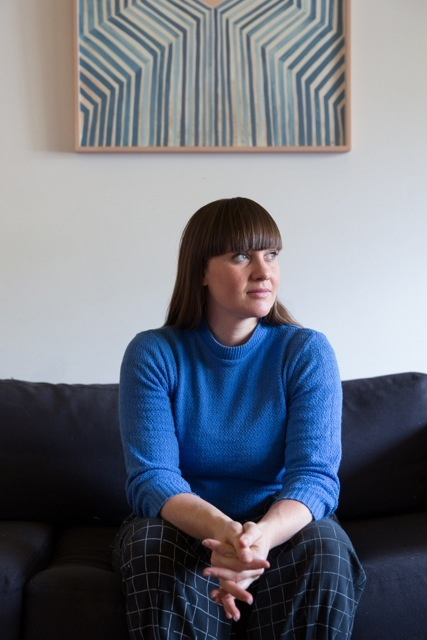
Image by Hilary Walker.
What in your personal life influenced you to choose and pursue a creative career?
Growing up, I spent half of my time in the city with my mum driving fast cars and going to the beach. When we visited my dad we were on the farm with cows and horses, so I had the best of both worlds as a kid. I guess the freedom on the farm was very formative in the way that I formed as a person and a thinker. I love horses and I spent many hours on a horse - galloping, wandering and dreaming. I even used to lie on my horse backwards and read my book while she was eating grass. I was always obsessed with drawing as a kid. I pretty much drew all the time I was not on a horse.
Actually, come to think of it, I made lots of different things as a kid - painted rocks, wax sculptures from dripping candles, constructed and designed environments for animals that I collected (frogs, crickets, lizards, rabbits, mice). I wrote dense and imaginative short stories. I was always pretty sure I would be something creative as an adult. There was never really any question about that. Tricky thing has just been working out what kind of creative I am!

Wilting Facade by Tai Snaith
Since graduating from VCA with honours, you’ve consistently maintained and actively pursued exhibiting, curating, residencies and reviewing the arts. Your commitment to seeing these projects through is demonstrated from the arduous task of grant and proposal submissions, to creating the work and installation. Exhibiting is often not a fast process. How do you find this process now? Has it got any easier with practice and do your networks you’ve established over time help?
It’s still difficult. And you’re right, it’s not a fast process. It takes a lot of perseverance to keep making work and finding ways to show it. Even just the process of following through an idea or finishing a painting without losing interest or courage. I am actually considering going back to do my Masters in the coming years, as I still have the desire to learn more about critically positioning my work and trying to tie all the loose ends together conceptually. Making the work is one thing, but talking about it and writing about it is at times very challenging. I actually have a long term dream of writing more fiction, I have always really loved that too. Maybe even a novel one day.
As well as your exhibitions, in 2012 your first children's book, The Family Hour in Australia was published by Thames and Hudson. From concept, research, writing, illustrating, pitching the book to Thames and Hudson and receiving a hard copy of the book in completion, how was this process and how long did the book take you?
The first picture book took me about 10 months. With a young baby, not having a clue what I was doing with either the baby or the book, I made most of it in delirious fits of drawing during my baby’s nap times. The second book took me about 8 months, with a toddler and a newborn! I still have no idea how or when I did that book- In my sleep?! I actually have very little memory of it now. The process of creating a picture book is quite an investment for very little return financially in the short term. But that’s not really why you do a book. The idea of planting a seed and watching it grow over time is a nice idea for me.
The idea of planting a seed and watching it grow over time is a nice idea for me. Also, getting into the minds of thousands of children is also pretty special. They are a lovely audience, the best kind really. I am working on my third book now and in some ways it is kind of like having a baby! And similar gestation period too.
Were you ever discouraged or had setbacks that derailed your career? Was there something that kept yourself optimistic and motivated?
Yes, I have had many. At art school I was very confused, I had no idea who I was. Lecturers made it even more confusing. For quite a few years after finishing art school I didn’t really make any proper art work. I struggled working as a waitress and in a bookshop and riding the rollercoaster of going out to a lot of parties and the associated highs and lows. To be honest, I feel like I have not really got a good hold of who I am until recently. At least not until my late 20’s. Also, I think during your 20’s there are more restraints in terms of money, which makes buying materials, renting studio space and being ‘professional’ almost impossible. I feel like those tough times are over, which is nice and I feel very fortunate to be where I am.
What keeps me optimistic is just the joy of making. I love making things. Creating worlds, bringing ideas to life. Creating things that no-one else can, no matter how much money they have. Expressing abstract thoughts in new languages. It is a gift and I am never bored of exploring it.
At an event on ‘Creativity After Kids’, held in 2015 and coordinated by Darebin City Council, you were on a panel with some other amazing women including Lorelei Vashti, Robin Penty and Rachel Power, which I was lucky enough to attend. The conversation was fantastic, all- encompassing and offered great insight and reflection on managing pre-schoolers through to young adults, with domesticity and family, while acknowledging the need to allow time for personal creativity. How do you continue to manage your time and creative output with two children and all that this entails, and do you think that they have contributed to your work in some way?
I think we all find ways to manage, whatever our situations might be. Some people manage careers AND families with serious illness. Some have to care for their parents full time. Some are haunted by bad luck. I feel like having kids has been challenging in many ways, but in more ways it has really given me a truer sense of who I am and definitely untapped a hunger and a drive that I didn’t really know I had. If you really want to do something you always find a way to do it.
At this event, you also touched on then the gender imbalance represented in Australia, especially in prizes such as the Archibald Prize. Do you think there is a gender imbalance in Australia supporting female artists operating in our current contemporary art system and have you ever felt inequality for being a female artist in Australia? If so, how or when or what was the scenario?
Yes! There is serious imbalance, STILL, in the art world. It is slowly being addressed, but I see it almost every day. Women are still treated patronisingly when they are single and like baby factories when they are mothers and often in good faith ‘given time’ to stop their careers in order to care for their children. What I don’t understand is how people think this is helpful? I often hear people (old male curators usually) say (and have said to me) ‘Just take some time out, your art can wait- the most important thing is to be a good mum. Don’t worry about meeting with me, I know how hard it is to just get the washing on the line.’ Like that is all a woman is good for once she has a baby. Which is absolute bullshit. The most important thing for a creative woman with young children is to keep a sense of yourself and often, for an artist, that is to keep making your art. And to have a reason to. It is the only thing that kept me sane through having kids! Women should not be made to feel guilty for spending part of their limited energy focusing on their creative work and taking time to keep it alive. I strongly believe this makes me a better mum in the long run anyway.
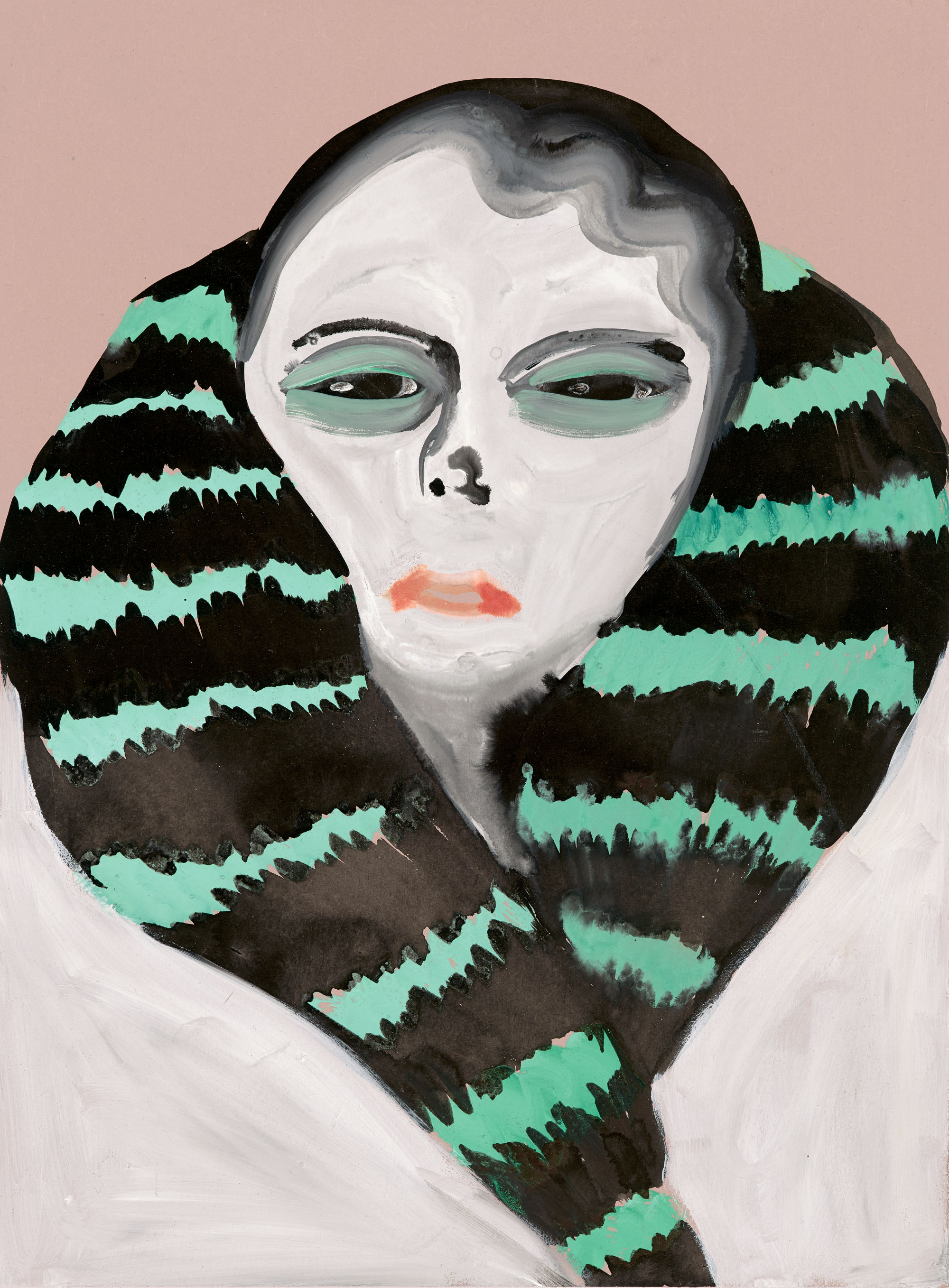
Lovekiller by Tai Snaith
The horrendous and unquestionably unfair recent Australia Council budget cuts, will see grants to individual artists and projects decrease dramatically over the next 12 months time, and potentially beyond - a thought I’m reluctant to mention. Before these cuts, and even more so now, do you feel that Australian female artists will have fewer resources, crucial financial support, to go into making and producing their art?
I think all Australian artists, including writers, dancers and actors and subsequently audiences and broader society will suffer from these recent cuts. I was lucky enough to have my first volunteer position at Express Media as a teenager and then one of my first jobs as a producer at the Next Wave Festival, both of which have recently lost their funding after years of providing platforms and launching places for creatives like myself. Without these organisations I would not have been able to work in the arts. I would probably be working in advertising. God forbid. I fear these pure, grassroots cultural incubators will increasingly be forced to become co-opted by corporations and subsumed into capitalism like everything else. Sad times.
On a more positive note, you have a new exhibition opening here in Melbourne. What is this exhibition about, and where can we see and support it?
I actually have 3 projects on at the moment, or coming up. One is an exhibition called ‘Concrete Agenda’ which I have curated and am also part of, for C3 gallery at the Abbotsford Convent. I am pretty excited about this show, it's a group of artists who I really respect including Kate Tucker, Laura Skerlj, Belle Bassin, Olga Bennett, Pia Murphy, Alice Wormald and Nell Pearson.
The next show my work is in is a group show in Sydney at a space called Home @735 in Redfern where I will be exhibiting a series of new fictional portraits paired with abstract ceramic assemblages for the first time. And at the end of July (Saturday 30th) our house (BKK Dolls House, designed by my partner Simon Knott) is one of the feature homes to be opened up to the public for Open House Melbourne and I will be opening up my studio and also displaying a series of new my works upstairs in our bedroom! June and July are quite busy, but now that I think of it, so is November and December- lucky we are going on holiday in September!
Where do you often find the most inspiration?
I find most inspiration from just starting to make. I love the process of making. I also read a lot of fiction and art books and I walk along the Merri Creek a lot listening to podcasts. These would be my main inspiration-generators.
Lastly, what is the best advice you have ever been given?
Be kind to yourself.
Creative blues: five common fears and how to beat them
 By Emma Clark Gratton
Working for yourself or passionately following a creative project requires a level of mental toughness and self-confidence that is hard to maintain. Dealing with rejection, financial challenges, working long hours with just yourself as taskmaster… all these things can build up until you are having an existential crisis before your morning coffee.
To make it even more difficult, these days of stunning Insta feeds and #humblebragging tweets can feel that everyone else is kicking goals while you are still slogging away. The reality? Even Frida Kahlo and Gertrude Stein and Madonna have done crappy work, and spent days pottering around in their pyjamas eating toast and not producing much. The people who are at the top of their game aren’t talking about it on Facebook, they are simply doing the work.
Here are some of the most common fears, self-doubting phrases and negative feelings that crop up, and how to deal with them.
I don’t deserve this!
You do. Whether you are taking the giant leap of quitting your day job, or simply ditching a family Game of Thrones marathon to dig out your old painting gear, all creative pursuits are worthwhile and valid. At the risk of sounding like an inspirational Instagram post, we only get one life, so why the hell wouldn’t you give it your best shot?
It is not a matter of 'deserving' or 'earning the right' to be creative. You don't need to justify it to anyone!
But (insert name here) is already doing this waaaaay better than I can!
You know the feeling: you’re feeling pretty good about yourself, chugging along on your creative projects,when a friend/colleague/stranger makes a big announcement. Perhaps they have an amazing book deal, or a huge solo exhibition, or they landed their dream creative job in Japan. You hug them and celebrate, but deep, deep down you feel a little stab of “Why not me? What is wrong with me? Do I suck?”
Morrisey even wrote a song about it: “We hate it when our friends become successful”, which goes “You see, it should’ve been me / It could’ve been me / Everybody knows / Everybody says so.”
This is a hard feeling. This feeling doesn’t make you a bad person (you can be genuinely happy for someone and still be slightly jealous at the same time), but it can be useful to examine that feeling further. Remind yourself of all the cool stuff you HAVE done, and the awesome things you are planning to do. There is room for all of us, and there is plenty of work to go around.
I don’t know what I’m doing!
Want to know a secret? Nobody actually knows what he or she is doing. It is a total ruse! Making mistakes, failing spectacularly, and starting again is all part of life. There is nothing you can’t find help on, either online or by asking people who have done it before.
When you are feeling overwhelmed and lost, try to cultivate a “what if?” attitude. Just try something that feels like a fairly good idea, then go from there. And remember, no one was born knowing how to code, or design, or knit. Learning new things is part of the fun!
But this is too scary/hard/overwhelming!
All the best things are scary. Sometimes, jumping in headfirst is the only way to give yourself the kick you need. But if you are feeling overwhelmed, then break the task down to the smallest component that you feel comfortable with. Want to start your own Etsy business but feeling totally overwhelmed? Just start by making a list of the kinds of thing you could sell. Take tiny, incremental steps towards your goal, then use the momentum to keep going.
I’m too poor/lazy/busy!
Well then, do what you can. Anything is better than nothing, right? Even the busiest working mother with multiple kids and a busy job can find time to crochet a few rows before bed, or scribble out her plans for starting a ceramics business. Work with what you’ve got. Heaps of resources and creative inspirations are free: go to the library and borrow art and business books, practice your floristry using blooms from your garden, or write your novel on your lunch break from your desk job.
Generally, a good way to deal with these kinds of doubts is to allow yourself to fully experience the negative feeling, acknowledge it, and then get on with your day. Let the fear and negativity in, say hello to it, but don’t let it stop you from getting on with being awesome. A favourite quote of mine is “A garden grows where you water it”, which means the things you nurture and pay attention to are what will grow the fastest. This goes for thoughts and actions as well as gardens: prioritise your creative pursuits and see what happens.
If you are genuinely struggling with anxiety, depression or feelings of overwhelm, I cannot stress the importance of talking to someone. Talk to your partner, your mum or a friend who gets it. Otherwise, seeing a counselor is an excellent way to sort out any issues in an objective way, and can help you get back on track. You don’t need to be in the depths of depression to seek professional help. In fact, seeking help when you are feeling good can help you handle the more serious emotions when times are tough.