
Branding basics: Communicate your brand

By Mirella Marie
This is Part Two of designer Mirella Marie’s series Branding Basics.
Once you define your brand, you need to communicate it. This is done through a brand identity. An identity supports your brand to convey its values, products and services, and the overall experience you provide your clients and customers. It is one of the most important investments you can make for your business.
What does a brand identity do?
- Communicates to your audience on your behalf
- Differentiates your business from competitors
- Establishes consistency
- Influences perceptions
- Attracts the right audience
- Inspires people to take action
What does it lead to?
- Brand trust and loyalty
- Increased and improved brand awareness
- Stronger credibility
- Higher profitability
- Motivated employees
- Positioning as an industry leader or expert
What does it involve?
Effective brand identity is achieved through the consistent use of strong visual elements to create distinction and differentiation. These are the five fundamentals of a brand identity:
Logo
At the core of every identity is a logo. A logo is used to identify a company, product or service with the use of a graphical mark, symbol or words. It should not literally describe what your business does, but, rather, identify it in a way that’s recognisable and memorable. In order to do this, it must communicate in its simplest form. Ensure that your logo is not complicated or cluttered — it must be legible and readable at 25% of its original size, without loss of detail. Do not include your tagline or any other text in your logo.
Consider the following:
- What kind of message do you want to convey?
- Can your logo be simplified even further?
- Does it differentiate from your competitors?
- Is it legible and readable?
- What makes your logo memorable?
Typography
Typography is the art and arrangement of type that makes written communication readable, legible and aesthetically pleasing. Typography adds tone, subtlety and even context to a message. For example, using a heavy, bold font may be suitable for a builder, but may not be suitable for an architect.
Consider the following:
- What type of message do you want to express?
- Which fonts will best achieve this?
- Are those fonts overused in your industry?
- Does they suitably portray your business?
- Are they legible and readable?
Colour
Colour is one of the most important considerations of a brand identity. It conveys messaging and emotion, and has a fundamental impact on readability, legibility, attracting people’s attention and maintaining engagement. The colours in your identity must have a purpose — if you want to use your favourite colour, ask yourself if it is the right one for your brand. For example, bright red may not be suitable for a masseuse. Warm colours (reds, oranges, yellows) evoke different psychological and emotional responses to cool colours (greens, blues).
Consider the following:
- What kind of message do you want to communicate?
- Which colour(s) will best achieve this?
- Are those colours overused in your industry?
- Are they legible and readable?
- Are they suitable for your brand?
- Are they eye-catching?
Tone of voice
A brand’s tone of voice provides an overall narrative for the brand to speak to its audience. It must complement and communicate your brand’s personality. If your voice is direct, your writing, content and engagement should be brief, clear and succinct. If your voice is outgoing, your writing, content and engagement should demonstrate a responsive attitude to your audience. You must use the same voice across all of your brand’s touchpoints to achieve consistency. If you are outgoing on social media but direct on your website, it will cause confusion.
Consider the following:
- What tone of voice will speak directly to your audience?
- How will you use it to maintain engagement?
- Are you speaking in a language they will understand?
- Are you able to incorporate some of your own personality?
- How do the tone of voice of your favourite brands resonate with you?
Imagery
Humans are highly visual — we first learned to communicate through pictures before words (hence “a picture is worth a thousand words”). Images such as photos, illustrations, and icons are used to visually describe your brand, products and services to your audience, so it is crucial they are clean, clear and easy to recognise.
Where possible, always hire a professional to create your brand's imagery and avoid using photos taken on a smartphone.
Consider the following:
- What do you want to express with your imagery?
- How will you use it to reach the right audience?
- Is it memorable?
- Is it clear?
- Is it of a high standard?
- How do you feel when you see other businesses using low quality images for their brand?
These five fundamentals must be consistent across all your brand communications, including your website, social media, print materials, templates, ads, newsletters, apps, etc. It is this consistency that what will help make your brand memorable.
Remember, your audience is overwhelmed with choice. Presenting your brand with a cluttered logo, unsuitable typography, inappropriate colours, conflicting tone of voice, or low quality images may see your audience turning to your competitors.
Your brand identity is the very first thing people see before even engaging with you, therefore you have one chance to make a lasting impression. The way something is presented will define the way people react to it.
Mirella Marie is the owner and creative director of Vertigo, a Melbourne based graphic design studio specialising in brand identity and design. She is also a contributor for Women of Graphic Design, a project examining the work of female designers around the world. Join her on Instagram @studiovertigo.
Painting your first mural
 By Júlia Palazzo
Melbourne has a thriving culture of art on walls. Just last weekend, streets on the CBD were taken over by hundreds of graffiti writers and street artists decorating dozens of walls and laneways for the Meeting of Styles festival. Many other capital cities in Australia are also being enlivened by similar events. As the general population and councils all over the country are starting to embrace and support street art and graffiti, there has been a growing interest in commissioning artists to create murals in facades and interiors.
Murals are also an incredibly effective way for emerging artists to promote their work and create new opportunities for themselves. However, I often hear from visual artists that creating in such a large scale, often in public, seems really daunting. Painting walls is very different from creating a piece of art in your studio. They bring unique challenges that need to be managed well. However if you are a painter or illustrator, you already have most of the skills that’ll help you do so, and following these tips will help your first experiences run smoothly.

Get familiar with the wall and its surroundings
If possible visit the wall you’ll paint in person before you paint it. Site visits will reveal unforeseen challenges and help you plan how to approach the project. It will also help you understand how the public will interact with your mural piece. If you cannot see the wall in person, try to get someone to send you plenty of photos of the surrounding, or even take a video.
Sketch before you paint
A detailed sketch will save you a lot of time on the painting day and help you make good design decisions. It will help you plan your timeline, what materials you’ll need, and get feedback from your client if it is a commission. Transferring the sketch to the wall can be challenging if you are not used to the scale, but it will get easier with practice. When painting the sketch, remember to regularly stand back and check if things are in the right proportion.
Choose the right paint for you
Pick materials that are durable and suit your artistic style, your level of skill and the surface you are painting on. Look beyond the art shop: hardware stores or graffiti shops offer great options. The artist I work with uses spray paint. Spray paint can quickly be applied to most surfaces and creates very beautiful effects, so it is no surprise that it is adopted by a lot of mural artists. However it takes a lot of practice to create good results and you need to plan your colour palette carefully as it’ll be impossible to mix the colours on site. Also, it can be expensive, and getting a cheap brand will sacrifice the durability of your art since the lower end products fade quickly. The paint fumes are strong, so you’ll need to wear a respirator to protect your lungs. I personally use outdoor, UV resistant acrylic paint I get from a hardware store. Although it is not as fast to apply as spray paint, it is a lot cheaper, easy to mix colours and a lot more suitable to my personal style, as well as removing the issue with fumes. I suggest you try a few different things and practice getting good at whatever is more suitable for your art.
Prepare to stress out
Your mural art will usually be on display for a lot of people while you are painting it, as well as for a long time after you finish it. People will watch as you go through your process and make mistakes, and it’ll be hard to hide the result if you are not satisfied with it. It is no surprise then that most of the mural artists I know to go through a lot of stressful emotional experiences when they’re painting. If you are working on a mural and you start feeling embarrassed or ashamed of what you are doing, take a deep breath, and remember that you might just be experiencing a very normal “wall-low”. If you are truly concerned about your piece, ask for the opinion of someone you trust, as the stress can skew your judgement and make things seem worst than they are. Plan ways to manage your emotions while you are painting, and maybe even go home and get back into it after a good night of sleep.
Manage your interaction with the public
Meeting new people is one of the highlights of painting in public spaces. You will meet many people that will stop by and tell you how beautiful your work is. You will meet people that are curious and full of admiration, and sometimes people that can help you in your career. However, you will inevitably have negative experiences as well. You will meet people that do not like your work and are very vocal about it, or that think you are a vandal because you are painting a wall. At the end of a full day of painting, all the different interactions can be very draining and leave you feeling demotivated, as well as stopping you from focussing and making progress. It is important to make the community that will interact with your art to feel engaged and excited, but that does not mean that you must spend all day talking to people. Be friendly and approachable, but do not hesitate to politely tell people that you need to keep painting. Do not give negative people your time or attention. If you are painting in an area that is a bit deserted or feels unsafe, it is a good idea to have friends keep you company during the day.
Get help
Murals can take a long time, and are usually much easier (and fun) if you have help, so don’t be shy to ask to collaborate with other artists or get a helping hand from your friends.
Image source: Maribyrnong City Council / Photographer: Brent Edwards
Júlia Palazzo is a visual artist from Brazil. Since moving to Melbourne in 2013 she has been running a partnership, Mayfield Palace, creating mural art for businesses and organisations all over Australia. She shares her art daily on Instagram: @julia.palazzo
Branding basics: Define your brand
By Mirella Marie

This is Part One of designer Mirella Marie’s series Branding Basics.
What is a brand? A brand is more than just a logo. A brand is who you are.
There are five fundamentals that form a brand. One cannot exist without the other, and for a brand to be successful, the fundamentals must work together to communicate everything you think, say and do.
1. Promise
Your brand is a promise to your clients and customers. Incorporating more than just products or services, your brand looks past what you’re selling to reach the feelings evoked in people when they use your products or services. Creating a powerful brand promise is essential, but unless you keep it, your brand will not stand up to the scrutiny of consumers, your industry or the marketplace.
What does your brand promise to deliver?
2. Perception
A brand is identified by the way people perceive it. Developing consumer perceptions that accurately reflect your brand is crucial; otherwise it will suffer limited growth potential. Everything a successful brand does is designed to trigger specific consumer awareness and inspire action.
What perception is your brand creating?
3. Expectation
Consumers develop expectations based on your promise. If you advertise your products or services as being the best in the world, people will expect the best in the world. If your visual communication is careless and unclear, people will expect your products or services to be low quality. If your brand does not deliver, people will become frustrated or confused, turning to your competitors for those expectations to be met.
Are you representing your products or services based on what people expect?
4. Personality
Every brand has a personality. You can determine the personality of your brand by using five key words to describe it, for example: quality, reliable, local, honest, sustainable. Now look at what you’re offering. Do those words accurately describe your brand as it is, or how you wish it were? From the very first impression, people will assess your brand’s personality to determine if they want to engage with it. The best way to measure this is to think of your brand as a human. Ask yourself honestly — would you want to be friends with it?
What would your brand be like if it was a person?
5. Identity
An identity is the visual representation of your brand. The way something is presented will define the way people react to it. If your brand is who you are, your brand identity is what your look like. Humans are highly visual so your customers’ attention must be attracted in a matter of seconds. The most effective way to do this is with an engaging identity. An identity consists of elements such as a logo (name/symbol), typography, colour, copywriting, photography, icons, imagery, etc. All of these visual elements must come together cohesively and consistently to communicate your promise, shape perceptions, meet expectations and define personality. If one of these fundamentals is weaker than others, it can affect your entire brand.
How are you using your brand identity to communicate to your audience?
With so much competition in your industry, does your brand identity stand out, or fit in with everyone else?
Creating a Brand Strategy
To understand how these brand fundamentals work from the perspective of your audience, consider your favourite brands and why you gravitate to them when making your own purchasing decisions.
– What triggers your desire for the products you buy?
– Why do you buy one type of product over another, exact same product?
– What draws you to the services you use?
– What makes you recommend services to people you know?
“Human behaviour flows from three main sources: desire, emotion and knowledge.” — Plato
Assess your own purchasing decisions as a consumer, and then use those factors as the foundation for your brand strategy. This way you will better understand your audience, its needs and its motivations, creating the empathy you need to provide an engaging, memorable experience for your clients and customers.
In a world of information overload, the last thing people need is more of the same. What they need is a reason to believe in you.
Mirella Marie is the owner and creative director of Vertigo, a Melbourne based graphic design studio specialising in brand identity and design for creative and commercial clients. She is also a contributor for Women of Graphic Design, a project examining the work of female designers around the world. Join her on Instagram @studiovertigo.
Project planning 101
 By Jes Egan
Being organised is a skill. It’s something that you can learn and refine but it doesn’t always come naturally. I have always been an organiser since a very young age. Today in my day job, that is exactly what I do. I plan and manage projects from start to finish and all that stuff in between. You may be lucky enough to have a specialist around you who will do this, or like many small creative businesses have to become a bit of a jack of all trades and apply this skill to what you are doing. Here are a few of my tips to help plan away.
Project planning
Planning a project at the very beginning before you start the job/work can save a great deal of time, stress and unneeded work being done. It’s one of those things that you can put at the bottom of the list as there are so many more interesting or fun things to get your teeth stuck into. For many people it isn’t the most enjoyable part but is definitely something that I would recommend doing for most projects, not just the larger ones.
Plan the entire project
Define the scope of the project clearly and precisely, make sure you have set the parameters of what you agree to do before you start. Try and define this at the beginning so you don’t have what we call scope creep, doing things for free that you didn’t originally agree or quote for, unless they’re prepared to allow you to charge more for it. Knowing what you are doing at each stage is a massive time saver as you move through the project. This can make you more efficient and make your project more cost effective and possibly more profitable.
Don’t know where to start? Sit down and think about what you need to do. This may be by starting at whatever the end result needs to be and working backwards. Work out what you need to get done and in what order you need to do it in. Start by writing this down as a task list.
Gantt chart milestone plan
Creating a timing plan or gantt chart is common practice and is really helpful. It allows you to plan what order everything needs to happen, factor in supplier deliveries, client approvals and reviews if required. There are many programs that can make this easier for you such as MS Project and Merlin Project or some great free online ones such as TeamGantt. Take the above task list and start to add dates to it, if you have a deadline start from there and work backwards. A good tip that I learnt many years ago is to put any key dates or milestones into a diary/calendar as an additional reminder.
It is helpful to group tasks together under headings in a clear and logical order. Some tasks will be dependent on another task being completed, find these dependencies and pin point them out. Know when if one task is delayed where the knock on effect will hit.
When changes happen such as delays in approval or from suppliers, make sure you map the changes as they happen so you can see the knock-on effect. It’s not always possible to complete a project on the agreed deadline. If there are delays throughout, sometimes you can make up time elsewhere. This isn’t always the case so make sure you update the plan when they happen so it is a realistic completion date and doesn’t leave you stressed trying to do a million things right at the end.
Daily todo lists
A big part of project planning is not just mapping it out at the beginning, it’s following it. I’m a massive list person - I write a new one at least once a day. It keeps me on track with what needs to happen that day and it also gives me clarity and allows me to prioritise what to do when I am overwhelmed. Handwriting lists, using apps or your calendar are all good ways to do this. Start the day by writing one todo list, bringing items over from the previous day that didn’t get completed and add to it. Prioritise it and tick off the items as they are done. The satisfaction of each tick can motivate you to get working on ticking the next one off.
Status meetings
If you are working with a team, suppliers or clients, regular status meetings is a good way to keep progress of how the job is tracking. These don’t have to be too long - simply review your timing plan and check that all items for that day/week are on track. If not, find out why and try to address it or make a plan to tackle it. Make sure any task delays or early completion dates are applied to your timings so that you are keeping as up to date as possible. If it helps, apply a traffic light tracking system to each task, where green = on track, orange = at risk of causing delays and red = delayed / needs attention.
Be realistic
Thinking ahead can save you loads of time in the future. Understanding this and putting the time into this can be boring but it is worth it in the long run. Just remember to be realistic and allow yourself the time to do what you want to do as best as you can do it.
Jes is a ‘practical creative’ and a very busy lady, doing the business in a digital agency, being an artist and an university lecturer, who can creatively be found cutting up a storm at paperchap.com. Follow Jes on Instagram.
Networking while abroad
 By Di Scully
Whether it's a permanent move or an extended vacation, it is a thrilling moment when you make the decision to head overseas. The opportunity to start over, find an exciting new direction, explore a new city and divulge into a new culture creates an unyielding level of excitement and anticipation within. However, it’s not uncommon to subsequently feel the pull of doubt and possibly fear when you contemplate how this move will impact your existing business or prospect of finding new work.
To get you started, your first step is all about finding new friends and making new connections. Here are some ways you can build your own network in a new city.
BEFORE YOU LEAVE
If you have the time to plan your relocation overseas, there are things you can do to ensure your transition is as smooth as possible.
Maximise your existing contacts. Now is the time to reach out, be fearlessly friendly and make the connection with those you know. Do you have a friend, acquaintance or distant family member who currently lives in your new city? And don’t forget to exhaust your contacts on social media. Are you friends with people on Facebook who may currently live overseas or who have lived in your new city? Is there anyone you follow on Instagram who has inspired you on this journey that your could reach out to? Another great place to explore your network of contacts is from university. Attend an Alumni night to connect with people in your industry who may know someone aboard they could introduce you to. The more people and connections you have before departure, the more comfortable the leap to your new country will be.
Connect online. The internet is an amazing tool to connect with people overseas. Is there an Australian group or society who currently live in your new city that have a website or Facebook page to connect? For example, in New York City, there is a fabulous community called Australian Women in New York. This group of women are so diverse in age, demographic, life experiences and skills that you are bound to connect with someone who can help you get started! In the early stages of setting up your home and finding your feet, a familiar accent who speaks your language and understands the 'Australian' way, will help you feel more at home. If you are seeking out connections in your area of work, LinkedIn is a great resource to utilise. If you haven’t already set up your own profile page, then do this before you leave and try to make connections with people in your industry prior to your departure.
IN YOUR NEW CITY
When you touch base in your new town, don’t let a month or two pass you by without achieving the goals you set out to do. Here’s a few things you can start immediately to get you connected with the locals.
Volunteer work or an internship are a great way to devote your time to something you are passionate about in your new city, while you have time available to you. Both fields of work will lead you to like-minded people, new connections and potential job opportunities that will no doubt help you feel more settled and in touch with the community around you.
Enrol in a class. There is so much to learn from a new city and the way your field of work operates there. So make sure you enrol in a whole host of events, classes, courses and conferences in your area of expertise or interest. These spaces will allow to you immediately connect with people who share a similar passion and skill, but at the same time, allow you to gain a better understanding of how things operate in your new city.
Be social. To find work overseas, you not only have to network in your area of expertise, but participate in social activities outside of work-related events to make friends too. Consider this, how many people do you know who have found work from contacts in the industry, word of mouth or friends? So if the offer for a coffee catch up, dinner or friday night drinks presents itself to you, embrace it! You never know who you may meet and the next opportunity waiting on the horizon for you.
Networking is all about building your community and the more people you know, the more you can reach out to when you need a favour.
Interior designer Diana Scully owns and operates her own interior design firm Spaces by Diana that’s all about designing beautiful, personalised homes to reflect the people who live in it. Diana also has her own lifestyle blog, Spaces + Places, where she regularly writes about inspiring spaces to see and visit from around the world and shares her recent travel adventures. Follow Diana on Facebook,
By Di Scully
Whether it's a permanent move or an extended vacation, it is a thrilling moment when you make the decision to head overseas. The opportunity to start over, find an exciting new direction, explore a new city and divulge into a new culture creates an unyielding level of excitement and anticipation within. However, it’s not uncommon to subsequently feel the pull of doubt and possibly fear when you contemplate how this move will impact your existing business or prospect of finding new work.
To get you started, your first step is all about finding new friends and making new connections. Here are FIVE ways you can build your own network in a new city.
Visual merchandising for markets
By Monica Ng
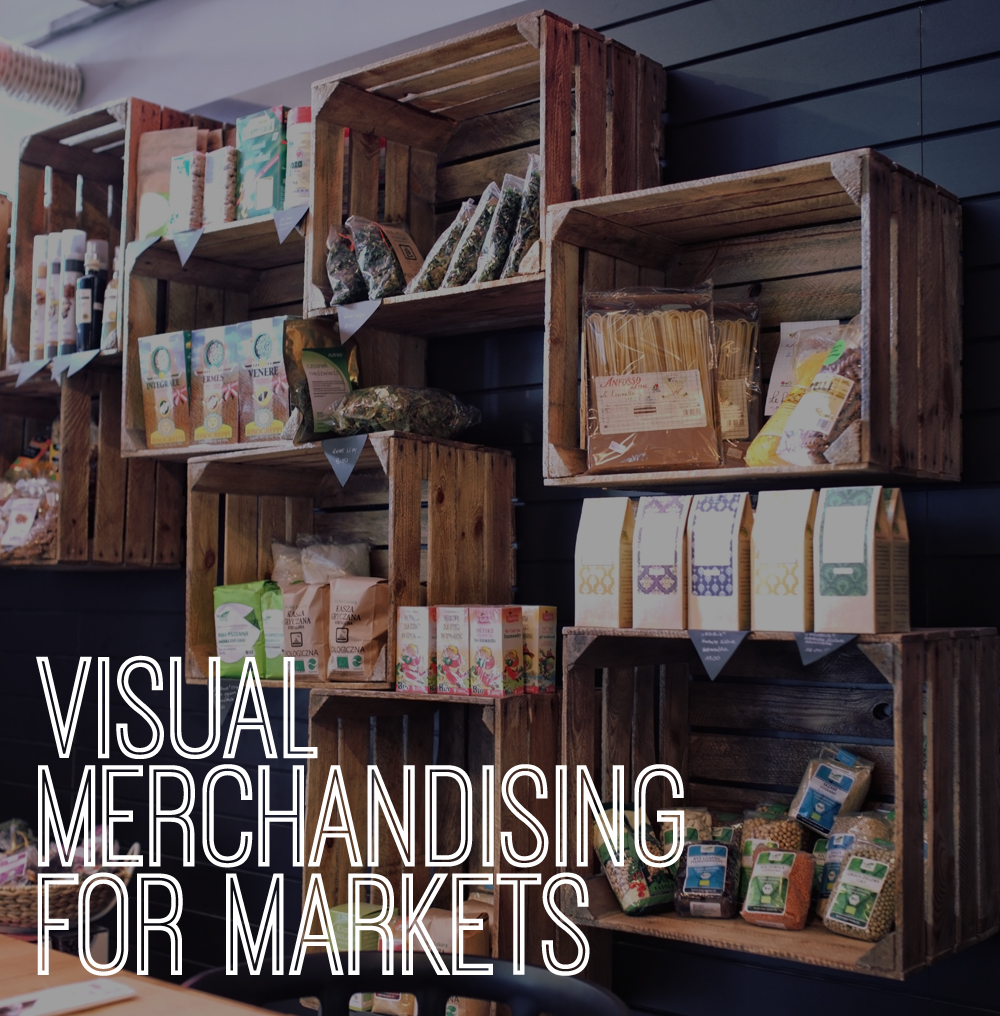
First impressions count - whether on your website, bricks and mortar store, or a market stall. Presenting a cohesive look is part of your overall branding, so try to consider every detail, from signage and marketing collateral to packaging and receipts. For a market stall, you will need displays and props to present your items, and these can be sourced from surprising places. As a jewellery maker myself, when I first started doing markets, I couldn’t find anything that matched the aesthetic of my shop’s brand, so I decided to build everything from scratch. It was surprisingly not that difficult, fun to do and if you have a partner or a friend who is DIY-inclined, why not partner up to complete this project together?
First thing is to do some research, gather some inspiration and draw up your plans. Rather than sit in front of your computer for research, do it the old-fashioned way and visit markets in person. Check out The Finders Keepers, The Big Design Market,Handmade Canberra or even local craft markets. You can also browse your favourite retail shops and boutiques for visual merchandising inspiration too.
Building a cohesive, organised and themed display will help attract attention – especially when it’s busy. With only limited time to attract a customer’s attention, the design also gives them a taste of what you and your products are like. A market may be the first time a customer sees your work, so make sure your first impression is positive and memorable! Ask yourself the following questions:
- What overall colour scheme would you like?
- How do these colours fit with the overall branding of your business?
- What do these colours represent?
It could be helpful to look into colour psychology and research what different colours represent. Would these colours appeal to your target customer?
Display table
It’s important to consider the height and the size. Most market stall sizes are at least 2m x 2m or bigger, so perhaps you’d like to consider maximising this area. Will you have one long rectangular table? 2 smaller square tables? A mixture of these and some shorter or taller stands?
What sort of materials will you make your table from? Wood? Plastic? Metal? A mixture? How will you be able to assemble and disassemble your display table(s)? Will this require the use of power drills or slots?
What type of finish will you have on your table? Leave things as per the natural material? A wooden stain?
Build upwards
Displaying your goods on levels or tiers enables people’s eyes to scan around your entire space, and not just skim across and to the next stall. Building upwards, allows you to place your products at different heights and lets people to see different things from different distances without needing to hunch or stand on tippy toes! Shelves, A-frames and T-racks also maximises your display area and adds visual interest.
Stall environment
Building a back wall, sidewalls or even a stall frame gives you more creative opportunities to display your goods. Don’t forget about the ceiling and floor too! Will this be easily transportable in a car or will you need a truck or multiple cars? Will you need a crew to help you set up?
Draw people in
Often having an unusual or aspirational piece can attract the eye of people in the market and draw them into your stall for a closer look. Although it may be a higher end piece that may not necessarily sell, nevertheless if attracts people to your stall, it’s doing it’s job!
Price your work clearly
Whether they’re tags, stickers or blocks, sometimes customers may not want to ask how much an item is and that could potentially be a lost sale! Make sure the aesthetic matches the overall theme of your brand and if you have messy handwriting, consider getting them printed and laminated.
Security
Thinking about the security of your products is important, especially when the market is busy and there’s lots of customers browsing and wanting to make a purchase. How can you package your goods and display them in a way that would deter theft?
Accessibility
Customers usually like to hold items or try things on before buying, so keep this in mind when you’re designing your stall layout. Do you want customers to be able to easily access all your goods? Consider placing your lower price point items closer to the front and your more expensive items in elevated and more secure locations.
Branding
It’s important to have a banner, signboard or something similar to display your shop’s logo so that it’s easy for people to remember your shop’s name. Having your shop’s name and logo on display also helps strengthen your brand and helps people who may have come especially to visit your stall, to easily identify your stall in the entire market. Banners or signboards don’t necessarily need to be professionally printed, these can look a bit corporate and not fit with your branding. As you’re a crafty maker – bust out your creativity! With a bit of fabric, paint, sewing skills or even chalk you could create an artistic alternative.
Make sure you have plenty of business cards with your shop’s name, your name, email address, website and social media! Sometimes people who don’t buy on the actual day buy later through your website – so don’t miss these opportunities!
To calm your pre-market nerves, I like practising laying out my entire stall display, so I can test where things look best. Once I’m satisfied with the layout, I take pictures, so on the actual market day, I can easily replicate my chosen layout.
Good luck!
Monica Ng left her accounting career at the end of 2013 to run Geometric Skies, her Etsy jewellery business, alongside her jewellery and object design studies at the Design Centre in Sydney. Find Monica at her blog or on Instagram @geometric_skies.
My Advice: Growth tips for Instagram
 By Andrea McArthur
Three prolific Instagrammers share their tried and tested tips for growing your brand on Instagram…
Petrina Turner, Designer. Stylist. Maker. Dreamer. Do-er. Petrina Turner Design www.petrinaturnerdesign.com.au // Instagram @petrinaturnerdesign // Followers 21.7k

I don’t think it’s any secret amongst those who know me that I love Instagram. As a designer, stylist and maker I am definitely a visual person and Instagram is the perfect medium for me to use as a visual diary to capture inspiration and beauty on a daily basis. And if you really look there is beauty everywhere.
My biggest piece of advice to anyone wanting to grow their network on Instagram is to be authentic. I post about the things that speak to me, and share the things I love. I never really set out to build a profile on Instagram, I just wanted to capture the beauty and my following happened quite organically. As a small business owner I found it a place of incredible inspiration, a place where at any time of the day or night I was connecting with like minds and creative souls. And my tribe grew… and grew… and grew.
I don’t really use it as a marketing tool by design. I think that by sharing what I see, and how I see it, it gives people an insight into how I work and my style. I really love my work as a designer so of course I am often sharing my work, or snippets of it. So I guess in that sense my Instagram account is an extension of my portfolio. I think what I’m really doing is taking people on my journey with me, and that resonates.
And I like the interaction with people that Instagram gives me. More than the number of followers what has really been the greatest gift from Instagram are the genuine connections I have made through it. It has led to inspiration, collaboration, PR and most importantly wonderful friendships. I try as much as possible to respond to the comments left on my images. With the amount I sometimes get I don’t always manage to respond to every single one, but I can assure you that I read and appreciate them all.
So find your true voice and share it. People will listen if it comes from your heart.
Jessica Viscarde, Creative Director Eclectic Creative www.eclecticcreative.com.au // Instagram @jess_eclecticcreative// Followers 17.7k

Tell your story I have always treated instagram as a visual diary and a story-telling tool that has documented my own work and a means of engaging with other likeminded individuals. I really believe that there is a market out there for absolutely anything and everything; you just need to find your people. And you find your people by simply just being yourself. Instagram is a powerful platform for reflecting your style, establishing your unique identity and showing off your creative flair. Everyone has a story that needs to be shared as we all have something to offer and can all learn something from it, so make sure you tell your own story through your visuals.
I started my own hashtag #pocketofmyhome long before anyone was really using them as a means of creating communities or connecting with others. I wanted a place where people could go and celebrate their own homes, not just the ones found in glossy magazines. I wanted to celebrate real homes with personality and create a little space for everyone to go and share their home pictures. Without much promotion at all or having to annoy people with too many competition spam, #pocketofmyhome now boasts close to 25K images from users all over the world! I love hearing that people have connected and become friends through the tag – what a fabulous community!
Be consistent Consistency is the magical, glittery goodness that in my opinion binds everything together and creates a visually stimulating and effective instagram. Consistency can come from using a similar theme/filter or colour way through your imagery, only sharing images from a particular genre (such as travel, interiors, food etc) or working out a mixture of everything but delivered in a consistent way, maybe posting time or your written style.
Consistency gives your followers a feeling of familiarity and builds trust and assures them the style of imagery they will see when they scroll down to your feed. My imagery is all mine, created by myself and our contributors and includes behind the scenes shots, images of my own home and even features my little rescue cat, Peg… as I want to tell my story and part of that is I love cats!
Quality + crediting Instagram is visual so make sure your images are of excellent quality so people actually want to see them and like them. This means no pixelation or blurred images, no selfies in the bathroom or toilet and if you are using apps to edit or reframe your images, pay the extra couple of bucks to have their ads or text removed! I also prefer to share my own work so my followers can get an authentic sense of the work I can create and deliver and who I see whom I collaborate with… In the rare occasion I regram an image, I make sure I credit where credit is due. Make sure you mention the account, not just tag them in (as so many people don’t see the tags) and ensure the credit/mention is in the first line of your message. And don’t forget to credit the photographers, they always get missed out. Just do the right thing and share the love… correctly!
Engage with your followers Lastly, engage with your followers, talk to them, and get to know them, let them get to know you. You’d be surprised whom you meet on instagram and can connect with. I have an amazing amount of support and have spoken with so many gorgeous people all just doing their own thing. Many of my collaborations have come from connections made on instagram so talk to people; you never know where it may lead.
Madeleine Dore, Founder and editor of Extraordinary Routines www.extraordinaryroutines.com // Instagram @extraordinary_routines // Followers 6,953

The nature of my interview project Extraordinary Routines has allowed my Instagram network to grow quite quickly. While a complete bonus, it’s helped to have interviewees with large followings share snippets of the interview and praise the project on their profile.
That said, people are discerning and won’t necessarily follow you on Instagram simply because someone has shared your work. You need to capture their attention when they click through to your profile – make it is as easy as possible for them to identify what you are about, and determine if your aesthetic is for them. From the beginning, I tried to keep the overall look of my feed consistent, quirky, and colourful. My profile description and icon clearly communicate my focus on creative’s routines, a topic that seems to create intrigue. Some Instagrammers who do this well include @oakandink, @chiliphilly and @socalitybarbie.
For me, the offline network I have grown through Instagram has been more fulfilling than seeing the number of followers grow. I was recently out to dinner and I looked at the friendly faces at the table and realised I had met them all through Instagram. I’ve made some beautiful friendships, and it’s as simple as telling people you admire their work, and once you have built some rapport, suggest coffee or brunch. I’ve even nabbed some dates that way! But romance aside, my favourite social media tip is to be social!
– – –
Thank you ladies for providing your tried and tested tips for growing your brand on Instagram. Title image by Eclectic Creative (@jess_eclecticcreative) from Instagram.
Andrea McArthur (www.andyjane.com) has a passion for all things visual and works as an Art Director and Freelance Designer based in Brisbane. Design is her true love and she goes weak at the knees over strategic branding. You’ll find her sharing on Instagram @andyjanemc.