
The basics of starting your own business
By Jes Egan
Thinking about starting your own creative business? Or have you already and are not sure that you’ve set everything up correctly? I’ve had many conversations with people who are toying with this idea and wondering where to start. I don’t mean what your business does or what it will sell, as generally the people I speak to already have that part sorted out. Most people know what they want to do, just not necessarily how to go about it or where to start. Personally, I think if you have your creative business idea worked out and you think there is a market out there for you, then that is the hardest part.
Some of the most amazingly creative people I’ve found are often overwhelmed (or bored) by what I’d call the ‘admin’ side of setting up a creative business. It can be the not-so-exciting part of your business, but it is really important. Taking some time and putting in the effort into this may seem fiddly and annoying but doing it properly can save you time, effort and money in the future.
What’s in a name?
The name you trade under is so important. How you come up with a name or what you choose can all be the fun part, however there are some requirements that you will need to check before you start using it.
If you wish to work under your own given name as a sole trader then you don’t need to register ‘your’ name, however if you wish to trade under a business name, you will need to register this name with ASIC (Australian Securities and Investments Commission). First thing to do is check that the name you wish to use is available and not being used by someone else. You can do this here. If the name you wish to use is available you then need to register this name with ASIC, you can do this here.
Just note that you will need to have an ABN (Australian Business Number) or be in the process of applying for one (with an application number) to do this.
An ABN (Australian Business Number) is important to have, although it isn’t mandatory if you’re a sole trader (as you will use your Tax File Number). To find out if you’re eligible for an ABN have a look here.
Money, money, money
A business bank account is one of the things I can’t recommend enough. It is really important to keep your business and personal accounts separate. This is a good way to keep track of what money is business related and to ensure you don’t spend too much of your personal money on business expenses.
I would recommend shopping around for the best business account for you - fees can vary so ensure you find something that you’re comfortable with, keeping in mind that you will need your ABN available when opening business bank accounts.
For my little creative business I have three accounts;
-
A transaction account, where the income from my sales goes and my expenses goes out of
-
A GST account, this is where I put 10% of all of my income into to ensure that I have my GST available if I’ve earn't enough that financial year to pay it
-
A business savings account, if I have a little profit sitting in my transaction account I move it into this account to earn better interest
Often banks can help with a small start-up loan or overdraft, which could be something worth considering as unexpected costs can happen. A Small Business Banker likes to see your business plan and don’t panic if you’re not sure it’s complete, some banks are happy to see a work in progress and some of them will even help you with this.
Registering for GST is something to think about if you run a creative business in Australia. If you’re expecting to earn less than $75,000 per financial year, then technically you don’t have to register, but if you think you may get close to that amount then you may need to. You can register for GST when you start your creative business or any time after if you think you’re going to reach the $75,000. If you would like more information about registering for GST have a look here.
Quoting and invoicing is also something that is important to know how to do. I’ve written a specific post dedicated to this alone, see the Guide to Quoting and Invoicing.
Call in the experts
When running a creative business you won’t be able to (or want to) do everything. Knowing when to bring in an expert in to get the right advice is an important thing to understand. For me, this is with all tax related items as this can be daunting at the best of times. I strongly recommend getting a qualified accountant’s advice for tax related issues.
If you can afford it, there are business mentors that you can work with that can help risk assess your product, target audience and business plan. A good place to look for one is through the Small Business Mentoring Programs (SMBP).
There are many things to set up for a new creative business and these are just some of the things that will help get you on your way. Taking the risk and going out on your own is a big step but don’t be scared by the ‘admin’ things. Once these are done, you can focus on the fun things like the branding, building your website and of course, your fabulous creative product or service that you’re offering.
You’ll get what you put into it, so give it a go, be bold and enjoy!
Please note that the above advice is informative only. For business advice, please speak to an accountant, lawyer or tax agent.
Jes is a ‘practical creative’ and a very busy lady, doing the business in a digital agency, being an artist, a university lecturer, and small business owner who can creatively be found cutting up a storm at paperchap.com. Follow Jes on Instagram and Facebook.
How a vacation can help your business

Most of us find ourselves dreaming about our next vacation or travel holiday but don’t book anything. Many of us follow travel accounts on Instagram, commenting on how much we’d love to visit this destination, but then don’t take any steps to get there. We want more time in life to take holidays, spend time with the family and just relax but find ourselves at the end of the year with accrued paid leave owing to us. So what’s going on?
For many of us, taking time away from our work, whether we are in paid employment or run our own business, can feel overwhelming. But its one view to be busy and another to confuse it with having a negative impact on your success. I don’t know about you, but I’ve always felt a personal change upon returning from a vacation, for the better. And for the positive impacts it has on my work, taking a vacation is no longer perceived as a luxury, but rather an essential part in the outcome of my busy work/life schedule. Here are five reasons why I make taking the time to travel each year, a necessity in my life:

A change in perspective. Travel gives you the opportunity to get away from your usual routine, the people you meet, what you eat, how you sleep and where you work… You begin to view things differently, think outside the box and allow yourself to take on something new.
When you travel, especially to underdeveloped nations or unknown destinations, you open yourself up to new ideas. You begin to appreciate how different life can be and you return to your own lifestyle with a fresh perspective and point of view. Consequently, the flow-on effect leads to new ideas or solutions to problems you may have been facing prior to your vacation, by allowing yourself to think in new ways.
Take a break and recharge your batteries. Travel gives you a chance to renew your energy, find your balance and re-align yourself. Most people reach a point throughout the year when logic becomes cloudy. Productivity declines and enthusiasm wanes. Taking a break, relaxing and switching off are ways to refuel yourself and find your positive energy. This opportunity allows you to indulge in your own needs for a period of time. And when you return, improve your productivity at work with your new, positive outlook on life.
To push your limits. Travel allows you to break a routine that at the best of times, is designed to make you work efficiently and effectively each week. But in doing so, you also build yourself a comfort zone and forget your ability to push boundaries to grow your business and work opportunities. If you’re thinking about applying for a new role, starting a new business or growing an existing one - you need to think beyond the norm. You need to push your boundaries. If you expose yourself to this way of thinking, you will teach yourself how to build the courage to do this in other areas of life, i.e. work, fitness and health.
Find inspiration. Travel gives you the opportunity to think for yourself for uninterrupted periods of time. Taking a vacation allows you to consider and contemplate issues/topics/opportunities that have been sitting on your to-do list for some time. When you give yourself the chance to think about something else than your daily routine and work commitments, you open your mind to new possibilities.
Network and meet new people. Travel allows you to network organically, especially if you travel independently or on your own. Travel forces you to talk to people, ask for help, seek advice and start conversations with strangers. It also shows you your strengths and weaknesses in your ability to communicate, adapt to new situations and accommodate different cultures and customs.
Start changing your perception about taking time off from work to travel. Reverse the logic and the tendency to perceive a vacation as an indulgence in life, but rather, focus on the benefits travel can offer you at work and your general overall happiness.
Images by Pexels.
Behind the scenes: our first market stall
 By Emma Clark Gratton
As I’ve mentioned before, my husband and I run a furniture-making workshop and have recently released a range of kid’s furniture. We are big fans of visiting craft and design markets so took the opportunity to launch the new range at a market. While furniture isn’t commonly sold at markets (besides old bearded men making coffee tables out of stumps at your local hippie market), we thought it would be a great way to increase awareness of our brand, meet our customers and make some new connections.
By Emma Clark Gratton
As I’ve mentioned before, my husband and I run a furniture-making workshop and have recently released a range of kid’s furniture. We are big fans of visiting craft and design markets so took the opportunity to launch the new range at a market. While furniture isn’t commonly sold at markets (besides old bearded men making coffee tables out of stumps at your local hippie market), we thought it would be a great way to increase awareness of our brand, meet our customers and make some new connections.
Which market?
There are heaps of markets to choose from, depending on the type of product you have, the amount of stock you are prepared to make and who your customer is. Markets range from smaller specialty markets, such as Boutique Markets and Rose St Artists Market, to local community markets, right up to design markets such as The Finders Keepers and trade fairs such as Life Instyle. We decided to apply to The Finders Keepers in Melbourne, as the ethos and clientele suited our products.
The countdown
Once we had confirmation that we were officially accepted into the markets, the real work began. We used it as an opportunity to freshen up our business, so we had a new logo designed, overhauled our website and designed a few new products. I arranged for new business cards, postcards, stickers and stocksheets to be printed, and made a huge masterlist of everything we would need on the day, from props to snacks to packing materials and payment facilities.
On the day
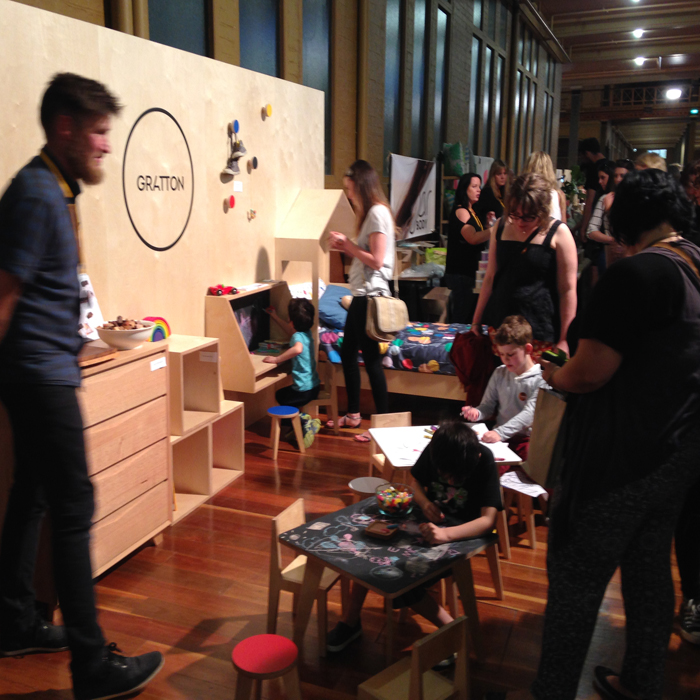
We had the afternoon to set up our stand before the markets opened at 6pm. We had prepared a quick mock-up of the stand in the workshop beforehand, so I had an idea of where everything would go. Once we had the stand up and ready, we wandered around and were blown away (and slightly intimidated!) by how amazing everyone else’s stands looked. We met our lovely stall neighbours, had a quick bite to eat and then the crowds poured in.
We quickly realized that it was up to us to engage the customers and be as approachable as possible. Start talking to people as soon as they approach your stand and keep smiling! It might feel artificial at first, but asking people how they are, how they are enjoying the market and letting them know something about your products can be a great way to make a connection and hopefully, a sale.
That said, being ‘on’ all the time can be exhausting, so take regular breaks. Make sure you bring a friend or helper to cover the stand while you duck off to eat lunch or have a rest.
What worked
Getting customer feedback
Getting to meet our customers and potential clients directly was invaluable. It was a great way to see which products people were interested in, what customizations were popular and who our customers were. For example, quite a few people asked if we made bunk beds. We didn’t, but are now adding bunk beds to our range in response to the customer feedback. We had always imagined mums being our biggest customers, but just as many dads purchased products too, which was interesting information.
Lollies
I grabbed a few bags of lollies at the last minute and put them in a bowl on one of our kid’s tables. It turned out to be perfect, as lollies attract kids and kids bring parents! We also provided chalk to draw on our Mini Chalky tables and crayons and colouring in pages for our Mini tables, which were a hit with the kids. While the kids drew, we chatted to the parents and made a few sales and contacts.
Trolleys
Beg, borrow or steal at least one trolley to carry your gear. Using a trolley will literally cut your bumping in and out time in half. We ended up lending ours to our neighbouring stallholders once we were unpacked, as it was a bit of a walk to the carpark and lugging boxes of stock and trestle tables is not fun.
What didn’t
Fancy shoes
I made the mistake of favouring fashion over function on the first night and my feet were not happy. Make sure you wear shoes and clothes that you will be comfortable standing in all day, in hot or cold weather.
Not spending all our profits
As tempting as it is, try to resist spending all your cash! As much as we love to support other handmade businesses, we did want to take home some profits and so I set myself a budget for a few special things that I was eyeing off over the weekend. Chatting to other stallholders is an excellent way to get advice, suss out how other small businesses do it and make new connections.
Not being prepared for the post-market rush
We expected to be busy the weekend of the market, but were not expecting the amount of orders in the weeks following. Our site received more traffic than ever before and we got a lot of requests for custom orders and different projects. In retrospect, this should have made sense as people don’t really go to a craft market to buy a large piece of furniture and would rather purchase it later on. We managed to adjust our workflow to accommodate the influx, but it would have been better if I had planned for the orders.
Emma Clark Gratton is an interior designer, writer and podcaster who, alongside her husband Lee, runs GRATTON, a timber furniture and architectural joinery company. She blogs at Worst House Best Street and posts endless photos of her sons on Instagram at @emmamakesthings.
Self care for small business owners
 By Monica Ng
No matter where you are on the spectrum of being a full-time small business owner or work a fulltime job alongside your small business pursuits, running your own business can seem like running the longest marathon of your life. Day in, day out, you work long hours at your day job and come home, tired but continue work for your own business. You hope to grow it into something that supports yourself and perhaps your family too. You spend every spare minute working on your sidepreneur gig. Any time that you are not working on your business, you are wracked with guilt and fear. In your mind you are constantly plagued with “what if” questions and try to rationalise your decisions for working on your business instead.
“What if I were to skip this (insert social occasion) and spend time doing X, Y and Z instead? I have an endless To-do list! There’ll always be next time…”
If you do take time out, you’re constantly thinking about or worried about your business. You’re glued to your phone, monitoring and updating your business. You’re not fully present. You feel inadequate and question whether you have the drive to really “make it.” Maybe you view this way of working like a badge of honour? Sacrificing things now for a better future? But really, if this is the mentality you’ve adopted, it can be all too easy to burn out. Your ability to be effective and efficient becomes diminished. You stop producing your best creative work. You’re stuck in a vicious cycle. Lose direction. Panic! Feel paralysed. Which is why the most vital thing for you to do for your business is to look after your number 1 and best asset: you.
This has been something I have always struggled with, especially most recently. Together with deadlines for my jewellery studies, last minute organization for my holiday (who gets stressed from organising a holiday, right?!) and tying up loose ends at home before flying overseas for said holiday – I felt completely deflated, unenthusiastic and a bit directionless about my business. But after being reminded that self-care as a small business owner is the most important thing I can do for myself and my business, here’s my top 5 action tips you can do too to look after yourself and your business.
Celebrate all your wins (whether small or big)
You’ve worked hard to achieve your goal – whether it’s big, like gaining a new client you’ve signed up or something 'smaller' – every achievement should be viewed as a win in your eyes and you should do something to celebrate these milestones! Whether its a nice meal out with loved ones, a candle lit bubble bath, or some time walking along the beach with your dog – take the time out to celebrate your achievement – because you worked hard to achieve it!
Look after your body
When you’re busy, it’s easy to forget that our bodies need regular exercise, nutritious food and plenty of sleep to be productive! Take the time to schedule into your calendar, regular times to do some exercise – whether it be an early morning walk with your pet, a midday yoga class or cycling around your neighbourhood, whatever activity you enjoy, make the time to do it! Life is too short to feel sluggish, be unfit and neglect your health. Not only will you feel better after exercising (hello endorphins!) but you’ll be so much more alert and energised to do the best work that you can.
The same goes for the food you eat too! Too often, we reach for the easiest and most convenient food options, which usually contains too much salt, fat or processed sugar. If you continue down this path of unhealthy eating, it’s no wonder you won’t feel at your best. If your schedule is busy, why not spend time planning your meals for the week, take a few hours and batch cooking some food and freezing it for the remainder of the week? You’ll be surprised how easy it can be to eat some nutritious home cooked meals when you put a little planning into the process.
Get enough sleep. Simple advice but often the first thing that gets sacrificed.
Go on a digital detox and recharge
Give yourself time to get away from the online world and reconnect with the natural world around you. Yes – this means disconnecting from all forms of social media, your blog, your online shop, forums etc etc.
Being constantly connected to the online world can be draining and counterproductive. Sometimes it may be best to just disconnect completely for a while, whether it is a few days, a week, a month or maybe more and spend time doing other things. Not only may this help you find new sources of inspiration, but also help you recharge so that when you do return to the online world – you’ll feel refreshed and ready to kick some butt again!
Allow yourself time to rest, catch up with friends and family and general “me time”
Give yourself permission to read a book and soak in the sun’s warm afternoon rays over a flat white, take a holiday (and don’t take work with you!) or do an activity you enjoy and don’t feel guilty about it!
For those that operate their small business from home, where this may mean a spare room, bedroom or kitchen is the “office”, the lines between work and play can be difficult to differentiate. Remember that for your business to be successful in the long-term, you need to draw some boundaries – just like you would if you worked a day job. Don’t fall into the mindset that you need every minute to work on your business to make it a success and that if you don’t do this, it means you’re not dedicated enough to your business. You’re not a failure for resting and relaxing! Our minds and bodies were not built to work 24/7. We need rest to recharge and you’ll be happier and healthier for it.
Remember why you decided to become a small business owner!
Think back to why you started your small business in the beginning. Did you start it up to gain financial freedom? To gain freedom away from the usual 9-5, operate during the hours you work best and pursue your passion? Whatever your reason may be - don’t forget it!
Sure there may be some late nights and early mornings – to grow a small business into a successful operation, it takes some serious hustling. But remember, that hustling means working efficiently, effectively, with excitement.
Now – don’t mind if I kickstart my own digital detox, recharge by immersing myself in Taiwan’s glorious luscious natural and urban landscapes and enjoy my holiday in Taipei!
Monica Ng left her accounting career at the end of 2013 to run Geometric Skies, her Etsy jewellery business, alongside her jewellery and object design studies at the Design Centre in Sydney. Find Monica at her blog or on Instagram @geometric_skies.
My Advice: Adding Value
 By Andrea McArthur
How to define value and add value to your product or creative service for customers and clients.
It's a big question but one that can create a spark! I've always found that clients and customers are always happiest when they have their expectations met and exceeded. For me (being in design) it's really important to fulfil and exceed clients expectations it's what can set me apart from other designers.
Small business tweaks can pay off! It's the small details which manifest as your brand which show your worth. Showing that you care about your brand, your service and your presentation are all important details. When you strive for excellence - clients will see the additional value in your business.
But the best and truest form of value-add that I've seen in practice is showing that you understand your client's business and their needs. Clients are open to receiving recommendations. By going a step further and exploring tailored options you will blow their mind, add value and possibly have more work. Creative solutions show value and keeps clients coming back for more!
Diana Scully, Principal (Interior) Designer www.spacesbydiana.com.au // Blog www.spacesandplacesblog.com
Working in a service based industry, adding value to what I offer comes down to my relationships with clients and therefore can be different for each project I work on. For me, its about understanding what's important to my client, then going the extra mile to deliver it. This may seem obvious, but for me, it about supporting my client through the process in a way that best suits their needs.
For potential new clients I have set up a lifestyle blog Spaces and Places where I discuss topics of interests relating to interior design. Sometimes its about understanding how certain pieces of furniture can work in your home, where to go shopping or breaking down the process of design so that readers understand how to apply the idea into their own home. I've even set up a Handbook page which has a list of showrooms and stores I usually visit for client projects! I hope that by sharing my knowledge and experiences with the community, they receive a benefit from my services, even before they have engaged me.
Without a doubt, adding value to my business means improving customer service, as I've learnt, people are predominately emotional beings when it comes to their home. They are greatly impacted by warmth, friendliness, being helpful and supportive. This may sound simple, but to me, this is a crucial aspect of adding value when you work in a service based industry. A positive attitude and level of enthusiasm towards a project is what can distinguish your service from the next, especially if you're working in an industry where there's plenty of competition! I find that offering to manage aspects of the project like collect/return samples, process orders or make myself contactable, even after hours, are just a few little ways I can make the process more convenient and rewarding for my client.
 Steph Parsons and Micaela Cleave, Two of a Kind Events
www.two-ofakind.com // Instagram @two_ofakindevents
Steph Parsons and Micaela Cleave, Two of a Kind Events
www.two-ofakind.com // Instagram @two_ofakindevents
As we are still a young business (only a year and a half old) we are constantly asking ourselves how we can define the value we offer to our clients. As cliched as it sounds, so far it really has been a process of finding what works for us through a lot of trial and error. Event styling itself is sometimes a hard concept to define, with our clients often expecting a concrete product for their money.
Recently we have introduced a clear step-by-step process for each of our service pathways which our clients receive when they book with us. This acts as a reference point for them to see which stage of the event design process we are up to at any given time. We've found this to be really helpful with managing a client's expectations and ultimately allowing us to exceed those expectations.
We also think it's really important to be our authentic selves in all aspects of our business. This of course impacts the relationships we form with our clients, and is something that we can offer them that no one else can. We are our product, and staying true to that has allowed us to connect with like minded people who have ended up becoming friends along the way.
{Image by Geelong Advertiser}
 Andrea Finch, Graphic Designer & Virtual Assistant
www.andreafinch.com.au // Twitter @andreafinch_
Andrea Finch, Graphic Designer & Virtual Assistant
www.andreafinch.com.au // Twitter @andreafinch_
I'm great at delivering exactly what I promise, when I promise. My clients are always impressed with what I have to offer. But I can do more by going the extra mile.
Here are three things that I do to add value that you might also find helpful.
Creativity. When I'm designing a logo for a client, I go the extra mile and also save it out at the right size for their profile picture for their Facebook business page. This might seem little but it creates a big impact on the client. I try to be creative and think of something small that I can include to delight my clients.
Professional Advice. As a supplier, I have the chance to offer a professional perspective on a clients’ business. My advice can help take them to the next critical step in growing their business (winner!). Professional advice could play a huge role in highlighting issues a client may not have yet considered, and if that input can help them reach big results, then the added value will be appreciated.
Communication. I’m a strong believer that you can’t do business without communication. It is the key ingredient to running a successful business. Ensuring I keep clients up to date with where I am at with their project (even if they don’t ask) is not only good work ethic but it tends to give me brownie points when you’re keeping them in the loop.
– – –
Thanks ladies for opening up and explaining some of your processes that work to add value in your creative businesses.
Andrea McArthur (www.andyjane.com) has a passion for all things visual and works as an Art Director and Designer for the Brisbane Festival. Design is her true love and she goes weak at the knees over strategic branding. You’ll find her sharing on Instagram @andyjanemc.
12 productivity tools and tricks for creative businesses
 By Monica Ng
As a small business owner, it can be difficult juggling multiple responsibilities simultaneously. On top of the day to day of fulfilling orders, planning for and creating new products or services, updating multiple social media channels, connecting with fans and peers in your niche, replying to a seemingly endless stream of emails, blogging, and project management, trying to manage it all without the right tools can be overwhelming!
So today I’d like to share with you my top 12 productivity tools, tips and tricks I use everyday for my online jewellery business.
1. Use Boomerang to schedule emails
With this Gmail plugin, you have the ability to write your reply whenever it’s convenient for you and schedule it to be sent at a specific time in the future. Not only this, but you can schedule email reminders. Hurray if you’re a night owl or an early bird (but don't want clients to know you are working after business hours ;))
2. Use Gmail Undo when you regret hitting 'send'
Ever regret sending an email, because you accidentally added someone in as cc when they were supposed to be bcc, attached the wrong document or sent an email or addressed it to the wrong person? After this, there’ll be no more email regret!
- Login to your email inbox, click the gear drop down menu in the top right, select settings
- Scroll to “undo send” and click enable
- Set the cancellation period and save changes
- After you click send, a yellow box pops up to confirm your message was sent complete with an “undo” and “view message” link.
- Click “undo” within your chosen cancellation period to retract the email you just sent.
3. Write template email responses to save time
Do you receive a lot of emails for wholesale enquires, PR requests, advertising queries etc. that require a very similar response? Having a pre-written response to these types of emails can save you a tonne of time each day. In addition to a basic cut-and-paste technique, Gmail’s canned responses let you insert a pre-written response with just a couple of clicks. TextExpander for Mac allows you to create keyboard shortcuts for anything from a lengthy response to a simple phrase or web address you find yourself constantly typing out.
4. Turn on Inbox pause
Do you constantly get interrupted and distracted by the familiar ‘ding’ or notification popping up, alerting you of a new email? Take back control over your inbox! This plugin for Gmail allows you to temporarily pause emails from arriving into your inbox with a click of a button. You can choose to send an auto-responder to anyone who sends you an email whilst your inbox is paused. All messages are rerouted to a special label until you un-pause your inbox.
5. Use Unroll.me to declutter your inbox
It’s easy for your inbox to get clogged up with junk emails you can’t even remember signing up to. This service scans your inbox for all your subscriptions and lists them all, allowing you to keep them or unsubscribe with a simple click of a button. Keep the subscriptions you love and unsubscribe from the ones you don’t.
Social Media
6. Make Photoshop templates for your social media updates
Create set size templates for all your social media platforms like Twitter, Instagram, Facebook and Pinterest. Then, when you need a new image, just change the text and image and voila – perfectly sized images for each social media platform.
For your reference, here are the current recommended sizes:
- Twitter header: 1500 x 500
- Twitter profile: 400 x 400
- Instagram: 1080 x 1080
- Facebook cover photo: 851 x 315
- Facebook profile: 180 x 180
- Facebook link preview: 600 x 315
- Pinterest board cover: 217 x 146
- Pinterest pins: 735 x 900-2100
7. Use Pinterest secret boards
Need a bank of inspiration ready for you to share and curate on your social media channels? Start up a secret Pinterest board. Only you (and anyone else you invite to the board) can see the pins and the pins you’ve pinned won’t show up anywhere else on Pinterest.
8. Make text-based images with Notegraphy
Funny, inspirational or motivational quotes spread like wildfire on social media, so this mobile app makes it easy to create and share beautifully designed images for your fans in under 20 seconds. Simply just type your message, choose a style and share it on your chosen social media channels.
9. Use Buffer to schedule social media updates
Schedule your social media updates with ease amongst multiple platforms such as Facebook, LinkedIn, Twitter, Google+ and most recently, Pinterest. Spread out your updates across the day and the week, so you don’t need to be constantly glued to your computer or phone in order to have a social media presence.
Blogging & Project management
10. Organise your life with Trello
Organise, plan and schedule projects and blog content with your team or as a solopreneur. Think of it as virtual post-it notes that allow you to track your progress for your tasks. Provide comments for instant feedback, set due dates, checklists and add attachments. All updates occur in real-time and you can see everything at a glance. It also syncs with your smartphone for list-making on the go!
11. Reduce email noise via Slack
Real time messaging to help you communicate with your team and reduce email clutter. Create channels for specific projects, topic or team members, send direct messages or make private groups. Slack syncs up to services like Google Drive, Dropbox or Box too – they sync in real time and all documents are searchable too.
12. Plan for the future with Wunderlist
Though not as robust as Slack, Wunderlist is a fantastic mobile and desktop app I use for personal planning. It’s a space that helps you plan for anything, whether it’s your grocery list, an upcoming holiday or work related tasks etc. You can set due dates, reminders and share your to-dos with others.
If you liked Monica's 12 tips, hop over to her website to download her guide to 8 more productivity apps for creative businesses!
Monica Ng left her accounting career at the end of 2013 to run Geometric Skies, her Etsy jewellery business, alongside her jewellery and object design studies at the Design Centre in Sydney. Find Monica at her blog or on Instagram @geometric_skies.
My Advice: Photography Tips
 By Andrea McArthur
Human beings thrive on the visual, especially those who consider themselves creative. The online world reflects this - today our businesses and creative output is supported by image-heavy blogs, websites, and social media feeds which make it important to represent yourself and your imagery in the best possible way.
This month, I asked three professional photographers for their tips to improve the result when you're tasked with presenting your products or work in the best possible light.
Karina Sharpe, Conceptual Artist and Product Photographer www.karinasharpe.com.au // Instagram // @karina_jean_sharpe
Imagery is big these days, and high calibre imagery has become both the norm and the expectation. I teach a lot of people how to take good photos more effortlessly - and less by accident - in my Benchtop Photography workshops. These are the three tips that people seem to find of most value.
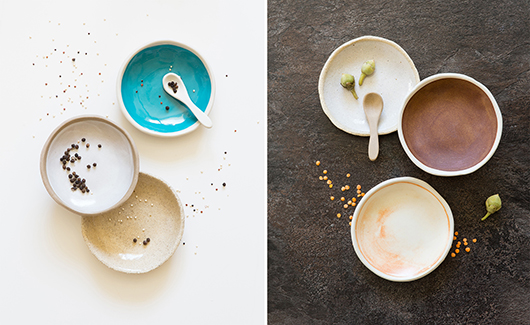
1. The direction of LIGHT, in relation to an object’s position and orientation, can be the single most transformational element of your photographs. This is because objects have a form that will show itself differently depending on how its surfaces are lit up. Begin to notice the light around you and where it is coming from. Try and set your arrangements up on something that you can spin around in relation to the light source. Then, play with how the light falls onto, and across, your objects. Observe what gives the most captivating result.
2. SHADOWS are definitely not your enemy. In most situations we want to engage with our audience on an emotional level, and shadows provide depth, tangibility, realism and substance. However, we want to try and avoid the shadow of one object falling across another object, so become aware and move your objects if shadows are falling in an unfriendly manner. Also, try to avoid double shadows. If you notice this is happening, try to eliminate any extra light sources.
3. Creative use of BACKDROPS allows our images to standout, be recognisable, and build consistency for our brand. Coloured paper or cardboard are easy options, and things like tiles, fabric, flooring offcuts and fake timbers & textures give even more scope. Choose surfaces with your brand’s ethos in mind; timber is not just timber – white-washed might look refined and adventure-y, whereas a dark rough grain would be more earthy and homespun. Ask yourself, which timber am I?
Jessica K Reftel Evans, Photographer www.amorfo.net // Instagram // @amorfophotography

Before setting out on taking your images it's a massive time saver to work out clear visual objectives. Storyboard what it is that you're trying to achieve; a colour palette/mood-board and if you want these images to be more editorial/environmental or clean/factual. Take these thoughts with you as you prepare the shoot with backgrounds and props. Keeping the styling consistent is the key.
To display most products honestly and flatteringly I would suggest using a soft light source. If you don't have special lights you can use a window. Avoid direct sunlight and diffuse the light with a photographic scrim or thin white fabric. If the shadows are too heavy use a white card or another piece of white fabric on the shadow side of your product. Also, turn off your roof lights since they might change the colour temperature and light of your image. The colour of daylight changes throughout the day. So to make sure that your images have consistent and accurate colour representation use white balance settings. This can be done either on your camera or in your image processing software.
And remember, you might not get the perfect image the first time. So just practice, experiment and most importantly have fun. Happy shooting!
Hannah Rose Robinson, photographer www.hannahrose.com.au // Instagram // @hannah_rose_robinson
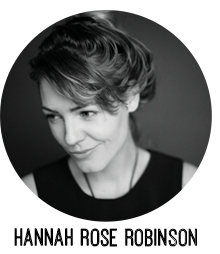
Tell a story. In today's world we are so bombarded with images everywhere we turn that it's hard to stand out. A visual identity is so important - carving out a style that is unique and becomes a recognisable brand, they tell a story through all the elements involved. Photography is just one element of that but an important one. Use imagery that tells a story, or evokes an emotional response. Put multiple images together to create a mood, or piece together a narrative. Write something to accompany the image/s, tell a story. I want to know what people are about, how they feel, their views on the world. Show your process. This is engaging and people like to be invited into the intimate space you can create with images and words. No matter what the subject matter, food, products, people, how can they be a story. What else is in the picture, what else can help tell my narrative.
Be unique. We are all guilty of scrolling Instagram or a favourite blog and getting tunnel vision on someone else's style when we see an image we fall in love with. Try not to get lost in this. I like to see people be different from the masses, find their own vision. There will always be trends that will come and go, but if you spend some time looking deep and hard on what your core vision and personal brand message is, you should be able to start carving out your own style. Be inspired by the images you like, but don't look to be a copy. Look to what the elements are that you like in those images (maybe it's the light or tone or mood) and be inspired by them to create your own unique look.
Switch off. The online world that we are all so intrinsically plugged into these days is immense. It takes up a lot of our time, we devote it our time, and it demands our time. Our technology and online lives are so ingrained in our experiences these days that it frankly makes my head ache. So my big tip is to switch off. Every now and then just switch it all off. Don't take a picture, don't blog, don't scroll. Go do the things you love to blog about and reconnect with them on a fully present scale. It's easy to miss the essence of a moment, lose sight of the essence of your work- whilst being lost in how to capture and share it. Every now and then, switch off and revaluate the process. Go climb a mountain purely to feel the joy in the ache of your legs, to feel the air sweetly fill your lungs, to drink in that view from the top, be fully present. Don't take a picture. Make a memory, and keep it for yourself. Put them in your bank to inspire you. It reboots your brain, and will only mean great things for all your creative endeavours.


- - - Thank you ladies for sharing your photography tips. I am definitely going to have a play with my camera soon!
{Title image by Karina Sharpe}
Andrea McArthur (www.andyjane.com) has a passion for all things visual and works as an Art Director and Designer for the Brisbane Festival. Design is her true love and she goes weak at the knees over strategic branding. You’ll find her sharing on Instagram @andyjanemc.