
Advertising tips for small creative businesses
Today's post is by guest blogger Jes Egan of Paper Chap. Welcome, Jes!
Creativity is in my blood. I come from a mad creative family and I had a pretty conservative schooling, which I tried to conform to, but in the end the creative flair won and I went and studied design at university. Being surrounded by creative people is inspiring and a guarantee you’ll get a taste for coffee or wine. Or both, as in my case. Upon graduation, I went travelling. However, in fighting some of the madness of my upbringing, a sensible and practical person developed alongside my creativity. So instead of sticking to being a designer, I went to what I aptly call the ‘dark side’ and became a ‘suit’ in the account management department of some of the biggest advertising agencies in the UK and Australia.
Now days, my brain is back in creative mode and I run my own little business, Paper Chap. My creative outlet, illustrated and hand cut paper cuts that I can make with love. My practical side still exists however, and it is possible to be creative and business minded, it just doesn’t always come naturally. I share my practical side with design students, lecturing in ‘Design and Business’ at Billy Blue College of Design.
My past life in big-brand advertising has taught me many things that can be applied to a creative business and successful brand.
Find your point of difference.
There is so much competition, there are other companies who do what you do, just under a different brand. But you will have a point of difference (POD), this might be service, design, price, it can be anything that is a benefit to the end user and is different to your competitors. Find out what yours is, if you can’t pin point what it is then neither will your customer. Once you know what your POD is you can use this to your advantage. We are so used to choice these days, we expect it and we make informed purchasing decisions daily. Stand out from your competitors, be bold and show how you differentiate yourself.
Know your audience.
It doesn’t matter what type of business that you are in, knowing your audience is paramount. You can waste time, effort and money targeting the wrong audience. Depending on what you do there are numerous different ways to find out who your audience are and if you are a small business one of the best ways to do this is look at your existing clients/customers. So many key learnings/insights can be taken from them.
Be targeted.
When you know who your audience is target them specifically, this will save you time, effort and money. For example if your audience frequent certain types of websites or publications, or favours Facebook over LinkedIn, put your time and efforts into those places. Be it paid advertising or just doing it on your own, you are eliminating wastage and sending your message to places where your audience is.
Chose your social media sites carefully.
You don’t have to use all the social media channels out there, chose what will reach your audience best and focus on those. Don’t over stretch yourself, if you are selling a creative service or product then visual channels might work best for you such as Instagram or Pinterest. If you sell a service then maybe LinkedIn, Twitter etc are better. It will be depend on where your audience is participating in social media as to where you need to be.
Be on message.
Often businesses try and cram every message they want to say into a very small space. This can dilute your message and make it really confusing for your audience to understand what you are trying to get across. Try and stay single minded. Even if it is a tweet or a Facebook post, if you have two things to say, do two messages. It might sounds simple and that is the point, it should be simple. It will take little time and effort and be more effective.
It is better to pay more for fewer ads in the right places than less for multiple ads in the wrong places.
Does paying for advertising work? Given my background, this is often a question I am asked. Without doubt, it you have the budget to pay for advertising then yes it can pay off. It can build your brand awareness and potentially convert into sales and hopefully you’ll get a decent return on your investment. But if you’re going to do it, do it properly. Make sure your creative is on message, targeted and made well. Also, make sure you are hitting your audience - don’t try hit the masses by buying cheap ad spaces across as many channels as you can. It goes back to knowing your audience. Don’t let your add get lost or ignored.
...
Putting yourself and your creative business 'out there' can be easier said then done, I know. Particularly if your heart is entrenched in what you do, which is often the case in the creative world. But there are so many ways to put effectively advertise and market your business while staying true to your values and integrity, it's just about making an educated decision on which avenue you want to explore and being creative with your budget.
Jes is a ‘practical creative’ with a past life in advertising. These days Jes is an artist, lecturer, and small business owner who can be found cutting up a storm at paperchap.com. Follow Jes on Instagram and Facebook.
{Image by Jes!}
How to Improve Your Blog to Grow Your Creative Business
 By Dannielle Cresp
Blogging is great for business. We all know it. But when it’s not the number one thing on your to-do list, it can slip from a “must do” to a “should do”. When a month or two passes without any new content going up, we know it looks bad, but the longer it’s left the more difficult it feels to get back to it.
I’ve been blogging weekly for almost a year now without missing a single post. So today I want to share with you my tips for improving your blog to help your creative business grow, without adding too much more to your plate.
- Have an editorial calendar and dedicate at least half a day a month to it. Decide what days of the week you’ll be posting over the coming month. I recommend less rather than more if your blog isn’t your main business. It’s better to be consistent once or twice a week than 5 days one week and nothing for the rest of the month. Use that half day to plan what you will write (even if it’s just vague topics for now) and the dates you will publish the posts.
- Dedicate time write posts in batches. Set aside half a day to a day to write as many posts as you can. Take the photos you need to accompany what you've written, and then schedule them according to your editorial calendar. It might seem silly to not work on your main business for a whole day or so, but blogging is an important part of marketing!
- Make your images easily pinable to Pinterest. Only use great quality images and add your post title to the image you’re going to use (like the example above). Also consider adding a 'pin it' button over your images. This makes your content easier to share amongst Pinterest users, and will help drive traffic back to your site. It's also a great way to bookmark and categorise your own blog posts for easy reference.
- Have an e-Newsletter Sign Up on your blog sidebar and encourage readers to sign up (e.g. by offering them exclusive offers or something extra if they do).
- Keep your colours and fonts consistent. Your blog is an intrinsic part of your brand, and consistency will ensure people will get to know you and your work by sight.
- Only write as much as you need to. Blog posts needn't be long, especially if your creative business has lots of visual appeal. Write only what you need to and share some great images that will help you get your point across. There is no ideal blog post length. For many of you, images will be a way to share some behind the scenes work and you’ll only a short ammount of text to give those images some context.
- Have some fun with it. It might seem odd that you would have fun with the marketing side of your business, but if you let your personality shine through a bit people can see there’s a person behind the brand and feel like they’re supporting someone rather than something. Even if you’re a team, it can be a great way to give some insight into who the customer (or client) might be hiring or purchasing from.
Blogging can be great for your business and it doesn't have to take up a big part of your daily business routine. Find a rhythm that works for you and and it will be much easier to stick to and to enjoy.
Dannielle is a blogger, serial organiser and passionate traveller. She has a secret love of 90s teen movies and can often be found hanging out on Pinterest. She is on a mission to help people bring happiness (and fun) back into their homes with a dash of organisation and a sprinkle of their own awesome style over at her blog Style for a Happy Home.
Image from © Lime Lane Photography with text overlay
My Advice: Going freelance
By Lizzie Stafford

Going freelance means giving up a steady income, sick leave, holiday pay and the security of knowing where you’ll be or what you’ll be working on tomorrow, next week or a month from now. But it also means more creative freedom, flexibility, independence – and being able to nap during the day. We asked four freelancers – a graphic designer, a writer and editor, a consultant and collaborator and a creative director – for some advice on how to make the transition into working for yourself.
Be practical.
Jo Hoban, freelance editorial consultant and creative collaborator
"I made the shift to freelancing when I had young babies, and it suited me—I knew I wouldn’t have a wealth of time to work anyway, but I managed different projects when I could, and now that the kids are a bit older, I’m finding it more natural to increase my workload.
Starting to freelance is like bungee jumping—it’s scary, but you know you’re tied to something, so hope for the best! Exhilaration aside, you need to be practical. It’s sensible to know that you have a ‘bread-and-butter’ client or two who will flick work your way (thanks, old employer!). And if you share your finances with a partner, you need to know that they’re in a position to shoulder your financial responsibilities should your work contracts be on the lean side. Once you’ve got the basics covered, you can learn as you go, and slowly grow your business. I’ve found that if you just keep chugging away, gradually you’ll start to gather more momentum.
Some useful advice I’ve received along the way has been to stay calm and make time for everything, even if you feel like a job is consuming you. Be organised with your admin and allocate some time for your marketing, or seeking future work—how much depends on how busy you want to be and how many existing clients you have. It’s worthwhile to do some kinds of work for free, to help build your portfolio and feed your creativity. And you never know what other opportunities might come from it. Gather testimonials as you go and connect with your collaborators and clients through social media sites. And finally… once you’ve made the decision to go freelance, back yourself! If you know that you can provide a valuable, high-quality service, be prepared to summarise that when an opportunity arises."
Show up, show up, show up, and after a while, the work shows up, too.
Madeleine Dore, freelance writer and editor, Extraordinary Routines
“Show up, show up, show up, and after a while the muse shows up, too.” - Isabel Allende
"In the beginning of building a career as freelance writer, I think it’s important to put your hand up for as many things as possible. Find an internship that will sharpen your skills, build your portfolio and give you a valuable contact in the industry who can vouch for your writing. Ask friends if you can help write content for their website, short bios, or press releases. Pitch features to your favourite publications and volunteer to write the first one for free if the editor is not familiar with your work. Start a blog or writing project to showcase your writing. Make your name known. Show up, show up, show up, and after a while, the work shows up, too."
Take naps often.
Lara Stephenson, creative director, The Grazing Elk
"Something I have learned through being a freelancer and now owning my own business would be: take frequent naps. If you’re tired or frustrated – just check out. Have a nap, watch a movie, read a book, go do something nice for yourself, have fun... and come back to your project, your business, or your work when you are feeling better, inspired and uplifted from the good things you have just done.
It is only recently I have heard this from other people, but I have found it is one of the easiest and nicest ways to feel good again, get inspiration (my website idea came to me in a dream), and you feeling good, confident and loved is the first step of everything. Being a freelancer, you have this freedom to take time out, have a nap and do something fun.
You will return to whatever you were doing before on a completely new level and fresh inspiration."
Stay busy.
Jodi English, freelance graphic designer
"Recently, I've been constantly coming back to some advice from Andrew Denton at the recent Semi Permanent conference in Sydney: “Be busy. Be Hungry. Be silent. Be bold. Be prepared to fail. And persevere.”
Over time I've come to realise it's so much more important to stay busy, not only on commercial work, but personal projects. This allows you the freedom to explore different mediums, different ideas, learn different skills and gives you a platform to continually experiment. Whilst freelancing offers you a degree of freedom, you are responsible with your time and it's important to stay organised, be proactive and explore new and exciting opportunities that keep you motivated.
For me, being hungry is having a constant curiosity, not only about design but about travel, people, food, ideas and the world around us. I believe we can gain inspiration from the most unexpected places so it's important to always be a sponge!
I find it so easy to constantly be thinking about your current projects, next week's plans or getting caught up in your Facebook timeline or Instagram feed. Recently, I've been making a conscious effort to just sit down, relax and enjoy some quiet time away from my phone/computer and read my latest books and magazines. Surprisingly, some of your best ideas actually come when you don't intend!
I believe being bold is about being confident in your own abilities, believing in yourself and having the willingness to put yourself out there. At times, I think we all struggle with this and often compare ourselves to others. It's important to believe in your work, embrace your individual style as a freelancer and remember the real value of your work. Be open to meeting new people, getting involved in your local community and collaborating with other creatives.
More than anything else, work hard, stay humble, hopeful, patient and never give up! Oh and make sure you keep money aside for tax!"
Lizzie Stafford is a freelance writer and editor and owns and runs Künstler, an independent magazine and bookstore based in Winn Lane, Brisbane. She is the Brisbane events coordinator for CWC.
How to Plan now for the Christmas Rush
By Susan Goodwin

Christmas, a time for giving, a time for family and the lead up to it can be some of the most intense times for your business. It may be months away yet but if you do some prep work now you will arrive at Christmas not a frazzled mess but as a cool calm collected business woman who has just made the most of one of the biggest retail opportunities available.
Get your products ready Ensure all products, goods and services are going to be ready in time for the Christmas sales period. If they aren’t you will lose a big opportunity so make sure your deadlines are being met.
Plan when to let your customers know Work out a calendar of when the goods are available and how to best communicate to your customers during a time period when they are going to be bombarded with buy buy buy messages
Schedules your blog posts and social media Hopefully you are working to a blog content 'calendar' by now... If so, set aside a couple of days in July and do as much prep work as you possibly can to have December posts ready to go. Even if you need to add photos later, get the writing and scheduling done.
Plan out your cards Sending out Christmas cards? If they are physical cards, get them designed and printed before October. That way, you have time to write in them and get them into the post mid- to late-November in time for an early December delivery. If the bulk of your cards are going overseas, be sure to check the posting schedule and aim for an early November post date.
If your cards are virtual, get onto the design now and pre-schedule them to be sent out.
Sending gifts or products to key clients or agencies? Think ahead and be sure to make your present relevant and as inspired as possible. Avoid the cliches and ensure you give a gift that will be remembered and appreciated.
Wrapping paper, not just for the presents you are giving, but for your own products Think about how wrapping a product can benefit your brand and delight your customers. Do test runs, get costings and have everything ready far in advance.
Wrapping your products in a creative way could work in-store or at markets. Think about how to make this an engaging aspect of your customer's experience. Could you set up a wrapping station and allow customers to wrap their own gifts? Or have expert guides on hand to help? For online customers, offer gift wrapping as part of the service or for a small charge. Beautiful photos of the final wrapping are a must and will encourage people to take the option of wrapping and be happy to pay for it.
Then, prep for sales beyond Christmas Think ahead: will you offer sales and discounts in December, or just from Boxing Day? Make a sales plan and act accordingly. If your website needs to change prices on the 26th, ensure you won’t be needed to manually input pricing changes on Christmas Day. Perhaps inside the gift wrapping you might consider adding a discount card to encourage repeat custom, or an easy way for them to share their gift on social media. Make it fun and engaging to increase your exposure. Plan it, pre-schedule it.
---
Overall, planning and scheduling as much as possible earlier in the year, will ensure you're calm and efficient during December. Not only will sales be flying out the door, you will have engagements and parties of your own to attend. Make sure your business is well looked after so you can enjoy the celebrations and not be locked in the office till midnight writing out Christmas cards (which could’ve been done in October!).
Plan and schedule and you will have time for both success and pleasure this Christmas.
Susan Goodwin is the designer, sewer and creator of Rocket Fuel, ensuring you are decked out in style while cycling. Read her blog or follow her on Twitter @rocketfuelstyle.
5 Tips for Keeping a Positive Mindset When Things Aren’t Going to Plan
 Sometimes we have periods where our businesses are going great-guns. It's hard work but things are moving quickly and in a forward direction. Nothing but awesome - it's a great place to be. But there are also times where we might start to wonder why things aren’t going to plan, and why it feels more like we’re treading water (even if it looks awesome from the outside looking in).
Here are some tips to work with that.
- Take a break and get away from work. This could be an hour or two in a coffee shop or a weekend away, or even a weekend where you just do anything but work. Clear your head and give it a chance to see the forest for the trees. It can feel counter productive to step away when tasks are piling up and you feel like you should be doing more to fix the situation, but you have to take care of you to take care of your creative business.
- Confide in someone you trust. Even if they can’t give advice, they can help share that load weighing on your mind. They might have some creative solutions, or they might just be someone who’s got your back. We all need them, in good times, but especially when times feel bad. Having someone to remind you of something funny always helps.
- Come up with a plan. Yes, things aren’t feeling great, but now’s your opportunity to turn the situation around. Identify the things that aren’t working and write them each on their own pieces of paper. Turn your favourite music on, dance, and start to think about how you can use those things (focusing on one at a time) as jumping-off points for something much better. Sometimes it’s in the most frustrating problems that we find the best solutions.
- Dream big and then dream small. Things aren’t going to plan? You realised that this just isn’t working as it is? Now is a great time to start thinking about what does work for you. Ask yourself: What’s the 'big picture?' Got it? Now dream small and turn it into actionable goals. Remember that nothing is a straight sprint to “Hell yeah!”, it’s more like an obstacle course.
- Do something that fills you with energy. When things aren’t going well, it can feel like there’s no time to do the kind of work that fills you with energy and makes you feel great. Try to find 15 minutes to an hour a day to do the task that reminds you what that great feeling feels like. Even if you have to ride the less than great times out, this will give you something to hold onto during those times when you need it most.
All of these things have helped me when things in my creative business haven’t been going as planned. When I came out the other side, I had all these things in my armoury, plus the knowledge that the tough times don’t last forever. Even if things are going great right now, it can be good to make a mental plan of who to reach out too and what it is that always fills you with energy. Here’s to more good times than bad!
Dannielle is a blogger, serial organiser and passionate traveller. She has a secret love of 90s teen movies and can often be found hanging out on Pinterest. She is on a mission to help people bring happiness (and fun) back into their homes with a dash of organisation and a sprinkle of their own awesome style over at her blog Style for a Happy Home.
My Advice: Getting Published
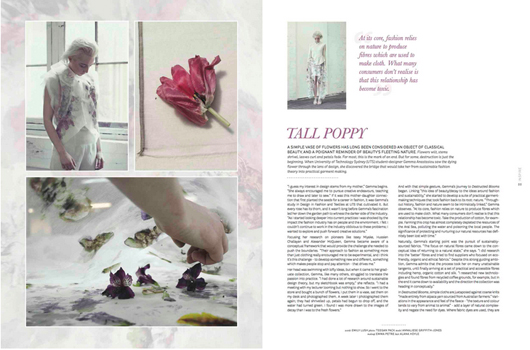
 {Photographs by Natalie McComas, published in Frankie Magazine}
By Lizzie Stafford
Getting your work out there is one of the most important aspects of being a creative practitioner, but everyone knows getting published isn't easy. So how do you approach an editor? How do you let them know your work is good enough or the right fit for their magazine, blog, book or website? Here, a photographer, a stylist, an editor/writer, an illustrator and a blogger/author/crafter offer their (invaluable) words of advice.
Have an up-to-date, clean and easy-to-navigate website.
Natalie McComas, photographer
"I feel that every photographer's journey into the publishing world can be a different one.
For me, it's been a combination of editors contacting me via my website, networking with other creatives, submitting article ideas and folios, photographers referring me for jobs and also knowing the right people at the right time.
I'd definitely say that having an up to date, clean and easy-to-navigate website, with all the right key words for search engines, to be a pretty important part of not only getting work, but also getting published. It is, after all, your 'shopfront' available 24/7 for browsing. I've had international magazines contact me to shoot for them just from Googling photographers in my area. Once, I was asked by an editor in London to shoot an interior story for their magazine - even though I didn't have any interior shots on my site. They liked my style, saw I had credentials and knew I'd be able to do the job the way they needed it done.
If you are submitting work, firstly, do your homework to make sure it is not something that has been featured elsewhere recently! It is best if the pitch is succinct and with all relevant links/ facts/ accompanying photos to make it super easy for your contact to look through and evaluate.
Whilst making submissions do not get discouraged if you don't get a reply straight away. Sometimes I've heard back from editors three months later from when I actually pitched the idea. If you don't hear back or if you are rejected, don't take it personally. Keep your chin up and think about how you can make your next submission a little better."

Know your magazines.
Lyndel Miller, stylist
"I still get a kick out of seeing my work grace the pages of a magazine. As I start writing this I am reminded that there is a lot to know about this process. I am a published cookbook author, have produced and styled books for others and am now writing my second cookbook/styling book for release in 2015. I love books! I equally love magazines and love to encourage others.
There is a process for the stylist when looking to get published. There is one for the photographer and one also for the writer. This is also a collaborative process. I think the single most important thing to take on board for all parties if you are dreaming of photographing, styling, or writing for an interior editorial is to know your magazines. It's the best place to start.
Really know them. This might be stating the obvious, though I find those I mentor are not always attuned to this. Subscribe to the ones you would like to submit to.
Ask yourself: Who is their audience? What style of homes are they constantly featuring? What is the writing style? What is the style of photography?
Look beyond the gloss on pages to the formula. Read them! Know your editors, read their work. They are the essence of their magazines. Then look at whether your style and your crew you have chosen to collaborate with can cater to this.
An editorial submission is not just about you and your work but that of a photographer, and perhaps a writer if you decide to team up with one and offer a magazine the whole package.
Not all photographers are the same. Not all writers are the same. This applies to stylists also. Choose to work with those that exhibit talent for the field you wish to pursue. A like-minded team is very important. Ideally, team up and collaborate with a crew that already has contacts in the industry. This can be very helpful. Collaboration is key! A photo stylist cannot showcase ones work without a photographer. Building a relationship with a photographer is paramount."
Pitch often and pitch well.
Emily Lush, freelance writer/editor
"When you’re trying to get published, rejection is inevitable but feedback is invaluable. Pitch often and pitch well - not only will it improve your chances of getting published, but pitching is a great way to access feedback. Whether it’s an auto reply or a thoughtful piece of constructive criticism, take every rejection letter you receive and learn something from it.
No matter how many leads you’ve chased, interviews you’ve transcribed or background research you’ve enveloped yourself in, no idea is ever wasted, and no time you invest in a story you’re passionate about is ever wasted time. Getting published might be your end goal, but professional writing is a process. One of the first feature articles I ever wrote was shot down in flames by the magazine I pitched to - so into the desk drawer it went. When I had the opportunity to revisit the subject for a different publication several years later, I already had the knowledge, so I was able to build on my original ideas, reconnect with old contacts and write a stronger feature. Better still, my initial awareness on the topic had subconsciously forced me to pay attention to every little tidbit of information I came across in the interim. The story that I eventually published took a few days to write, but it had been in development for three years - becoming richer and more refined with every passing day.
There’s nothing wrong with recycling your old ideas or contacts - the best stories take time to produce. Now that I work on the other side of the desk sorting submissions (at Peppermint Magazine), I often see writers come back again and again with ideas they’ve polished or new ones they’ve pursued. Showing a publication that you’re willing to persevere - and to learn and bounce back from rejection - proves that you’re committed.
Once you have momentum, keep it rolling. I highly recommend using an online portfolio or blog to catalogue your published and unpublished work. If you use a blog, you can track your progress as a writer and curate your own content, which can be a helpful motivator if you’re struggling to get your ideas noticed. An online portfolio is also a great way to store your ideas and inspirations - return to them again and again, make links between old and new, and keep creating."
Get ready to hear the word no.
Amy Borrell, illustrator
"I first started freelancing as an illustrator a few years ago and in the beginning, getting my work out into the world and published was all a bit of a mystery. But through a fair bit of trial and error I've learnt a few tricks that will hopefully help increase the chances of your work being seen - and commissioned! - by the right people.
Do good work! It sounds simple, but if you don't like your own work, chances are noone else will. Identify potential publications with a similar aesthetic to your own. Reaching out to likeminded people will increase the chances of a response.
Try to find the Art Director's name of said publication so you can contact them directly. Be personal, polite and straight to the point. Clients are generally busy people, so you have to give them a reason to read your email over the hundreds of others that may be lining their inbox. Use their name at the beginning, a clear subject line and a short cheery email introducing yourself with a link to your online portfolio.
Get ready to hear the word no - or nothing at all! It happens a lot when you're first starting out, but with a little perseverance you'll stumble upon people who will genuinely love and support your work!"

Be innovative, surprising, authentic, fresh!
Pip Lincolne, author, blogger, crafter
"My advice to creatives who want to be published is this: have a blog or website where you can showcase your work. Editors not only need to be able to read your work, they need to be able to FIND you if they Google you! Be innovative, surprising, authentic, fresh! Offer your own unique self out to the world, there is nobody like you and this is your chance to show who you really are.
Be humble and thankful for any help you get along the way and promote the work of other creatives you love to build a little community around you. If you want to write a book or appear in your favourite magazine, interact with publishers either on platforms like Instagram and Facebook - or just email them a short, polite, personal email telling them about the good things you are doing. If you email a publisher or editor, keep it short and sweet and include any relevant information about your work PLUS a low res image (with a ink to a hi-res online version). Make your email short but compelling to make publication/further research easier for the recipient.
And finally work hard, be nice to people and never give up! It takes time to be successful! Don't be disheartened if it's slow progress. Slow going is better than no-going, if publication is your dream! Keep going at your craft and soldier on!"
Lizzie Stafford is a freelance writer and editor and owns and runs Künstler, an independent magazine and bookstore based in Winn Lane, Brisbane. She is the Brisbane events coordinator for CWC.
Create a mood board to clarify your brand
By Susan Goodwin

Despite not always wanting to admit it, as creatives who sell our work or creative services, we 'are' our brands. And in the online space, the visual impact of your brand matters more now than ever before. Having a strong cohesive look to everything from your website and social media accounts, to your email marketing and printed promotional pieces, has become increasingly important.
For this reason, it's worth regularly standing back to have a look at the elements of your brand and how they are represented visually, and if that representation accurately reflects who you are and what you do.
Ask yourself: Do they all look like they came from one place? Or are they completely varied and share none of the same visual clues? Do they tell a story or show you something you want to buy or be a part of?
If your communications are leaving you feeling less than stellar about your brand, then don't become disheartened. Like any marketing exercise, it simply might be time for you to start reigning in your ideas, and focus. One way this can be achieved is ti create a mood board for your brand.
 A mood board will create a visual look for your brand so that each time you need to take a photo, use a font, or create a marketing piece you can draw inspiration from the same source material. This way, instead of having a disjointed message, you will be providing a strong clear visual that backs up the presence of your brand.
Ideally, your mood board should:
- be a collection of images that give you inspiration.
- have images that show the ideals of your brand.
- showcase your aesthetic.
- depict colours, fonts, and styles of imagery that work together and that provide a practical resource you can refer to when creating communications.
But, most importantly, every time you look at your mood board it should make you feel inspired, it should remind you of your goals and all the things you want to achieve in your creative business.
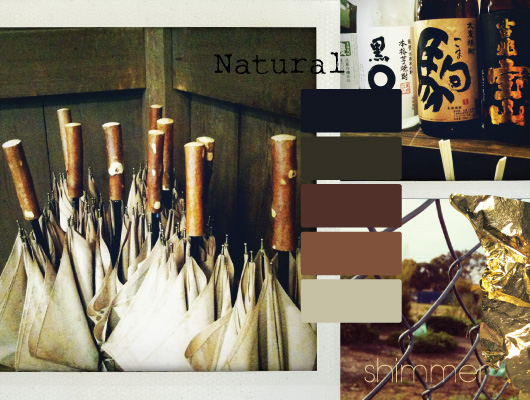
In terms of actually creating a mood board, there are many options. Your mood board can be virtual, using a platform like Pinterest; you could create one using Illustrator or Photoshop; or you could make yourself a coffee, grab a stack of magazines and get to cutting and assemble one on a cork board for above your desk (or if you're really pressed for space, just take over the refrigerator door!).
Mood boards are fun to make and a constant source of inspiration. And remember, they can change. As your brands grows you can add or subtract your source imagery. It won’t stop you from being spontaneous and taking a perfect Instagram image on the spur of the moment, but it might just help to bring your brand and business intentions into focus and create a better visual language.
{Image credits: Screenshot from our Pinterest page; other images by Susan.}
Susan Goodwin is the designer, sewer and creator of Rocket Fuel, ensuring you are decked out in style while cycling. Read her blog or follow her on Twitter @rocketfuelstyle.