
5 Tips for a More Productive Day
By Dannielle Cresp

Productivity and creativity aren’t always the best of friends. Sometimes you’re really feeling it and want to do all the things and other times it can feel a bit like you’re wading knee-deep through mud. Here are some of my favourite ways to push through and make a really productive day.
- Start with Two To-Do Lists. First write down all the things you need to get done, not just today, but all of them. Doesn’t matter about order or priority for the mean time, just get them all down on paper. Once they’re all there, take a highlighter and highlight all the ones you want or need to get done today. Put them on your second to-do list and put that first big one out of sight.
- Get your working environment ready. It might seem like procrastinating but think about what you need for the tasks on your to-do list and get them out so they are within reach before you start. Nothing makes it harder to stay productive than searching for something you need desperately mid-task. Also get a bottle of water so you’re keeping hydrated whilst working.
- Decide the order of your to-do list and eat the frog first! When deciding the order of tasks, do the hardest thing, or the one you don’t feel like doing the most, first. Then do something that’s quick and/or something you enjoy. Once that thing you didn’t want to do is out of the way you’ll feel lighter and more able to get on with everything else.
- Batch your tasks so you can stay in the right mindset. Need to write a series of blog posts? Do a few together whilst you’re focussed on writing. Need to organise your social media for the week? Schedule your posts and social media updates in one hit - guarateed to make you feel super on top of it all.
- Take proper scheduled breaks. It might seem counter-productive to be taking a break when trying to be productive but it’s amazing what 20 minutes of fresh air and slowing down will do for you during your efficiency and creativity. If you try to run at full speed all day, everyday, you will get tired and worn out and your productivity will suffer. Taking a break allows your body and your brain to reset and even in a world of deadlines, we all need that!
Just a little bit of planning at the beginning of the day can really help make it a more productive - and ultimately more creative -one. Giving yourself the permission not to do everything on your big to-do list and just taking it one day at a time can really make a big difference. Tackling each day like this really helps you to prioritise what the important things are to you and your creative business, which is the cherry on top!
Dannielle is a blogger, serial organiser and passionate traveller. She has a secret love of 90s teen movies and can often be found hanging out on Pinterest. She is on a mission to help people bring happiness (and fun) back into their homes with a dash of organisation and a sprinkle of their own awesome style over at her blog Style for a Happy Home.
Image from © Lime Lane Photography with text overlay
My Advice: Staying on top of admin
By Lizzie Stafford There aren’t many small creative business owners who would openly admit to loving their admin work. Tasks like bookkeeping, emails, invoices and social media build up and eventually seem to take over, so you feel like you have little time left for the actual creating. We asked three organised business owners how they stay on top of the books without going insane. In the wise words of potter Ilona Topolcsanyi: “Admin is like a leg wax: if you move quickly, the pain is minimal and the results are pretty damn sexy.”

Check your emails twice daily. No more, no less.
Bek Smith, photographer, Bek Smith Photography & Journal
"Keeping on top of admin is so important when running a business and it's sometimes easy to let the most important tasks slip past you if you don't have a productive system in place. As a photographer running my own business, the best piece of advice I have been given is to check your emails twice daily. No more, no less. This way you can tackle your inbox in two chunks and focus your full attention on each gorgeous client."

Create a routine. Schedule manageable, bite-sized tasks into your weekly calendar.
Nat Carroll, creative director, designer & illustrator, the Seamstress
"Instead of leaving things like marketing, taxes and blog writing to the last minute, which leads to unnecessary stress and tight deadlines, try creating a weekly routine that incorporates these tasks into more manageable, bite-sized items that you can follow through on every week.
Try to stick with it, no matter how busy you might be. Block it out in your calendar. I find Monday mornings are a good, quiet time in the week to plan my goals, write posts for my blog or work on my next self-promotional piece. I also like to finish up on Friday afternoons by dealing with my finances; I'm creatively exhausted by then and need a different kind of task to carry me through until the start of the weekend.
I've found that approaching my business in this way creates more structure to my week, which helps when you only have yourself to answer to. I've also found that I am closer to my goals because I've worked at them every week, in little baby steps, instead of feeling overwhelmed by my 'to-do' list and struggling to find the time to make those things happen."

Your time is important. Regularly measure and assess the value of it.
Ilona Topolcsanyi, potter, Cone 11 Ceramics + Design Studio
"In the first few years of our business we needed to do everything ourselves because we couldn’t afford to pay someone to do it for us. As the business grew, we assessed the value of our time. We asked ourselves: “Would we be better off paying someone to do that so we can concentrate on what we do best?”
What are (my) roles and responsibilities? Can I afford to hand this task over to someone else? If not, then am I equipped with the skills and knowledge to complete this task within a reasonable time frame? Will it save me time and money to be trained?
A few simple computer programs allow a lot of the boring tasks to be automated, reducing the amount of time I need to spend tied to my desk.
I use Campaign Monitor (to manage the studio mailing list and e-newsletter). We have an ipad in the studio with a link to the subscriber page (on our website), which allows visitors to join the mailing list. Gone are the days of transcribing the long list of illegible email addresses.
For the bookkeeping we use QuickBooks and take advantage of features such as automated recurring expenses, importing electronic bank statements and issuing quotes that I can easily turn into invoices. While we can’t afford a regular bookkeeper, we also can’t afford countless wasted hours trying to figure it out. So we invested in some basic training.
For the rest of the tasks that I can’t teach my computer to do for me I allocate two mornings a month with a lovely cup of coffee, a raspberry danish from Dench Bakery and re-runs of Sex in the City."
Lizzie Stafford is a freelance writer and editor and owns and runs Künstler, an independent magazine and bookstore based in Winn Lane, Brisbane. She is the Brisbane events coordinator for CWC.
How to write a great design brief
Our guest columnist Nat Carroll is back today with a follow-up to her popular article Why Write a Design Brief. Having been convinced that this is essential for the creative process to flourish between client and designer, she outlines what should be included and how best to get your point across (or draw it out from a client). Thanks, Nat!
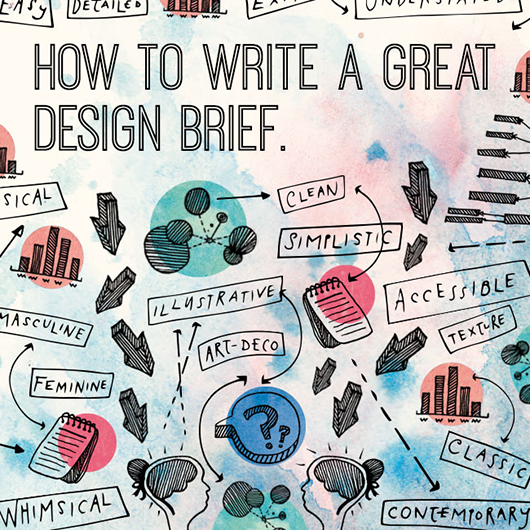
You've been pondering over your business idea for weeks, months — perhaps even years. You know it inside out and back to front. It's your baby, and it WILL be brilliant! But, here lies an obstacle: how do you best communicate to a graphic designer the details, tiny nuances and objectives you have, that require their creative input?
Achieving design that truly represents – and hopefully accentuates – your project, begins with a healthy amount of dialogue between you and your designer. It's time to gather up all of your thinking – the what, why, how and what if's – and arrange them into some sort of sensible explanation. We designers make use of a helpful series of questions – commonly known as the design brief – to assist you in identifying the information most relevant. It should be said that some design briefs though, are more superior to others. Being asked the right set of questions by a designer and understanding why they've been asked in the first place, lays the foundations for a better project outcome.
Why write one in the first place, you may ask? Why not just have a brief phone discussion and get the ball rolling? Writing a design brief, whether you write it yourself, or have your designer write it for you, has numerous benefits. I've explained some of those benefits in my previous blog post.
So, what constitutes the contents of a well-written brief? When working with clients in my own practice, there are the things that I really like to know about before moving towards the research and concepts phase, and I'd like to share them with you here.
01. Who are you, really?
Tell your designer all about yourself. And I do mean ALL. Your designer is now your new best friend. It's crucial to work with a designer that you know in your heart of hearts you can trust. The more openly you can speak with them, the more they will understand your expectations and motivations. This leads to design that addresses your bigger goals, rather than narrowly focusing in on the smaller, mandatory details only. A well-written design brief should cover expansive knowledge of your brand. Often I find the simple mistake here can be to resist revealing all – this really shouldn't be a time for a modest elevator pitch.
Give a background on the history and where you're at, present day. What do you create, provide, represent? What do you see it growing into? What are the big goals, issues to achieving these, and where does it's strengths and weaknesses lie? What are it's values, tone of voice, attributes? If it were a person, who would it be? Who are it's competitors? What makes your brand unique? What problems does it solve?
Answers to these questions add up to giving your designer a good overall sense of the big picture – often forgotten in the determination for the project's details. Your designer is now better equipped to be able to advise you and steer you in a direction that is more tailored to fit you!
02. Who is your audience?
It's unfortunate that you cannot be everything to everyone in this world. There's no point in trying. But, there is an upside to this! You can be meaningful to a select group, one that will stay loyal to you, if you are loyal to them. Narrowing your focus and understanding as much as you can about your selective audience and catering to them specifically, will pay off in dividends. Tuning into your audience and understanding what motivates them, pleases them, frustrates them, helps immensely in formulating an informed visual direction for your designer. Speaking succinctly to your audience, in THEIR language – be that visual and verbal – is the goal here.
What do you know about your audience, or the audience you would like to attract? Describe a typical member of your tribe: Are they predominately male? Female? Does your brand have more than one audience? Where do they live, work and play? How much do they earn? What do they spend their money on? What are the motivations behind their purchases or use of a service? Do you have any data you can share with your designer? Do you have past surveys, focus groups, Google Analytics or data from your Facebook Fan Page? And what about feedback?
Understanding your audience will allow a designer an insightful view into communicating with them in a language that is appropriate. Creating a story that speaks to your audience in their visual language will create a sense of belonging, which in turn builds brand loyalty.
03. How and why did your project arise?
It may be that your brand has lost it's way a little, a whole lot, or that you are simply in the start-up stage. It may be that you've discovered a gap in the market for a new product. Maybe you've just about finished your artistic endeavors, but you need to visually package everything together. Giving your designer an insight into the way your project came to fruition, helps them to understand the motivations and objectives behind your project. This section of a design brief really helps to define the design 'problem' – big, small or somewhere in between – highlighting the issues your designer needs to fully address and resolve.
Tell your designer about your 'problem'. Give them a summary of your project and the main reasons you are commissioning them for their creative input. How did this all arise? What are the goals you plan to achieve by undertaking the project? Is it to create further recognition? Develop your audience? An investment or financial gain? What specific design deliverables do you believe addresses your 'problem'? And how will you measure your success?
These factors will drive a designer to find and create an effective aesthetic and strategy that is in tune with addressing your goals.
04. What is the key message you are giving to your audience?
Often in communication, we tend to muddy the waters by saying too much. It is important now more than ever to simplify and pinpoint. You are competing in a sea of information, a decreasing of attention spans and the increased perceptions in lack of one's time. You have about five seconds, more or less, to make an impression – so – make it count. What is the single, key message you wish to impress on your audience? How would you like them to respond, feel, react and/or act?
Your designer will now be sure to focus in on illustrating this message succinctly and simply.
05. OK! Now, for the details.
This may come across as rather obvious! However, ensure you tell your designer what you require from them. Provide as much detail as you can. The outcome of a project is affected by it's constraints, so it's important to be upfront about these before a project moves to the concept stage. A thoughtful designer will be able to forewarn you of issues that may arise because of said constraints and steer you towards a direction that bests reaches a compromise.
Give them an idea of your deadline, and any outside factors that may affect the date. How many people will be involved in the signing off process? Are there mandatory, non-negotiable factors that must be adhered to? What is your printing and/or development arrangement? Is there any text in the works that needs to be finalised and supplied? Will the scope of the project likely remain as it is?
Keep your designer abreast of these details, and any amendments as soon as they arise, and you'll find you've created a more mutually collaborative relationship.
.....
Gathering and sharing all the information – research, data, plans, goals, thoughts, samples, inspiration – you have at your disposal, enlightens your designer with much more knowledge to operate from. If you let them into your inner circle, by placing emphasis on partnership, rather than just relying on their technical know-how, you'll find it will allow a designer to respond by creating a meaningful, engaging outcome. One that is much more in tune with your goals and your audience's desires. This is the unequivocal benefit of mastering an excellently written design brief!
If you're wondering about the specific questions of a design brief, try searching for samples online – there are plenty out there to pick and choose from. In my own design practice, I've formulated a series of questions from over ten years of reading and putting them together – feel free to utilise this one if you see fit!
Nat Carroll is NSW-based creative director, designer & illustrator with an artisan style and strategic approach, working under the moniker, the Seamstress. She carefully crafts visual communication — brands, design & illustration — for the creative, cultural, business & non profit fields.
Statigram makes your Instagram work for you
By Susan Goodwin
We all love Instagram, those pocket-sized sneaky peaks into other peoples lives, giving us the opportunity to travel the world, eat all the good things, and see abundant creativity.
It is also a great way to share your own creativity, and if you want to grow an audience for your creative business, then Instagram can be a useful tool to achieve that.
First, a few things to consider:
- Is your account a business account? Are you using it to drive more sales/awareness/and audience to what you do?
- What parts of your life overlap with your business, that add character and richness to your creativity and bring your story to life?
- Is your account name the same as your Twitter/Facebook/blog/Pinterest name?
- What other Instagram accounts do you really enjoy, and why? Do they have beautiful composition, amazing styling, gorgeous photos?
Being strategic about what you post may sound a little less "insta" than you are used to with an Instagram account. However, if you want to use it as a tool to grow your business, then a crazy mash up of last night's leftovers, photos taken in the dark and endless photos of your family or your pets may not necessarily drive sales to your door.
Having a goal and finding the steps to reach it starts with analysis. Enter Statigram. Here, you can find statistics on your Instagram profile, such as who has started following you and who has jumped ship, your 'like' rates, which posts get the most interaction, and it even gives you a handy little graph which shows when the people in your Instagram community are most likely to be online.
Now that you have all this data you can start to use Instagram more effectively.

- Post at the times your community is around for maximum effect.
- Post more of the images your audience likes to see.
- If the images of your work are not getting the most love, then consider different angles of photography, styling in an unusual way or using videos to show how you do things.
- Hashtags may look ugly but good ones can bring a new audience to you. Try searching for your tag and using it occasionally to bring in a new crowd.
You will soon find Statigram as addictive as Instagram. It will place all the information to grow your audience at your fingertips.
(P.S. This post was NOT sponsored by Statigram or Instagram, we just like their websites.)
Susan Goodwin is the designer, sewer and creator of Rocket Fuel, ensuring you are decked out in style while cycling. Read her blog or follow her on Twitter @rocketfuelstyle.
Photo credit: images from Measure Twice Cut Once
How to Take a Break from Social Media (Without Your Business Suffering!)
 Do you ever feel stressed about taking a break from your social media and losing all your traction with your followers/clients/customers? It can be hard to switch it off, especially when it’s such a great marketing and customer service tool for your creative business. But every once in a while you will need to step away.
Here are some great ways to do it without losing your following:
- Let your readers/clients/customers know before you go, and if possible, how long you’ll be away. Keeping them in the loop is better than just disappearing without a word.
- Ask them to sign up for your blog’s RSS feed and schedule content for the time you are away. Consider organising guest posts where it’s appropriate or re-publish a series of your most read posts.
- Have someone take over your social media accounts for that time. If you’re taking significant time off, like maternity leave, and have a business that mostly works without you there (passive income or a shop with ready made goods), consider taking someone on for that time to post to your social media accounts and pack orders.
- Use a service like Buffer or Hootsuite to schedule your Twitter posts in advance, so you don’t lose your reach. Facebook has recently improved their scheduling service too. Let your readers know that you're doing this and that you might not be there to answer questions a couple of times before you take the break.
- Decide if Instagram will be included in your social media break - it might seem weird to take a break but still use one social network, but if you’re taking a holiday to a great destination, you can keep your followers in the loop with a holiday happy-snap here and there.
- If you’re still working but taking a 'digital sabbatical', let your clients know that you’ll still be available by email or your regular channels. But if you’re closing up shop as well as taking a social media break, consider preparing some great “we’re back” social media content that's ready to go when you are back and working again.
Taking a break from social media, or even from your business, doesn’t have to mean that you’ll be back at the beginning once you log back in. Most people understand that everyone needs a break to recharge their batteries. Having a clear strategy for your social media while you're away - frequency, content - can help you truly relax while you're on that break.
Dannielle is a blogger, serial organiser and passionate traveller. She has a secret love of 90s teen movies and can often be found hanging out on Pinterest. She is on a mission to help people bring happiness (and fun) back into their homes with a dash of organisation and a sprinkle of their own awesome style over at her blog Style for a Happy Home.
Image from © Lime Lane Photography
My Advice: Starting a retail shop
By Lizzie Stafford Venturing into a new retail business is daunting and most small business owners will admit the first few years are a steep learning curve. It’s tough. But having your own shop space can also be hugely rewarding. I asked five successful store owners for their best piece of advice for starting a retail business.

Don’t get caught up in the details.
Alana Langan, Hunt & Bow, online boutique
"Prior to launching Hunt & Bow I found myself spending hours upon hours getting everything *perfect* behind the scenes, when the most important thing for me to do was just get out there and get going. So much can be tweaked along the way and being an online retailer, it's better to be up and running online and interacting with customers than not. That said, there is definitely a place for getting key things right from the beginning (like your business name and logo - the big things!)"

Everything in business can be learnt.
Tiana Vasiljev, Beautiful Pages, Sydney
"Starting up a business can be daunting but it's not rocket science. Most of business is common sense and everything can be learnt with a bit of practise. Experience is the best teacher when it comes to running a business. The longer you do it, the easier it will become.
Hire a business coach. Find good mentors. Surround yourself with successful people. Finding someone who you can talk to regularly and who can offer advice is a huge help. Having a coach will assist you in identifying and reaching your goals. They can provide focus, motivate you and help clarify your goals (in both business and in life). It's also important to find mentors and learn from what they have to offer. A large amount of how successful you are in life comes down to who you surround yourself with.
Never start a business for the money. You need to truly love what you are doing, stand by your values and believe in what you do. It is important to do something meaningful, something that you truly love doing and care about. It will not only feed your soul, but help grow your business and keep you focused during hard times.
Once you get into it, it's important to never quit. Every great leader that I have ever looked up to persevered to make it work and never quit. Many times your business will get tough, but it is important to preserve and stick with it. Change your strategy or approach if need be, but never give up."

There’s no point trying to be all things to all people.
Julia Pound, Dagmar Rousset, Melbourne
"At first I used to worry that some people didn’t seem to “get” Dagmar. Occasionally they would walk in and laugh at the stock, or tell me they were too old for it (despite the fact that some of my most loyal customers are over 60). I told this to my accountant and she suggested I stock a broader range that would appeal to a greater cross section of the population. I thought about this for a while and then I had an epiphany: does Radiohead worry about how to get in on Justin Bieber’s demographic? Does Opera Australia advertise at AFL games? Why would you worry about not everyone liking you? Just do it for you and all the people who “get” you. There is such a sense of relief in thinking this way – it’s truly life changing, or at least it was for me. Now I just worry about what my customers like. No one else matters."

Invite other people to perform some of the everyday tasks.
Michelle Gillies, Nook, Brisbane
"A lesson that I'm in the process of learning is that as soon as it's possible, I think that it's beneficial to invite other people to perform some of the everyday tasks, to enable you to focus on other creative or developmental aspects of the business. Many of the day-to-day tasks can be time consuming and tiring and leave you with less time to be creative and consider new ways to grow and evolve the business. It is essential to allow time to research new suppliers and products, consider store related events and come up with nice new ways to display stock. This can also ensure that you remain interested, enthusiastic and inspired, which is just as important for you as it is for the business."

Stay true to your vision.
Lyndal Gubbels, The Flower Dispensary, Geelong
"Don't expect others to have the same vision as you; they don't know what's going on inside that creative head of yours. I'm not the best person to explain all the visions I'm having inside my head, and trying to relay this to your staff is not an easy task.
Having staff that have similar visions has been my hardest hurdle since having The Flower Dispensary. Staff need to have a similar style or be willing to adapt their style to suit your business.
I opened The Flower Dispensary to be a feel good place to all, a place to escape and evoke the senses with beautiful smelling blooms and colour and to be greeted with happy staff that are working because they have a passion for their trade.
I thoroughly enjoy working in a creative space with the staff that we employ to continue to grow our business. I learn everyday from them."
----
Lizzie Stafford is a writer and soon-to-be retailer in Brisbane. Her magazine and book store Künstler will open in March 2014. She is also organising Brisbane’s first CWC event happening in April, with more details announced soon!
Why write a design brief?
Today we welcome guest blogger Nat Carroll to the CWC stage, for her first post in a two-part series about design briefs. Welcome, Nat!

To achieve design that matters, it’s imperative your designer must understand all aspects and the tiny nuances of a project. You may end up, otherwise, with something that looks pretty, but ultimately does not resonate with your target audience. The questions you need to ask yourself of the design, are: Will it increase your brand awareness, increase your sales, or better your other strategic goals? Will it solve the heart of your problem? Design can be strategically valuable, if the project has clear goals and objectives from the outset.
Enter the design brief.
In my opinion, this often over–looked, rushed and/or under–valued part of the design process is vital to the outcome of your project’s success, and most likely, your bottom–line.
A good project briefing thoroughly explores and defines the project, objectives, success criteria, target audience, competition and the scope of work involved.
For the client, a good brief works as:
- A defining of the problem, to which an informed design becomes the solution to;
- A process of clarification and refinement, before moving too hastily ahead with concepts;
- A challenge to existing perceptions, that may have resulted in the design problem initially; and
- An alignment of all the key decision–makers, helping to avoid dead–ends or disagreements later on
And for the designer, a good brief works as:
- The best guide to quoting a project accurately by understanding the total scope involved;
- A directive tool, that the designer can constantly refer back to, to ensure they’re on–track; and
- A reference tool, to design from an informed viewpoint, creating more meaningful design
This part of the process manages the risk involved in investing in the hire of a creative, by creating common goals, with defined issues/restraints, and a structure for solving the problem. It aligns all involved with a reference point, giving the designer the ability to clarify and understand the needs of the client and their problem. Writing a design brief encourages clear communication and collaboration between the two parties.
Collaborating with your designer in a transparent approach, by sharing your most likely, intimate knowledge of your brand – be that a product, service, your own art – will harvest the most innovative project outcomes. Think of your designer almost as if he/she were a business partner – sharing your deepest values and business goals, will allow for insight and new perspectives that may just spark the most creative of solutions, and help tick the goals on your list.
This all begins, with a clear, well–written and informative design brief!
Design briefs can take many forms. In my own design practice, I guide clients toward an informative brief via a questionnaire (you can see an example here). In part two of this series, we'll explore How to Write a Design Brief. Stay tuned!
Nat Carroll is NSW-based creative director, designer & illustrator with an artisan style and strategic approach, working under the moniker, the Seamstress. She carefully crafts visual communication — brands, design & illustration — for the creative, cultural, business & non profit fields.