
What's new in Social Media: If this, then that
By Ellison Bloomfield Each morning when I wake up I check my email, twitter, instagram, path and facebook accounts and throughout the day I'm updating, adding and checking these accounts (and multitude of other profiles and accounts). Obviously this is time consuming and as anyone who is using multiple social media profiles will know there are often cross over points between streams. Something happening in one place can trigger something you want to happen in another place which means a manual process to get this to happen.
Enter ifttt - if this then that, which is a tool which allows you to set up triggers for activities to save you having to do it yourself. When this [trigger] happens then do this [action].

Ifttt works with a number of different channels including the most popular social media sites blogger, facebook, foursquare, flickr, gmail, the list goes on.
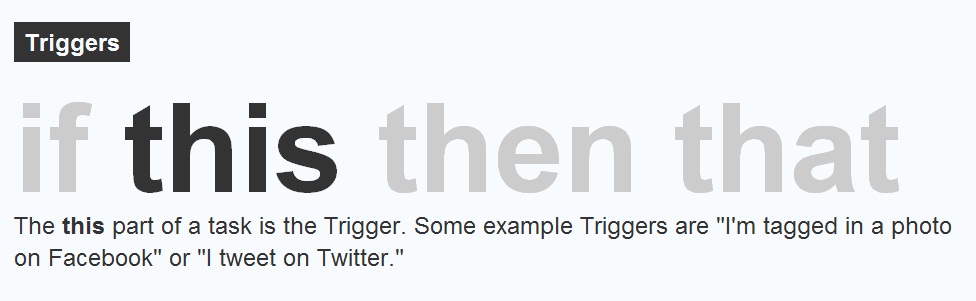
By creating tasks you can manage triggers, 'I post a photo to instagram' and create an action 'Save this file to dropbox'. You can set up your own tasks and share this with others which turns it into a recipe. When you go to the recipes tab you can see the tasks set up by others which you can then use and add to your tasks. This means you don't have to create it yourself (saving even more time).
There might be tasks or actions you want to do on a particular channel but the channel doesn't have the functionality to do it. By using ifttt you can create the actions you want and get the internet to work for you. If for any reason you don't need a task you can turn it off and when you need it again turn it back on and it will pick up again just like a new task.
Ifttt is simple to sign up to and the 1,000,000 plus recipes set up already are a simple starting point and provide you with an idea of what the service can help you to achieve.
Ellison Bloomfield is a Senior Analyst in Social Media at Deloitte. Her blog – Humane Resource has received world-wide attention and Ellison is frequently quoted as a thought leader on HR issues both within Australian and international publications. She can be found on twitter and pinterest @EllisonAmy
Stress & Wellness: Putting the Brakes on Stress
By Emily Harrison There’s a great line about stress being like dark chocolate – while a few squares can be good for you, too much can tip you over the edge…
Like most things in life it’s about finding the balance.
Last month we took a look at stress and the mind body connection. This month is the follow up piece which looks at some ways to keep stress levels in check and keep your creative fire burning (rather than burning out).
- Stop. But you’re too busy right? It may sound counter-productive when you have a million and ten things to get done, but hitting the pause button, just for a moment, can help stop the spiral spiralling out of control. Or, if you are completely stubborn and insist on pushing through, then you will probably find you conk out at some stage and will be forced to stop.
- Prioritise. So you’ve stopped! Good! Now what? Let’s take stock of the situation, CWC columnist Andrea McArthur has some great articles in her Organise Me column – think about starting a list, prioritising tasks and Andrea’s tips on productivity are well worth a read.
- Breatheee. Use slow, deep, breaths to settle jangled nerves, help clear the mind and restore balance in the body. There is power in the breath and you can use it to recharge and refocus.
- Quiet time. It may be stopping just for ten minutes to do some quiet focused breathing. Or you may explore other techniques such as meditation, guided relaxation/visualisations or yoga. When you are not sure if you are coming or going these moments of quiet time can be very grounding practises which offer reflection, insight and perspective.
- Move it. On the flip side, some people find the best way shift a cluttered state is to pound the pavement or shake it out zumba style. Whatever form moves your mojo, exercising helps to balance the stress hormones in the body and boosts those feel good endorphins.
- Nature nurtures – getting outdoors, squidging toes in the grass or breathing fresh air is a time tested grounding technique. (And if you are ‘too busy’ then pop the head out the window for a few breaths, stale air = stale brain I figure).
- Drink plenty of Water and Eat nutritious snacks and meals. It’s one of the things that can easily slide when the pressure is on, but keeping hydrated and giving your body adequate nutrients will keep you fuelled and firing (she says reaching for a glass of water and wondering how many squares of dark chocolate is ‘a few’).
- Laugh. Teehee. For body and mind, laughter is one of the best medicines. Look for lightness and humour when you find yourself on a worry wave.
- Play. Gosh, when did it all get so serious? Like laughter we need play and to look forward to pleasurable activities. It may be socialising with friends, playing music, reading , gardening or checking out an exhibition. Having things to look forward to helps break up the mundane or make the monotonous worthwhile.
- Rest and Sleep. Stress and sleep problems can go hand-in-hand so getting adequate rest is important in order to have resilience to life’s challenges. And there’s much wisdom in the advice “to just sleep on it.”
The list could go on…but I wouldn’t want to ‘stress’ you out!
Remember, you don’t need to be the super hero. And if you find things are spiralling out of control or you’re wearing your wonder undies on the outside then there are many support services that could assist.
Wishing you much laughter and joy in the month ahead.
Emily Harrison is a yoga teacher, writer and communications adviser with a passion for health and wellbeing. She encourages people to discover the vast potential and possibility that lies within each and every one of us. In 2012 she takes a leap of faith out of the corporate world and further into her writing and teaching…you can read more at iamem.com
What's new in social media: Facebook timeline for brands
By Ellison Bloomfield Facebook timeline is now mandatory for business pages and while many have fought to avoid the timeline this is no longer an option. Which means that businesses and page administrators now need to update their pages and ensure that they have an understanding of the new layout and the changes now in effect.
The basics
Cover Photo
Firstly, you need a cover photo, this is an opportunity to clearly highlight to your fans and followers what your page is about and what you do.

The harry&henry shoes cover photo and profile picture clearly demonstrate what the brand is and is consistent with the look and feel of the label.
Tabs, milestones and landing pages
The timeline reduces the ability of brands to have specific tabs such as a welcome landing page and so it is important to use the new features to highlight important information for your fans. By using 'milestones' brands can ensure that achievements or important information is recorded. Milestones record the evolution of the brand over time, from launch to the current day.
Brands can 'pin' content or posts to the top of the timeline, although only one item can be pinned at a time so choose carefully. You can use this feature to make sure fans are aware of a sale or for relevant news. The pinned item will also be featured in your timeline in chronological order.
Private Messages
Brands and fans will now be able to post private messages allowing for greater interaction with fans. This ensures that if fans have a problem or a question it can be dealt with privately and doesn't have to be public on timelines. When it comes to customer service with social media though remember, if someone has a complaint or problem, take the conversation offline as soon as possible to get to a speedy resolution.
Settings
As always with Facebook it's important to understand the settings and what the defaults are. For example, the default setting for mentions or check ins by others is that they will show up on your page, which is great if the content is positive but not so great if it's negative.
If you want to remove a post simply go to the top right hand corner of the post and you will have options to edit or remove it.
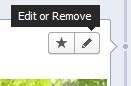
On the flip side of this if there is a particular post you like by clicking on the 'star' image you can highlight it and it will stretch across the whole page.
Analytics
Facebook now allows brands to see analytics around their page which can be useful for planning content and knowing what is popular with your followers. These analytics include a myriad of information including where your fans are, what they like and even down to their age and gender. This information can assist you with targeting your messaging.
It's not all bad
While there has been a lot of opposition to the timeline for brands there are many positives. For creative brands and those with products they want to promote the visual style of the timeline allows brands to highlight products. There is more opportunity to get creative with the images used and to engage with your fans on the site.
As with all social media the important thing is to do your research, see what others are doing and understand the settings and by doing these things you can use the timeline to your advantage.
Ellison Bloomfield is a Senior Analyst in Social Media at Deloitte. Her blog – Humane Resource has received world-wide attention and Ellison is frequently quoted as a thought leader on HR issues both within Australian and international publications. She can be found on twitter and pinterest @EllisonAmy
Social media: In the cloud
By Ellison Bloomfield Last week, Andy wrote about the importance of regularly backing up computer data, and mentioned 'cloud storage' as one newer option. Today, I'm going to look at one popular cloud storage option, Dropbox.
I must have purchased at least a dozen USB flash drives but every time I need to save something to transfer to another computer I can’t find them. So I started to look into what other file storage options there were so I could save my work and projects in a safe place, but still access them from other locations. Saving files online, or 'in the cloud' as online storage is colloquially known, seemed like the best solution.
A free Dropbox account gives you 2 gigabytes worth of online storage space, and you can earn additional data by referring friends (I received a referral for my account which gave me a bonus 250mb of data and the same amount for my referrer). There are also paid options starting at $9.99 per month for up to 50gb and beyond. But if you’re just looking to save and share smaller amounts of data the free option will more than suffice. If you’re referring friends you can get up to 8gb of space which should tide over even the most prolific of users.
Save
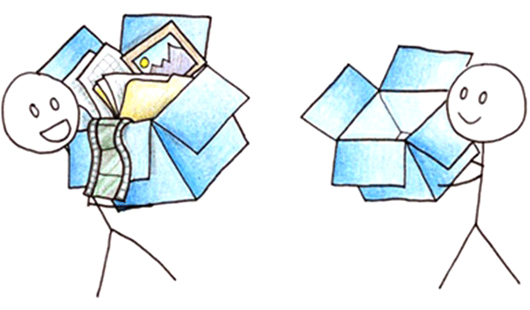
The files you save in your Dropbox will be accessible across all of your electronic devices - there are apps for your computer, Android, iPhone, iPad and Blackberry as well as the option to log into the Dropbox.com website to access your files.
This means that not only will you be able to access your files when and where you want, but you can be protected against data loss with all the files safely 'in the cloud’.
Share
Probably one of the most useful features of Dropbox is the ability to share your folders or specific files with people. They will be able to access the same files from their Dropbox account simply and easily. This is particularly useful if you’re co-located or working from different locations and can make it easier to coordinate work on projects (professional or personal).
Safe
If you’re like me you’ve probably accidentally deleted something and then feverishly tried to undo the damage! With Dropbox you can undelete files and ‘go back in time’ to save yourself from these little mistakes.
Dropbox is a simple to use and navigate tool that will help you to be more organised and save time when it comes to saving your data. There may be some people that are hesitant to use these types of tools, due to the fact that your files and data are being saved online instead of a personal device. But while this term may be new the concept isn’t. We’ve been using cloud storage for years through accounts such as Hotmail, Gmail, Facebook and probably countless others, and the ease of use has definitely been proven.
If you’d like to start using Dropbox today you can use this link (and get yourself some bonus data!).
Ellison Bloomfield is a Senior Analyst in Social Media at Deloitte. Her blog – Humane Resource has received world-wide attention and Ellison is frequently quoted as a thought leader on HR issues both within Australian and international publications. She can be found on twitter and pinterest @EllisonAmy
Stress & wellness: Harnessing the Power of the Breath for increased creativity
By Emily Harrison
There’s an old saying that suggests ‘it is not the number of years that matter but the number of breaths.’ So let’s make these breaths count and help fuel our creative potential.
Our natural stress buster The breath is our most natural, free and on demand stress buster we have…if we use it correctly. By breathing properly and fully we:
- Recharge and energise by increasing oxygen levels and removing waste.
- Exercise the diaphragm muscle (a dome shaped muscle at the bottom of the lungs) which gently massages the internal organs of the abdomen region.
- Switch off stress or anxiety states and restore calm and balance.
- As we breathe correctly it quietens the mind and you are more likely to perceive more clearly and have a steady accurate focus.
Yogis have known the power in, and of, the breath for some time.
But we don’t necessarily want to levitate or walk on hot coals. We simply want to reach our full healthy, creative potential as human beings.
And we can do that by maximising our control of the breath and its life force or vital energy qualities – this is what the Chinese call the flow of ‘Chi,’ the Japanese refer to it as ‘Ki’ and Yogis will call it ‘Prana’. It is essentially the ‘X-Factor’ that we take in from our air (as well as food and water) that gives us the zest for life and brings the mind and body into balance. It is abundant and free and we can all make the most of it through breathing.
How do we do this?
Taking a few moments to pause and check in to your breath can make a big difference. Also scan how you may be sitting or standing – is the spine straight and shoulders relaxed?
Below are some different techniques you may like to try to focus your breathing.
Remember it’s important never to practise tension (we have more than enough of that!) If the exercises don’t flow smoothly then don’t stress – just the act of stopping, being aware and taking a few deep breaths will bring benefits.
- Begin by inhaling for one count and then release the breath over two counts.
- Once this feels comfortable lengthen the inhale to two counts and exhale over four counts. Continue for a few rounds before releasing the technique.
- If you are someone who likes visuals then you may like to add the image of sunshine filling and energising your body as you inhale (I like to think of it as champagne bubbles!) and as you breath out send out any tension or tightness.
Belly Breathing – full deep breathing starts deep in the abdomen, but in a stressful situation or if we’re hunching for long periods then we can restrict this movement and short shallow breaths become the norm. To restore the deeper rhythm you:
- Begin by inhaling and send the breath deep down into the abdomen area, seeing it expand like a balloon.
- As you release the breath, the belly contracts back down, just like a deflating balloon.
Just think of how a sleeping newborn breathes or even a lazing cat or dog – it is our natural way to breathe. It’s also a great one to do at night to help still a busy mind.
The challenge I find is remembering to use such techniques to restore the inner balance at times of stress or pressure. But the more I practise and the more aware of my tension triggers the easier it is becoming a ‘better breather.’
So, creative women out there imagine the possibilities of greater mental clarity and wellbeing and take a moment to give some thought to the power of your breath.
Emily Harrison is a yoga teacher, writer and communications adviser with a passion for health and wellbeing. She encourages people to discover the vast potential and possibility that lies within each and every one of us. In 2012 she takes a leap of faith out of the corporate world and further into her writing and teaching... which will mean a new website coming soon!
Organise me: Start with a list...
By Andrea McArthur

Considering that it is the start of a fresh year I thought it appropriate for my first blog post to be on planning for the New Year ahead. If we take it back to basics looking at what you want to achieve by setting yourself some simple tasks. Starting with creating and using a functional To Do List.
Task management
Set yourself a goal to streamline your To Do List (or start a To Do List if you don't use them). Create one go-to place for all of your new tasks, that way you can track your tasks and not leave anything out. Some suggestions that I would recommend trying are:
- The traditional hard copy To Do List (I love paper and swear by lists) but this method can become cumbersome.
- A simple low-fi method frequently used is a raw text edit file. This way you can cut and paste, make edits and save out To Do Lists for future ongoing use. Just make sure you are using headings for ease of reading.
- Email method, you can utilize this by using your inbox to show all of your current tasks. Email yourself whenever you get a new project and organize your emails with labels and folders. A very straight forward method.
- Utilizing software, I have recently been looking into tech-ing up my To Do List. There are many great paid and free programs that I have found. When looking at these programs, look for one which has an easy to use interface and one which can sync between your devices.
Whichever method you utilize the most important part is use your To Do List regularly and then prioritize your tasks.
Prioritising
One gem which has always stayed with me comes from a Marketing Manager who was very efficient and managed a large work load with apparent ease. Her method was very simple - complete all simple or quick tasks immediately. If something is only going to take a few minutes to complete just get it done then and there.
Prioritise longer tasks with an actionable label. Use a subject description and also a clear task that is to be completed. For instance 'New Identity Design / Meet with client to discuss concepts'.
Don't be afraid to separate tasks into groups, you could start with some basic ones such as Work, Personal, Backburner (commonly called the Get to Someday pile).
From here, much like the organized Account Managers at Design Studios you should also create a daily Work In Progress - To Do List to keep you on track for the day. Keep this short and succinct in order not to overwhelm yourself. You could utilize your Calendar to set reminders in order to help create your daily WIP as well.
Best of luck starting your own To Do List! I've started mine...
Andrea McArthur has a passion for all things visual. Type is her true love and goes weak over great design. After being a graphic designer for many years she has switched hats to become an educator of graphic design and enjoys watching others fall in love with design too. From January this year Andrea has switched hats again starting her solo freelance design business in Brisbane.
Women in film: 10 things film school taught me
By Nathania Gilson
1. Be brave and step outside your comfort zone.
Part of getting your project off the ground involves doing things that might be just a little frightening. This is a good thing, I promise. Approach people whom you think normally wouldn't give you the time of day. Show someone else a script you've had sitting on your desktop for months. Take on a role you've never attempted before -- never let lack of experience hold you back. Don't wait for permission to make your film, or for someone to give you their blessing. Surprise yourself. Surprise others. Never be short of enthusiasm, for yourself, your project, and others. Accomplish things.
2. Finish things.
Always, even if it's not an easy task to get through. Imagine it, do it, finish it. Set deadlines and stick to them. Film school is good for this, even if it doesn't end up working out for everyone. Due-by dates decided by other people are often a good way to force yourself to spend time on working towards something. Remember -- a project that you can wrap up at a certain point in the year is a lot more promising than an an overly ambitious project that never really gets past pre-production. Stop worrying about perfection and focus your efforts towards something tangible that you can share with others. If you run out of money along the way, find a way to get it done without. It's okay to look back and wish you could've fixed things. Move forward. There will be a next time to try and get it right again, but it's up to you to make sure that happens.
3. Have empathy.
Everyone has their bad days, including you, and even the worst day of your week, month, or year isn't all that bad in retrospect. Cultivating the personality of a film set when you're both on and off the job is a delicate yet crucial task. Learn everyone's names and figure out what they are meant to be doing. Don't ask people to hurry up but do remind them that time is something you do need to make the most of. Think outside of your own ego, even at the lowest point in the day. Pay attention. Be generous. Help somebody learn something that they don't know about. Work with people who do things that you know nothing about for the experience. Understand what it is that they go through to achieve a finished product or vision. Use this insight to better your own approach.
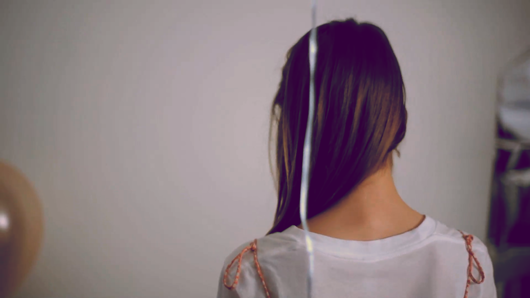
Still from 'Tiny Earthquakes', a short film I wrote, directed and edited.
4. Think ahead.
Preparation is half of what gets you there, and figuring it out on the day (or in the middle of the night) isn't always a viable option. Plan. It's never too early to. Make lists, layout a schedule, anticipate what comes next, come to an agreement about what to do if something goes wrong with both yourself and the people around you. If all of these things intimidate or bore you, get someone whom you trust involved to help out.
5. Educate yourself.
Learn a new language. Figure out how people in your industry talk to each other. Master the technical terminology, even if you're not set on working in anything technically related. The more you know, the better your decision making will be. Don't always let other people make those decisions for you. Go to the library and pick out every book that catches your eye. Risk tallying up horrendous library fines. Read, watch and listen to everything you can. Find out what you like and what you don't like, and why. Find the best ways to articulate yourself. Find your own voice -- your writing, directing or editing voice, too. Pay attention to everything and everyone around you as life happens. Write it down. Draw it. Film it. Animate it. Figure out what it is that you want to say. Pin-point what it is that makes it so special and yet so universal. Make something of this.
6. Stay motivated.
Fight distraction. Fight laziness. Fight 'maybe tomorrow instead'. Remember why you're doing this to begin with. Don't give up. Yes, getting films funded is difficult and it's not always obvious whom to speak to about getting this process set in motion, but it is certainly not impossible. It is meant to be tough and challenging because if it wasn't, getting to the end of it all probably wouldn't feel so rewarding. If in doubt, remember that someone out there probably needs to hear what you have to say. Procrastination's only okay if you really like running off adrenaline. In the mean time, find a mentor to guide you along the way. This can a friend, family member, a lecturer, an industry practitioner -- anyone you look up to who has your best interests at heart but someone who will also be honest with you when you most need it.

Still from a music video I directed for Melbourne band, Love of Diagrams.
7. Think outside of the ordinary.
Get creative. Be resourceful. Money should never replace common sense. Not just with the kind of stories you want to tell, but also how to go about making them happen. Take a look at every opportunity that comes toward you, even if it doesn't make sense at first. Logic is overrated; find out what your subconscious wants to make a film about and act accordingly. Skip gimmicks, and think about what makes your story or idea worth paying attention to. Don't try to make the film that you think other people want you to make. Collaboration is an important part of creative growth, too. Involve other talented people in the work you want to make possible; they don't even have to be working in the same industry as you.
8. Get really good at something.
Accept one thing, and accept it as early on in your life as possible: you will struggle to be unequivocally talented at every single aspect of the industry you want to be a part of. Not that this should deter you from learning as much as possible about everything around you, but you'll find your calling eventually. Pick something you love; something you can obsess over and stay up all night for, and learn everything you possibly can about it for as long as you choose to practise it. Meet people who practise the art, throw yourself into situations where you get to practise it, too, ask questions and find answers at any given opportunity, and never think that you'll finally reach a point where you know and seem to have done it all. You won't, but that's the exciting bit -- being part of an industry that is ever evolving and being shaped by the people who try to sustain a career out of it.
 Another still from 'Tiny Earthquakes'.
9. Do other stuff.
Spend an hour or three a day doing something that isn't related to the task at hand for the sake of your own sanity. Let your mind wander if it wants to, but avoid letting it get bored with what you have in front of you. What you do outside of your projects informs as much as what you achieve when working on them. It can be as simple as walking away from the computer to make a cup of tea or going for a walk to clear your head. Working on multiple projects at once can be a positive force as well, and something I can encourage from my own experiences of having simultaneously balanced pre-production, production, and post-production roles across more than one genre. Although hypothetically, this sounds like madness, it can be a good way to help you climb out of one creative rut by spending time building upon someone else's vision in a completely different capacity. When stuck on one project, you always have the option to step into a different role, or world, and re-focus your attention on what you need to prioritise. Sleep, too. That's important.
10. Enjoy what you do.
...Otherwise, what's the point? Work with people who inspire you and make you want to continue to get better at what it is you want to do. Instead of freaking out about where you'll end up five years from now, look forward to it. Keep working hard, you never know what could happen, or who will notice.
Nathania Gilson is a young filmmaker living in Melbourne, Australia. She has spent the last three years working on a number of short films, music videos and documentaries. Her side projects involve curating content for independent publications, adventuring and maintaining the ability to function on minimal sleep. She is excited about the future.